First Education

Observation

Post Image

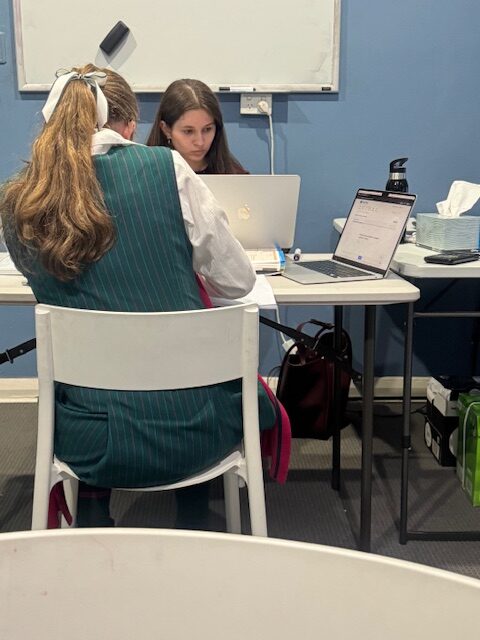
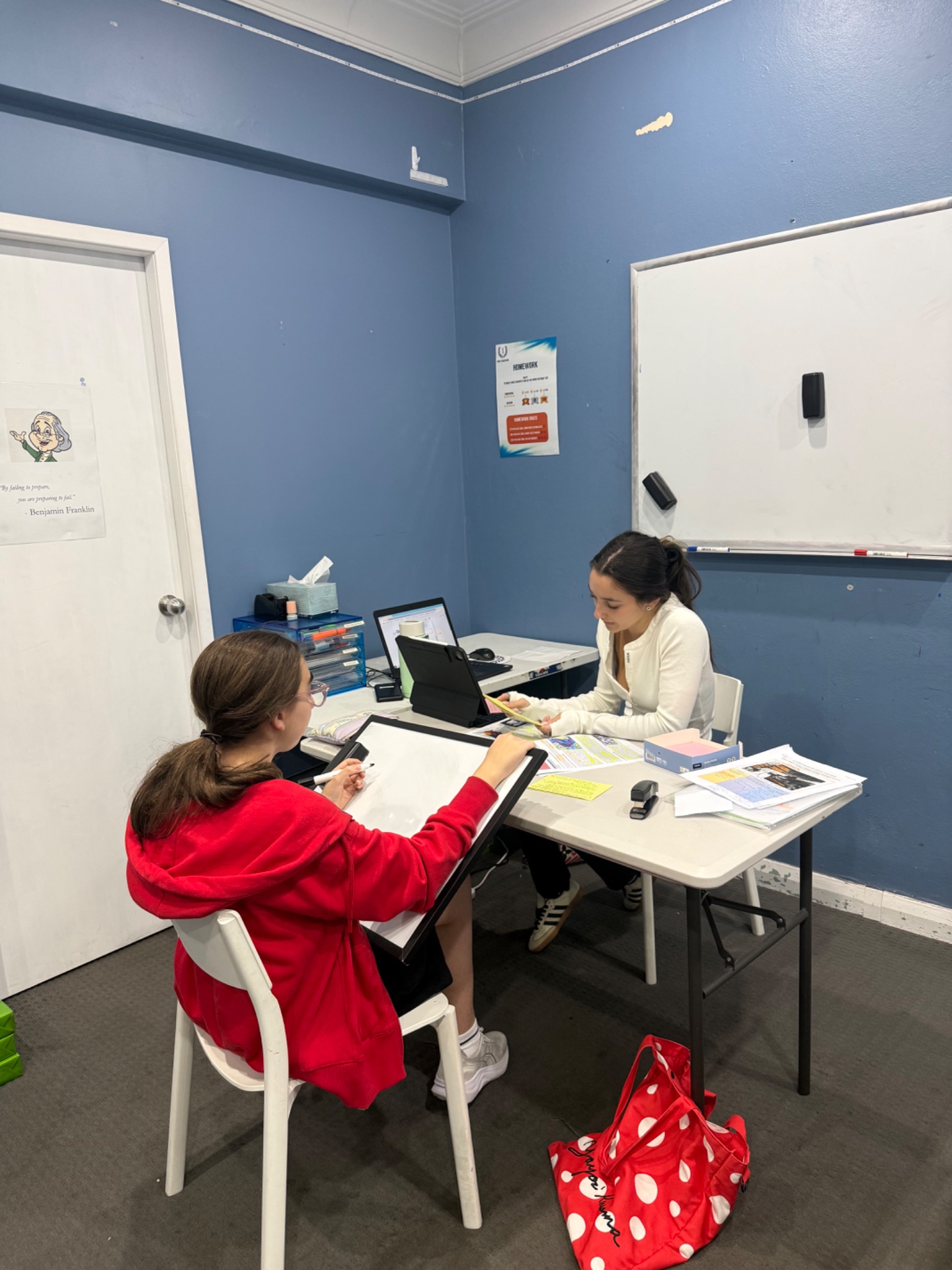
-Throughout the session, the tutor explained mathematical concepts clearly by breaking difficult questions unto smaller steps. She helped guide the student by providing a variety of methods and different questions from the textbook and online activities to help solve questions. She provided strong communication skills by adjusting explanation where the student became confused.

The tutor used visual working out and language to make concepts more accessible and maintain an approachable manner when the student asked questions. She further prompted the student by helping her understand the mathematical question. She further checked for understanding before moving onto the next question and reinforced prior knowledge to connect learning.

Emilia Labos

How to study when you have no motivation

Post Image

We all have those days where the last thing you feel like doing is studying, you would much rather lie in bed and doom scroll then trying to get any work done. Here are some tips to try and get you out of that rut and try and get a little bit of productive work done instead.

1. Set out tasks that need to be done
– Starting out with small, achievable tasks makes doing something much more approachable and achievable. Instead of having a massive assignment that you know you need to do, break it down into doing one small part of it. Once you get into a rhythm, it makes it much easier to keep going with the rest of the tasks on your to do list.

2. Set up a study space
When you have a relaxing study space, it can make going to study much less stressful. When the space around you is relaxing, your mind will follow this. Make sure your desk is clean and the work you need to do is set out, which triggers your brain into remembering what you need to do. Get yourself your favourite beverage and a snack to get you motivated to study,

3. Study with friends
Organise times to study with friends, which combines socialising with study. This makes it easier to get up and go to study as it can make it more enjoyable. Studying with friends also allows you to have good balance between a social life and studying, which prevents burnout and lack of motivation.

4. Start with ‘easy’ subjects
Start study with the subjects that you enjoy most, do your favourite parts of study to begin a study session. This helps to ‘warm up’ your brain and get used to studying. Starting is always the hardest part, so beginning with something you like can make it easier to approach.

Maddie Manins

The Importance of Tutoring

Post Image

Tutoring is more than just helping someone complete homework or prepare for a test. It is a process that builds confidence, strengthens understanding, and creates meaningful connections between people. Whether it takes place in a classroom, online, or at a local library, tutoring plays an important role in supporting students of all ages.

One of the greatest benefits of tutoring is personalised learning. In a normal classroom, teachers often have limited time to focus on individual students. Tutors, however, can adapt their teaching style to suit the learner’s needs. Some students learn best through visual examples, while others prefer discussion or practice questions. This flexibility allows students to understand concepts at their own pace and feel more comfortable asking questions.

Tutoring also helps students develop confidence. Many learners struggle silently because they fear making mistakes in front of others. A tutor provides a supportive environment where mistakes become opportunities to learn rather than reasons for embarrassment. As students improve their understanding, they often become more motivated and willing to participate in class.

Beyond academic improvement, tutoring can develop important life skills. Students learn how to manage their time, stay organised, and approach problems critically. These skills are valuable not only in school but also in future careers and everyday life.

Tutoring benefits tutors as well. Explaining concepts to others strengthens the tutor’s own knowledge and improves communication skills. It can also be rewarding to watch someone grow and succeed because of your guidance.

In today’s fast-paced and competitive world, tutoring has become an essential form of support. It encourages growth, builds confidence, and reminds students that learning is not about being perfect, but about improving step by step.

Natalie Ha

Observation

Post Image

During this tutoring session, Deanne worked with a Year 10 student on History, focusing on the Civil War in preparation for an upcoming history exam. Throughout the lesson, Deanne demonstrated strong communication skills and created a supportive learning environment that encouraged participation and confidence.

The session was well structured and focused on revising key content areas including the causes of the Civil War, major events, significant figures, and the social and political impacts of the conflict. Deanne effectively broke down complex historical concepts into manageable explanations, allowing the student to engage with the material more confidently.

A particular strength observed during the session was Deanne’s ability to guide the student through exam preparation strategies. This included reviewing practice questions, discussing how to structure extended responses, and encouraging the use of historical evidence to support answers. Deanne consistently checked for understanding throughout the lesson and adapted explanations where necessary to ensure the student remained engaged.

The tutoring approach was patient, encouraging, and interactive. Deanne asked effective questions to prompt critical thinking and helped the student make connections between historical events and their broader significance. Positive reinforcement was also used throughout the session, which contributed to the student’s growing confidence when answering questions independently.

Overall, Deanne conducted a highly productive and supportive tutoring session that demonstrated strong content knowledge, preparation, and effective teaching strategies. The session successfully supported the student’s understanding of the Civil War topic while also building confidence ahead of the upcoming history exam.

Isabella Naumovski

Tutoring: The Only Job Where You Relearn Year 7 Math Under Pressure

Post Image

Tutoring sounds like a very professional activity until you actually do it.

At first, you imagine yourself inspiring young minds and explaining complex ideas with ease. In reality, you spend half the session trying to remember how long division works and the other half saying, “Okay… let’s read the question one more time.”

One of the funniest things about tutoring is how creative students become when they don’t want to do work. Suddenly they’re thirsty, tired, confused, hungry or deeply interested in the history of pencils. A 10-minute homework task can somehow turn into a full discussion about dinosaurs, conspiracy theories or why calculators should be allowed in every situation.

But tutoring is actually pretty entertaining because no two students are the same. Some students answer every question with confidence (even when they’re completely wrong). Others act like saying “I don’t know” costs money. And then there’s always one student who understands everything instantly and makes you question your own academic career.

The best part is the random moments when things finally click. A student who spent 20 minutes fighting for their life against fractions suddenly solves a problem alone and looks like they’ve just discovered fire.

Somehow, despite the confusion, the fake “I forgot my homework” excuses and the occasional maths crisis, tutoring ends up being genuinely rewarding…mostly because watching someone finally understand something never gets old.

Samantha Nguyen

Unpacking Directive Verbs (High School English)

Post Image

One of the fastest ways to improve your English essays is learning what the directive verb is actually asking you to do. A lot of students know their texts or arguments fairly well, but lose marks because they answer the wrong TYPE of question.
So, before writing, underline the directive verb. It tells you the depth, structure, and style your response needs.

Tier 1 Verbs:
– Describe
– Identify
– Define
– Name
– Outline
Eg. Identify two language techniques used in the text.

For tier 1 verbs, focus on: giving characteristics, features, or clear definitions, as well as straightforward explanations with accurate examples. Don’t overanalyse!!
If the question says identify, you usually only need concise evidence + brief explanation.

Tier 2 Verbs:
Explain
Analyse
Examine
Account for
In what ways
Eg. Explain how this text conveys the experience of distress.

Here, focus on HOW techniques create meaning, or WHY composers make certain choices. This requires explanation of cause and effect, typically examining relationships between ideas, context, and audience
So, avoid plot retelling. A good sentence starter might be “Shakespeare conveys… through the use of… which tells the audience…”

Tier 3 Verbs:
Assess
Evaluate
To what extent
Eg. To what extent is loss a central theme of Past the Shallows?

For Tier 3 verbs, focus on making an explicit, verbalised judgement (eg. “significantly effective”, “highly accurate” etc). Then you need to argue why the statement is true/valid, justifying your interpretation with evidence. Aka, these questions need a strong thesis.

Tier 4 Verbs:
Discuss
Explore
Eg. Explore the ways in which texts represent the complexity of human experience for individuals.

Here, focus on multiple perspectives, how complexity emerges through ifferent interpretations, and weighing ideas against each other. These questions are usually a bit broader and more flexible, so less obviously any “correct” answer.

Remember: A good essay doesn’t just address the topic, it answers what the directive verb is asking you to do.

Mica Krzyzanowski

Healthy Study Habits for Students

Post Image

Healthy study habits are more effective than simply spending more time studying and cramming. Creating realistic and balanced habits can help students feel less overwhelmed, more organised, and more confident in their learning.

One important study habit is having a consistent routine. Setting aside regular time for homework, revision, or reading can make studying feel more manageable instead of leaving everything until the last minute. Short periods of focused study can make a big difference over time.

Another healthy habit is staying organised. Using a planner, writing down tasks, or breaking larger assignments into smaller steps can help students avoid feeling stressed or unsure about where to start. Organisation can also help students balance school with other activities and responsibilities.

Taking breaks is also a very important part of healthy studying. Many students think they need to study continuously to be productive, but this can actually lead to feeling tired, distracted, or frustrated. Short breaks between study sessions can help students recharge and maintain focus. Simple things like getting a snack, stretching, going outside, or taking a short walk can help refresh the mind before returning to work.

It is also important for students to recognise that rest matters just as much as productivity. Getting enough sleep, having downtime, and maintaining balance can support concentration and learning far more effectively than overworking.

As a tutor, I’ve noticed that students often perform better when they develop study habits that are realistic and sustainable, rather than trying to do too much at once and at the last minute. Healthy study habits are not about being perfect — they are about creating routines that support learning while also looking after wellbeing.

At the end of the day, studying should not leave students feeling constantly exhausted or overwhelmed. With healthy habits, students can build confidence, improve their learning, and create a more positive relationship with school.

Tamiah Mahoney

Observation

Today I observed Isabella working with her Year 11 student, April, on trigonometry involving right angled triangles and bearings. The lesson was highly engaging and demonstrated Isabella’s strong ability to explain complex mathematical concepts in a clear and structured way.

One of the most effective aspects of the session was Isabella’s use of diagrams and visual explanations. She carefully drew triangles and bearings on the board, labelling angles and sides clearly so April could visualise the relationships within each question. This made the problems feel far less overwhelming and helped connect the formulas to the diagrams in a meaningful way.

Isabella also did an excellent job reinforcing the importance of working methodically through each question. Rather than rushing to an answer, she encouraged April to identify the known information first, determine which trigonometric ratio was needed, and then solve step by step. This structured approach helped April stay organised and reduced mistakes.

Another standout feature of the lesson was Isabella’s questioning style. Instead of simply telling April what to do, she regularly asked guiding questions to encourage independent thinking. Questions such as “Which side are we solving for?” and “What does the bearing tell us here?” prompted April to think critically and apply her understanding rather than rely on memorisation alone.

When April was unsure, Isabella remained patient and calmly re explained concepts using simpler examples before returning to the original question. This created a very supportive learning environment where April felt comfortable asking questions and working through challenges.

Overall, Isabella delivered a very strong lesson. Her clear explanations, strong use of visuals, and ability to guide independent thinking helped April build confidence and understanding in trigonometry and bearings. I will definitely apply some of these teaching strategies in my own tutoring sessions.

Demetria Koutavas

Early primary teaching

Post Image

One of the biggest things that can be a struggle when teaching early primary school kids is focus. What kids wants to spend another hour after school learning more stuff, a factor that is exacerbated when a session is on the weekend. If even I find it hard working on the weekend, imagine how these kids feel. I digress. There’s a few ways you can try to combat this. One way is by having a break (singular) or breaks (multiple) through a session. Whether you have one break or two or three will depend per student. Some can work completely fine for 25 minutes whereas some can only manage to concentrate for 10. When I started doing this age group my instinct was to try to fight these attention deficits. But that’s not the way. You have to accept that the student can and will only focus for a certain amount of time and any time after that will just be spent desperately trying to get them to do work to no avail. So you resort to breaks. The breaks aren’t just sitting around doing nothing. Play a game, do the Worlde or something. It’s a way of keeping the student engaged in a different way and also making the session fun. If the sessions aren’t fun then the student will be even less eager to do work. It’s about finding the right balance. Some sessions will go by and you think, man we had time spent on breaks than we did doing work. That’s the nature of this business. Sometimes the students just won’t work for you. But I like to think that the time spent not working banks for next week, meaning the student will have more energy to focus since they didn’t spend it on the week before. Anyway I have now crossed the 300 word threshold and therefore I will get full pay.

Hugo Nihill

Observation

Today I observed Isabella working with a Year 11 student on area and perimeter. The session was well organised and demonstrated Isabella’s ability to explain mathematical concepts in a clear and engaging way.

One of the strengths of the lesson was Isabella’s ability to break complex problems into smaller and more manageable steps. Rather than jumping straight into formulas, she first ensured the student understood the difference between area and perimeter conceptually. She used simple explanations and diagrams to reinforce the purpose of each calculation, helping the student understand not just how to solve the questions, but why each method was used.

Isabella also made excellent use of the board throughout the session. She carefully drew shapes and labelled dimensions clearly, which provided strong visual support for the student. By working through calculations step by step on the board, she helped the student stay organised and follow the logic behind each solution.

Another positive aspect of the lesson was the way Isabella encouraged participation. She frequently asked the student questions throughout the working process rather than simply completing the questions herself. This kept the student actively engaged and allowed Isabella to check understanding as the lesson progressed.

When the student made mistakes, Isabella responded calmly and used them as teaching opportunities. She guided the student back through the process and helped identify where the misunderstanding had occurred, which created a supportive learning environment and encouraged confidence.

Demetria Koutavas