
First Education

Tutoring – A Beautiful Dance

Post Image

Watching Vasili tutor Thomas in Physics was a stellar reminder of how a senior student and their tutor should be able to work together to improve both competence and confidence.

Vasili did a wonderful job of (one at a time) setting up individual problems on the whiteboard and allowing Thomas to work away at them – Oppenheimer style. He watched supportively, but also did a great job not to intervene at every opportunity, allowing Thomas the most leighway possible to work through the complexities of each question and harness the full depth of his understanding.

Vasili has clearly emphasised the importance to Thomas of neatly organising his working out – Thomas’ thought process was clearly regimented and structured, making it effortless for any marker to track his thought process as he navigated each problem towards solution.

At the end of each problem, Vasili also broke down everything that Thomas did well, and addressed any gaps in his working out / thinking process, utilising resources such as instructional videos to illustrate even more clearly that which he was already doing a wonderful job of explaining.

It was also very clear to me that Thomas feels very comfortable in Vasili’s care – looking to him for reassurance frequently and thinking out loud to him, as if he were his own conscience. Vasili also clearly has a knack for preempting what a student is about to communicate that they are struggling with, often already drawing up on the board the answer to Thomas’ question before he had even finished communicating it – really, very impressive – to say the least.

Overall, observing Vasili and Thomas work through different Physics problems together was a phenomenal reminder that tutoring is a dance – one where both the student and the teacher guide eachother to different areas of the ballroom. The tutor must make it such that the student feels comfortable enough opening up to them about where they require support, and it is our job (as tutors) to meet our students where their feet are, and provide them with everything it is that they require.

Thomas Koutavas

English Tutoring

Post Image

English tutoring is one of the most rewarding ways to help students grow in confidence, communication, and critical thinking. While many students initially see English as simply another school subject, tutoring often helps them discover that it is much more than analysing books and writing essays. It is about learning how to express ideas clearly, think independently, and engage with the world around them.

One of the most enjoyable aspects of English tutoring is watching students develop confidence in their own abilities. Many students come into sessions feeling overwhelmed by essay writing, unsure how to structure their ideas, or lacking confidence in their interpretations of texts. Through personalised support and consistent practice, they begin to realise that there is no single “perfect” answer in English. Instead, success comes from developing thoughtful arguments and supporting them with evidence. Seeing a student go from doubting themselves to proudly sharing their ideas is incredibly rewarding.

English tutoring is also highly interactive and creative. Every text opens the door to discussions about human experiences, relationships, morality, and society. Whether analysing a Shakespeare play, exploring a dystopian novel, or preparing for an HSC essay, lessons often involve meaningful conversations that encourage students to think beyond the classroom. No two sessions are ever exactly the same, which keeps tutoring engaging for both the tutor and the student.

Another rewarding aspect is helping students achieve goals they once thought were out of reach. Whether it is improving assessment marks, preparing for exams, or simply feeling more comfortable in class, every improvement represents hard work and growth. Academic success is important, but the confidence students gain along the way is often the most valuable outcome.

Ultimately, English tutoring is rewarding because it allows tutors to make a genuine difference in a student’s educational journey. By helping students develop stronger writing skills, analytical thinking, and self-belief, tutors provide tools that will benefit them far beyond school. It is a role that combines learning, creativity, and mentorship, making it both enjoyable and deeply fulfilling.

Lara Venn Jones

Why making mistakes is essential for learning

Learning is often associated with improvement and getting answers correct and while this is partially true and improvement is definitely the goal, how students deal with mistakes is the catalyst for learning. For a student to grow academically making mistakes is crucial. Students who never make mistakes often sty stagnant within their learning and this isn’t a coincidence because mistakes are essential. Getting questions wrong is often viewed as a negative but it shows the students what they can and need to improve upon thus providing an opportunity for learning.

The greatest students are able to harness their mistakes and use them to further themselves academically rather than viewing them as failures. This mentality separates top achieving students from others. Students should utilise the errors they make and use them as drivers to motivate them to improve. Students need to look back at past exams they they did poorly on rather than feeling ashamed of avoiding it. By looking back at past papers that they completed and re-attempting questions they got wrong they can then learn from them and improve for the next exam rather than getting the same style of questions wrong again.

By embracing mistakes rather than hiding from them students are able to harness their learning and improve independently and efficiently. Students must have a drive to improve and use their mistakes efficiently without dwelling on the error for too long. Mistakes allow room for growth and for the student to identify specific area that need improvement and with teacher or tutor feedback the improvement and direction can be pointed out easily. This allows the student to understand what they need to work on and how to work on it, stoping the confusion of “Why did I get this wrong” in its tracks.

Olivia Moustakis

Study tips for trials

Post Image

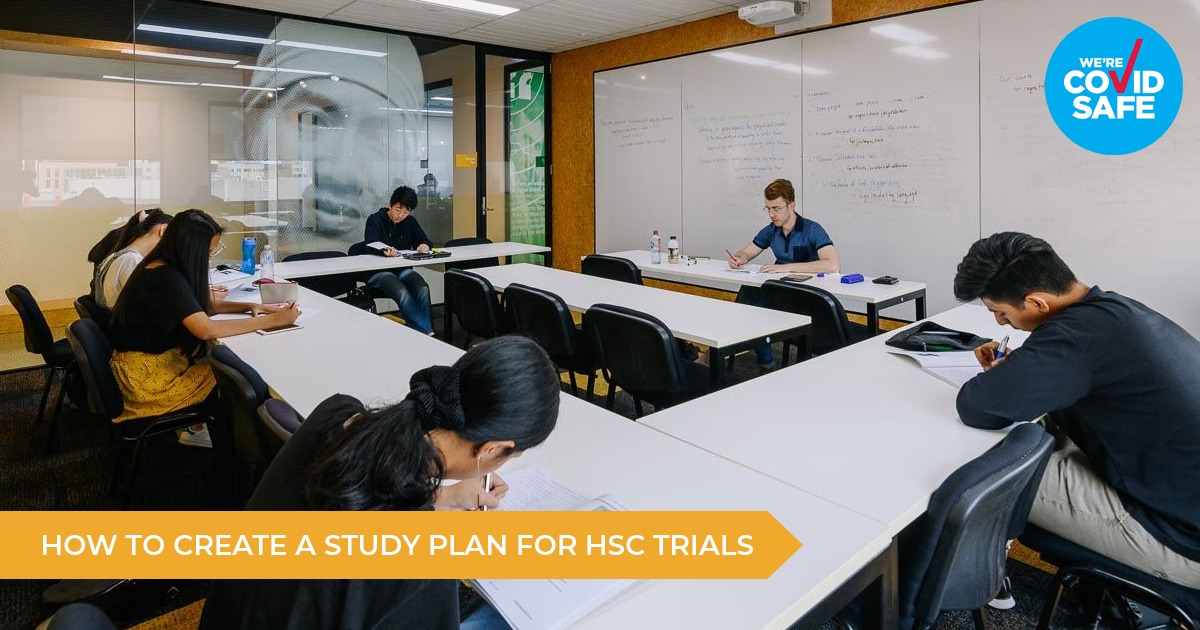
As trial exams approach, often students are uncertain about how to study and become quite anxious before their exams, however, preparation that starts early can prevent this stress.

Often students will wait until the holidays actually start before they begin any study, however, it’s important to properly plan out one’s study schedule for trials before the term breaks up, which includes exactly what needs to be covered in each subject, particular topics which may need more revision, and map these tasks out into a calendar to get a visual representation of how much time they have to study. By planning out each week as they go, students can remove the stress of deciding what to study each day and have more of a structure.

It may seem like a lot, but completing a decent amount of study each day beats cramming at the end of the holidays. Even a few hours of productive work each day will add up to a large amount of study by the end of the holidays, instead of trying to do massive 10 hour study days just once or twice a week.

It’s also important for students to maintain a study life balance, and actually incorporate some downtime into their schedules. Students who actually give themselves break can retain information better and perform more consistently by maintaining motivation and preventing burnout before exams even start.

Daisy Brenac

Roosters team list ratings and review 2026 round 15

1. Cody Ramsey 8/10- Decent but can’t make any post contact metres about of own half
2. Rex bassingwaithe- 7/10- Try on debut. Decent
3. Billy smith- 7/5/10- Good pcm but bad in defence and didn’t offer much in attack
4. Reece foley 6/10 Unlucky debut with an early HIA
5. Tommy Talau 5/10- Send him back to manly. Not good
6. Savala- 6/10- Got an early HIA as well.
7. DCE- 6/10- Played the whole game but was still awful and should have just retired
8. Nafahu Whyte- 9.5/10- Played all 80 and genuinely made 1 million runs. HIM
9. Connor watson- 8/10- Ended up having to play in the halves. Decent for the circumstances
10. Spencer Leniu- 6/10- Whole lot of nothing
11. Angus Crichton- 7/10- Meh better than normal
12. Siua Wong- 7.5/10- Yeah alright
13. Salesi foketi- 6.5/10- Didn’t get up to much
14. Beniah Ioelu- 6.5/10- Was alright coming back to cover HIAs
15. Taylor Losalu- ./10- Pretty sure he didn’t get any minutes because Whyte played all of them.
16. Nat Butcher- 5.5.10- Changed nothing but got played at least
17. Egan butcher- 4/10- Yeah got subbed on for like 15 and did nothing as normal

Charlie Currell

Importance of Homework

Post Image

Homework plays an important role in supporting student learning snd academic success. While learning begins in the classroom, homework provides students with the opportunity to continue developing their knowledge and skills independently at home.

One of the key benefits of homework is that it reinforces concepts taught during lessons. When students practice skills such as reading, spelling, mathematics or writing outside of school hours, they strengthen their understanding and improve their ability to recall information. Regular practice helps students build confidence and become more successful learners.

Homework also encourages the development of valuable life skills. By completing tasks independently, students learn responsibility, organisation and time management. These skills are essential not only for success at school but also for future education and employment. Learning too plan, prioritise and meet deadlines helps students become more self-directed and accountable for their learning.

Another importance advantage of homework is that it creates opportunities for families to engage in their child’s education. Parents and caregivers can gain insight into what their children are learning and provide encouragement and support. Research has shown that when families take active interest in learning, students are often more motivated and achieve better education.

Additionally, homework allows teachers to assess students’ understanding of concepts taught in class. It can highlight areas where students may need additional support or extension, enabling teachers to tailor future learning experiences to meet individual needs.

It is important that homework is purposeful, manageable and appropriate for student’ age and ability levels. Quality homework should reinforce learning without causing unnecessary stress or taking away from important family, recreational and wellbeing activities.

When used effectively, homework is a valuable tool that strengthens learning, builds essential skills and fosters positive connections between home and school. By encouraging consistent homework habits, we can help students develop the confidence and independence needed to succeed both inside and outside the classroom.

Maria Christou

The Best Way to Study For English Exams

Post Image

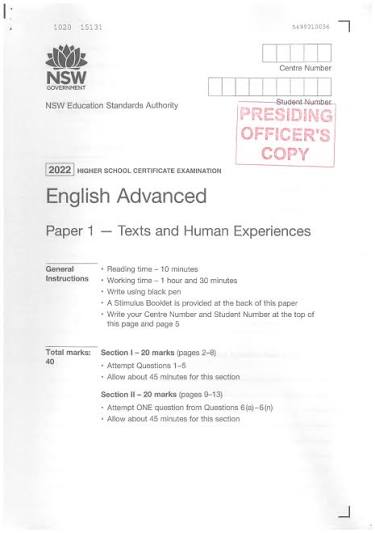
It may seem overwhelming at first to begin studying for your first senior English exams – too many words to remember and too many words to write in too little time! However, there is a very simple and very effective way to study for these exams!

Begin by writing an “alpha” essay. Usually before exams, your teacher will give you an essay question with which to practice. Make sure that you write a practice essay to this question and submit it for marking. Once you have fixed up and polished your essay, use flashcards to separate your essay into manageable pieces:
One flash card per quote + techniques + analysis
One flash card for the introduction
One flash card for the conclusion

Once you have gone through and memorised the key parts of your essay, start going through other practice questions online. Instead of diving right in and writing complete essay drafts in 40 minutes, I would recommend setting a five minute timer per practice question and writing out a plan. For example, on a piece of paper I would write out a sample thesis statement which answers the question, and then practice adapting my quotes and analysis to back up my new thesis statement.

Once I have become comfortable with adapting my skeleton essay to foreign questions, I start writing out full length practice essays under timed conditions. It is really important to write these out in exam conditions to emulate the stress of the exam. It may also be beneficial to form a study group and all practice writing the same essay under the same conditions together.

The most crucial part of this process is to only read over your essay a day later, not right after the exam. This way, your brain will have cooled off from the stress of the practice exam and you will be able to read your essay like a marker and find the key strengths and flaws of your arguments.

Using this very simple method, each English exam will be a breeze! Good luck on your exams 🙂

Shahaf Liraz

Maths, Logic and Cognition

Post Image

When we think of maths as a subject in school, we associate it with repetitive homework questions, thick textbooks, seemingly useless topics and often the most boring class of the day. However, this attitude is elementary. Maths is actually one of the most dignified and important subjects in school, and without a doubt the most universal and timeless subject.

Maths is one of the only subjects which is truly objective and abstract. What does this mean? It means that if a human found themselves in the middle of the wilderness, they could still (in theory) work out every mathematical principle that we have found. Even further, if the entire universe was destroyed, mathematics would remain just as true and relevant. There isn’t a possible reality where maths doesn’t exist. Try and imagine a scenario where 2+2 does not equal 4. It must be true, no matter the context. We call this a transcendent truth, hence maths is transcendent; it does not rely on people, places or subjectivity.

Did you know that maths is directly linked to philosophy because of this? The ancient Greek polymaths like Pythagoras, Euclid and Archimedes were all classified as philosophers. They were great pioneers of mathematics but they also explored questions of human society, politics, morality and truth. The ‘father of modern philosophy’ Rene Descartes was also a prolific mathematician. Any mathematical principle known as ‘Cartesian’, such as the Cartesian Plane was discovered by him. These people were philosophers because they were already maths geniuses. They could reason objectively about reality – about what we can actually, certainly know.

No other subject can compete with maths on this level. It is by far the most enduring area of knowledge. The advantages of maths in this respect become extremely important. It builds abstract thinking and advanced problem solving. It allows people to tie things together and find hidden answers. It reveals the underpinning principles of reality; the axioms that make up everything that exists. Students who excel in maths usually have heightened analytical skills and problem solving across a broad range of areas.

Raphael Dokos

Diary Entry Task

Post Image

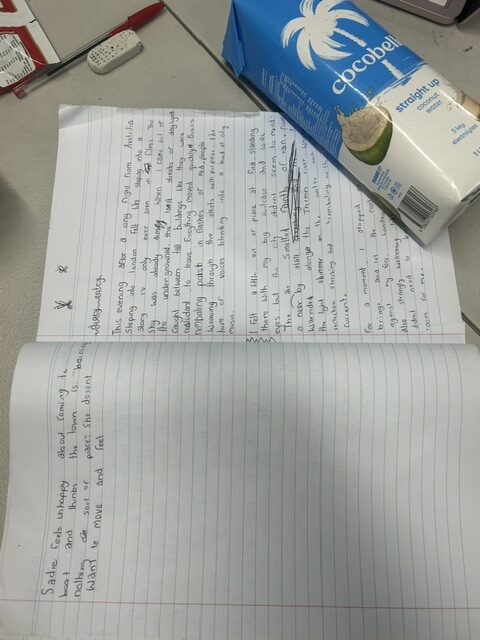
Daisy arrived to the session settled and ready, taking out her English book without prompting. The task set was a personal diary entry recounting the events of her day, with a focus on using descriptive language and the first person. She read the prompt twice and asked one clarifying question whether the entry needed to be “true or made up” which suggested she was thinking carefully about purpose and audience before beginning.

Once Sam confirmed she could choose, Daisy opted to write about her real day. She spent the first few minutes planning quietly, jotting a short list of moments she wanted to include: a maths test, lunch with friends, and a netball trial after school. This planning stage showed developing organisational skills, though she initially listed events without considering which were most interesting to a reader. As she wrote, Daisy showed good control of the diary form. She opened with “Dear Diary,” dated the entry, and maintained a consistent first person voice throughout. Her writing was strongest when describing feelings rather than facts; her line about being “so nervous my hands went cold” before the netball trial demonstrated an emerging ability to use sensory detail and show rather than tell. When Sam praised this, Daisy returned to an earlier sentence and added similar detail independently, indicating she could apply feedback within the task.

Areas for development became clear in her use of punctuation. Several sentences ran together with commas where full stops were needed, and she occasionally lost tense consistency, slipping from past to present. When Sam pointed to one example, Daisy corrected it confidently, suggesting the issue is one of proofreading habit rather than understanding. Throughout the session Daisy stayed focused, responded positively to questioning, and showed willingness to revise her work. Her engagement was high, and she expressed genuine pride when rereading her finished entry aloud.

Charlie Walker

Observation

Post Image

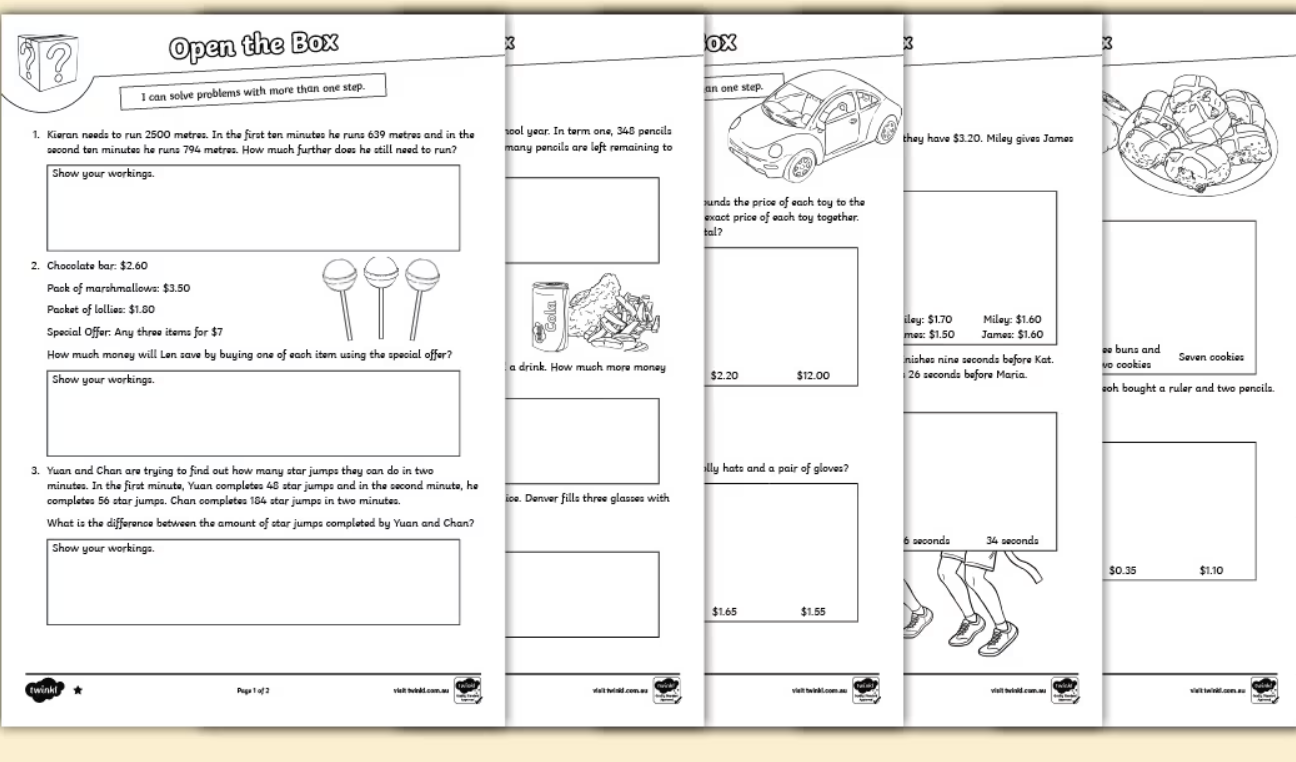
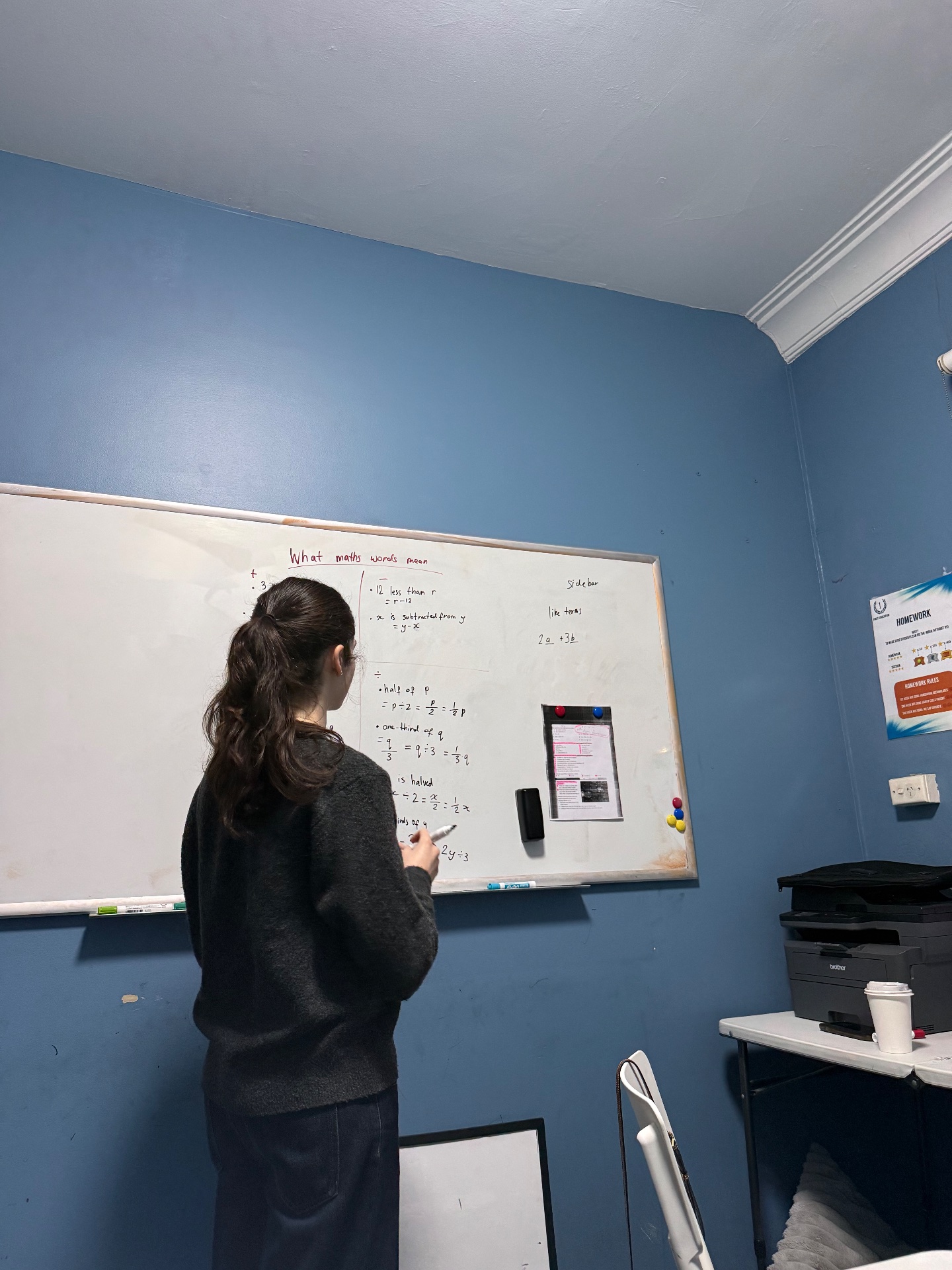
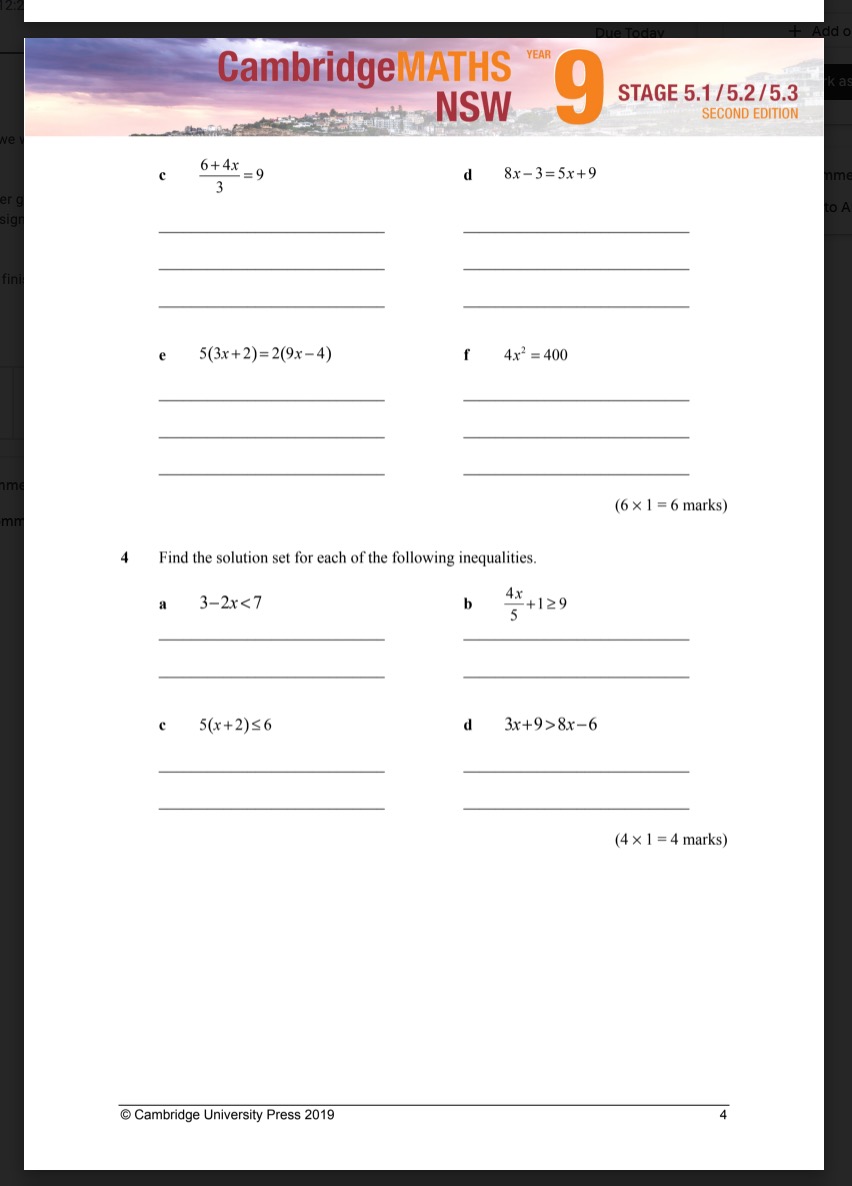
During this lesson, Pamela worked with her Year 6 Mathematics student on algebraic techniques. The lesson focused on introducing and reinforcing foundational algebra skills, helping the student build confidence in working with variables, number patterns and simple algebraic expressions.

Throughout the session, Pamela guided the student through a range of algebra questions, ensuring they understood the reasoning behind each step rather than simply finding the answer. She encouraged the student to identify patterns, recognise relationships between numbers and apply logical thinking when solving problems. Pamela broke down concepts into manageable steps and used clear explanations to support the student’s understanding. She regularly checked for understanding and encouraged the student to explain their thinking, helping to reinforce key concepts and build confidence.

The student remained engaged throughout the lesson and showed a positive attitude towards tackling new challenges. With encouragement and support, they became more confident when approaching algebra questions and applying the strategies discussed during the lesson. Overall, the lesson provided a valuable opportunity for the student to further develop their algebra skills in a supportive environment. Pamela’s clear explanations, patience and positive reinforcement helped the student make progress and feel more confident when working with algebraic concepts.

Isabella Naumovski