

First Education

Why Consistency Beats Motivation in High School

Post Image

One of the biggest misconceptions students have is that success comes from feeling motivated. It sounds logical. If you feel driven, you work harder and get better results. The problem is that motivation is unreliable. Some days you have it, most days you do not. This is why consistency matters far more.

Consistency is about showing up even when you do not feel like it. It is doing a small amount of work every day instead of relying on bursts of last minute effort. For example, studying maths for 20 minutes daily will almost always outperform cramming for three hours the night before a test. The brain retains information better when it is revisited regularly, and stress levels stay lower.

Another advantage of consistency is that it builds discipline. Discipline is a skill, just like solving equations or writing essays. The more you practice sticking to a routine, the easier it becomes. Over time, tasks that once felt difficult start to feel automatic. This reduces procrastination because you are no longer relying on how you feel in the moment.

Consistency also helps identify weaknesses earlier. If you engage with your subjects regularly, you quickly notice what you do not understand. This gives you time to ask for help, revise properly, and improve before assessments. In contrast, cramming often hides gaps in understanding until it is too late.

This does not mean you need to study for hours every day. In fact, shorter and more focused sessions are usually more effective. The key is to make your effort regular and intentional. Even on busy days, doing a small amount keeps the habit alive.

In the long run, students who are consistent outperform those who rely on motivation alone. Motivation may get you started, but consistency is what actually gets you results.

Samin Hossain

The Importance of sleep

Post Image

Often when students have back to back exams and study, the first thing to be sacrificed is sleep. When preparing for exams, many students believe that sacrificing sleep in favour of extra study time will improve their results. While this may seem productive in the short term, research consistently shows that sleep is essential for effective learning, memory, and overall academic performance.

Sleep plays a critical role in memory consolidation, the process by which the brain strengthens and stores new information. After a day of studying, the brain uses sleep to organise and embed what has been learned, transferring it from short-term to long-term memory. Without adequate sleep, this process is disrupted, making it significantly harder to recall information during exams.

In addition to memory, sleep directly impacts concentration and cognitive function. A well-rested student is better able to focus, think critically, and solve problems under pressure. Whereas, sleep deprivation can lead to slower reaction times, reduced attention span, and increased likelihood of errors. This can be particularly detrimental in exam settings, where clarity and accuracy are needed.

Sleep also affects emotional regulation and stress levels. During exam periods, students often experience heightened anxiety, and lack of sleep can intensify these feelings. Getting enough rest helps maintain a balanced mood, allowing students to approach their studies and exams with a clearer, calmer mindset.

Therefore, establishing a consistent sleep routine, especially in the lead-up to exams can significantly enhance both learning efficiency and performance, so sleep shouldn’t be sacrificed when in exams but prioritised.

Jessica Ciappara

Observation

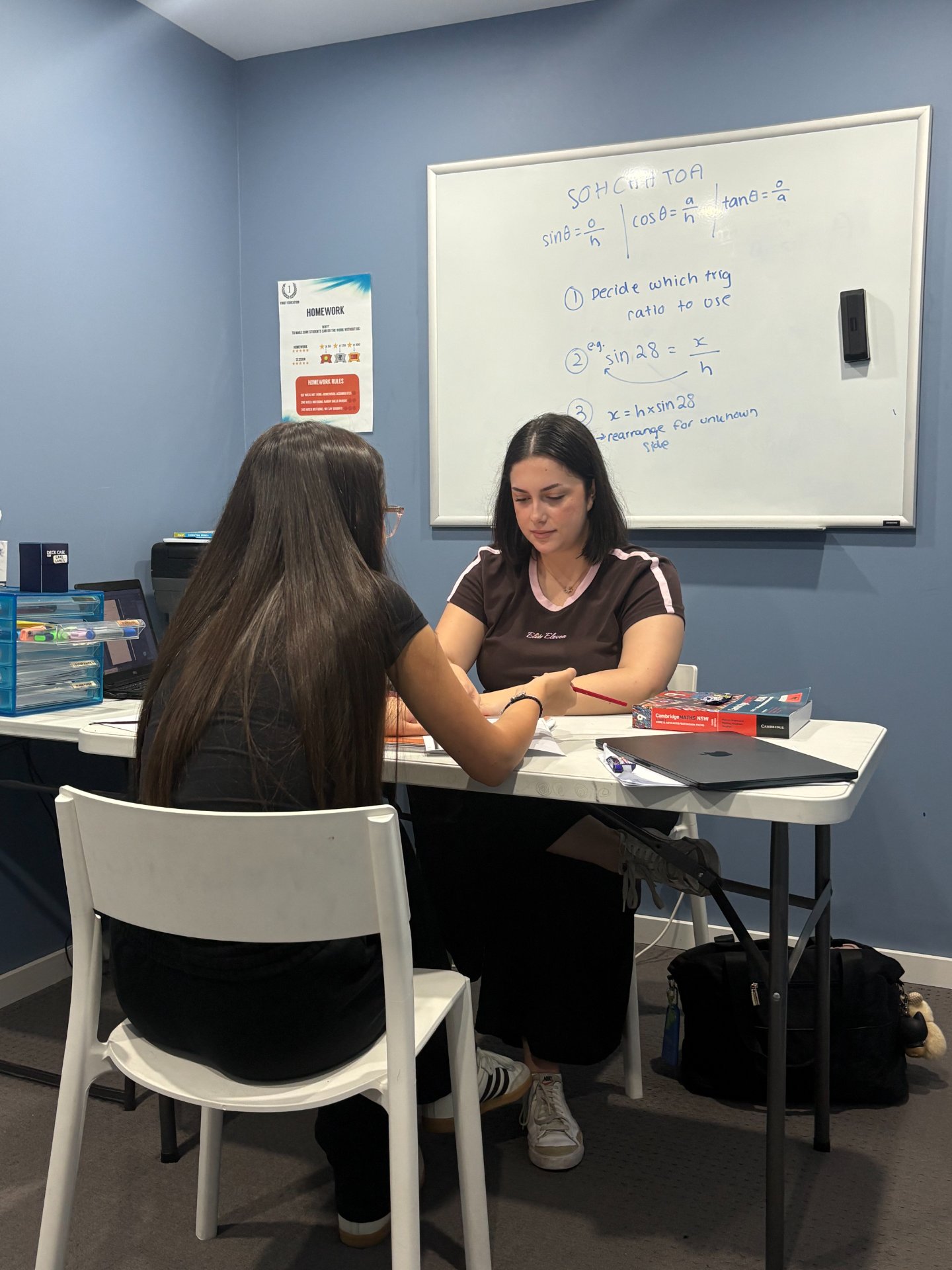
Observing Emilia teach distance, area, and perimeter was useful because it reinforced a few things I have picked up through tutoring, without really introducing anything forced or overly complicated. What I took from the lesson was how much of a difference it makes when a tutor stays clear and consistent with the way they explain each concept.
Watching the class reminded me that topics like distance, area, and perimeter seem simple at first, but can be easy for students to mix up if the explanation is not grounded well. Emilia kept the focus on what each idea actually meant, which helped the lesson stay clear and easy to follow. That stood out to me because it reflected how important it is to build understanding before expecting students to apply formulas confidently. I also noticed the value of giving the student space to think before stepping in. Emilia guided the lesson well, but she did not rush to fill every silence or correct every mistake immediately. Seeing that was a good reminder that students often learn more when they are given the chance to work through things themselves with support.
Overall, the lesson reaffirmed for me that effective tutoring usually comes back to the basics: clarity, patience, and knowing when to guide versus when to let the student think.

Nabil Harrar

Communication in Tutoring

Post Image

Clear communication is one of the most important skills a tutor can develop. No matter how strong a tutor’s knowledge is, if it is not communicated in a way the student understands, the learning will not be effective. Being able to explain ideas simply and clearly can make a significant difference in a student’s confidence and progress.

One key part of clear communication is adjusting language to suit the student. Younger students may need simpler wording and examples, while older students may benefit from more detailed explanations. Being aware of how a student responds and adapting accordingly helps ensure the message is being understood rather than just delivered.

Another important aspect is checking for understanding. It is easy to assume that a student understands something because they are nodding or following along. However, asking them to explain a concept back in their own words is a much more effective way to confirm their understanding. This also encourages active participation and helps students process the information more deeply.

Clarity also comes from structure. Breaking explanations into small steps and guiding the student through each part prevents them from feeling overwhelmed. When information is presented in a logical and organised way, it becomes much easier to follow and apply.

Non verbal communication also plays a role. Tone of voice, body language, and patience all contribute to how comfortable a student feels. A calm and supportive approach encourages students to ask questions and engage with the lesson.

Demetria Koutavas

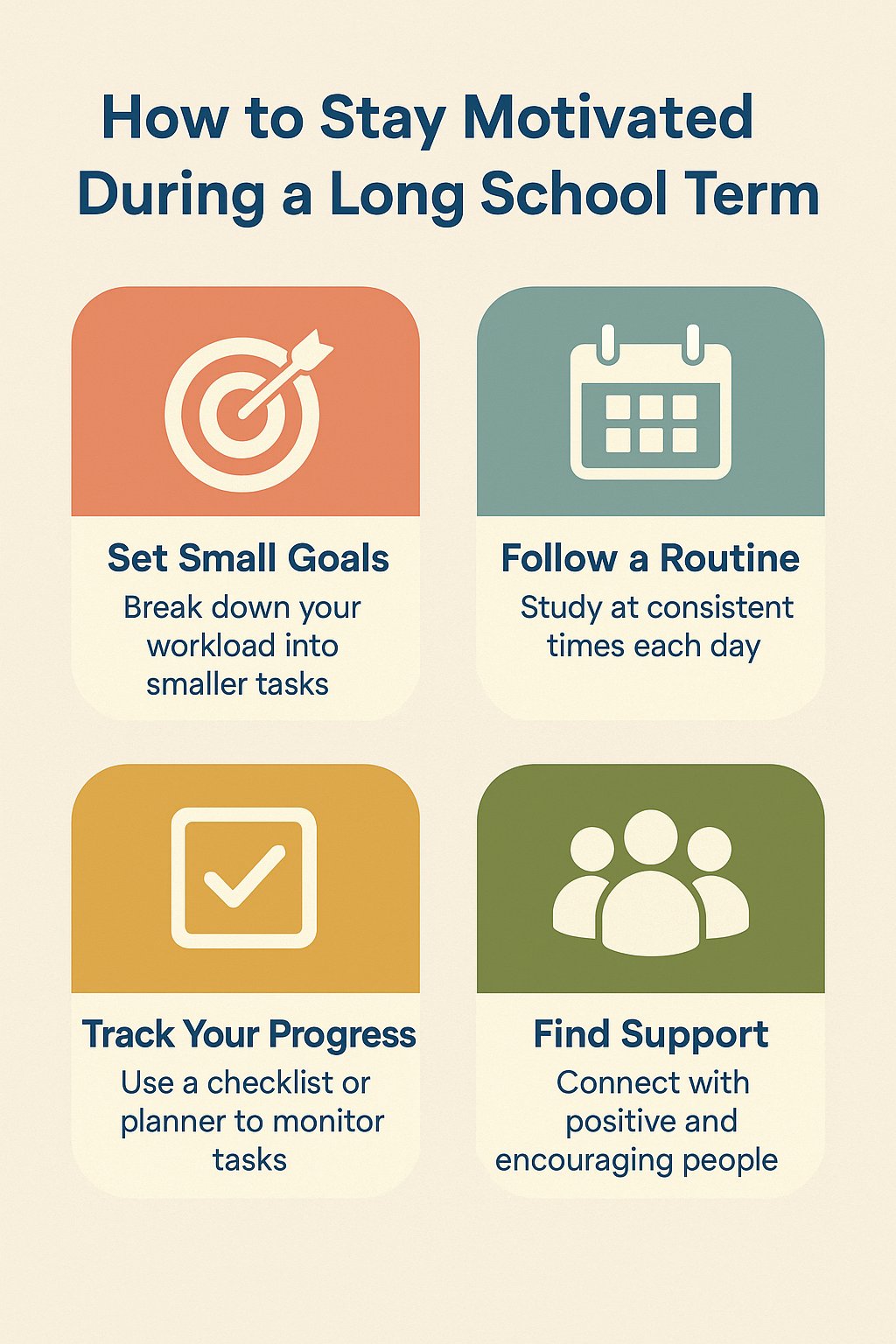
Student motivation

Post Image

The “end-of-term slump” is a mood you can practically taste. You see it in the kids dragging their bags across the playground and the teachers who are clearly counting down the minutes until the final bell. That collective burnout—that “malaise”—isn’t just a lack of motivation; it’s a signal that the brain’s tank is bone-dry.

While there’s always a bit of a push to “finish strong,” we need to stop looking at the holidays as just a gap in the calendar. For a child’s development, a break is as functional as a textbook.

The Myth of Constant Productivity
We often fall into the trap of thinking that if a child isn’t actively “learning,” they’re falling behind. In reality, the brain isn’t a bucket you just pour facts into; it’s a muscle that requires recovery to grow.

When kids are in the classroom, they are constantly using directed attention. This is mentally taxing. Without a total reset, that fatigue turns into irritability, a lack of focus, and eventually, a genuine resentment toward school. A holiday break allows the brain to switch into “Default Mode”—the state where it actually processes and wires in everything they’ve learned over the last ten weeks.

Why Downtime is Productive
Memory Consolidation: Sleep and unstructured play are when the brain moves information from short-term “storage” into long-term memory.

The Boredom Spark: When the rigid school schedule disappears, kids are forced to navigate their own time. This is where creativity, independent play, and problem-solving actually happen.

Emotional Regulation: School is a social marathon. Stepping away gives kids the space to decompress from the pressures of peer dynamics and performance.

Instead of seeing the next few weeks as “lost time,” think of it as the fallow period in farming. You can’t plant crops year-round without exhausting the soil. By letting the kids truly switch off, we aren’t just giving them a rest—we’re making sure they actually have the capacity to learn when they walk back through those doors next term.

Joseph Katz

Surviving in Year 11 Maths Standard

Post Image

Year 11 Maths Standard is often underestimated—but once you’re in it, you quickly realise it requires consistency, effort, and a solid understanding of the basics. It’s not about memorising complicated formulas like in advanced maths; instead, it focuses on applying mathematical thinking to real-life situations. That’s what makes it both practical and, at times, challenging.

One of the biggest adjustments in Year 11 is the pace. Topics move faster, and there’s an expectation that you already understand foundational skills from earlier years. If your basics—like algebra, percentages, or working with formulas—aren’t strong, things can start to pile up quickly. That’s why keeping up each week is so important. Falling behind in maths is much harder to recover from compared to other subjects.

Another key aspect of Maths Standard is its real-world focus. You’ll come across problems related to finance, measurement, data, and everyday scenarios. It’s less about abstract theory and more about solving problems you might actually face outside the classroom. While that sounds easier, it can sometimes be harder because the questions are word-based and require interpretation before you even start the maths.

What many students struggle with is not the calculations themselves, but understanding what the question is asking. Breaking down the question, identifying the key information, and choosing the right method are skills that develop over time with practice. Rushing straight into solving without thinking often leads to mistakes.

Consistency is the biggest factor in doing well. Maths isn’t something you can cram the night before an exam. Practising regularly—even just a few questions a day—makes a huge difference. It helps reinforce concepts, improve speed, and build confidence. Over time, you start recognising patterns in questions, which makes them easier to approach.

It’s also important to learn from mistakes. Getting a question wrong isn’t a bad thing—it’s actually one of the best ways to improve. Going back, understanding where you went wrong, and correcting it helps prevent the same mistake in the future.

At the end of the day, Year 11 Maths Standard is manageable if you stay on top of your work and put in consistent effort. It’s designed to build practical skills that you’ll carry into everyday life, whether it’s managing money, interpreting data, or solving problems logically. Like anything in maths, the more you practise, the more confident you become.

David Hanna

The importance of taking breaks

Post Image

Often students get so caught up in needing to cram in as much knowledge and learning as possible and obtain this misconception that they need to get everything done without taking breaks. This often comes with thinking that taking breaks makes you ‘lazy’ or it is unproductive but it’s quite the opposite. Taking regular, purposeful breaks while studying, ideally 5–60 minutes, is essential to boost focus, productivity, and energy levels, preventing cognitive fatigue. When students work continuously, their attention gradually declines, leading to reduced comprehension and increased mistakes. Breaks act as a mental reset, allowing the brain to process and consolidate information.

Breaks also play a role in long-term retention. When the brain is given time to pause, it strengthens neural connections, making it easier to recall information later. Without breaks, students may feel overwhelmed, leading to burnout and decreased engagement with their learning.

Productivity is not about constant effort, but about working smarter and more effectively. By balancing focused study with intentional rest, students can maintain concentration for longer periods, improve their understanding, and approach learning with greater reset and clarity. Ultimately, taking breaks is not a distraction from learning but it is an essential part of it.

Jessica Ciappara

Why patience with tutoring is important

Post Image

Not every student learns at the same pace, and thats something that you tend to pick up throughout your tutoring journey. Some students pick up topics quickly, others need explainations, practice, and revision to understand it at the same level, and thats ok.

What ive noticed is that impatience is damaging to the students progress. The moment a tutor rushes or shows even slight frustration and the student notices, it would deeply affect their abilitiy to stay postivie, focused and learn. The student could second guess themselves, get nervous, stop asking questions, heavily affecting their ability to progress within the session. However when a student feels comfortable, ready to learn and relaxed, they are way more able to get the most out of the lesson. It’s the tutors job to create this environment for them.

Being patient also forces you to be a better tutor. If the same explaination for a topic doesnt click with the student, changing your strategy becomes very important. You have to look for an analogy, break it up into smaller stops, connect or compare it to a similar topic/situation, you have to figure out a way to help them understand. This ability to adapt to your student cant really be taught, its something you pick up as a tutor when you are actively making sure that you are educating your student to the best of your ability.

Theres also something in it fo rthe studnet beyond just understanding the material. WHen they see that you are genuinely willing to work with them through their struggles and not give up, they push harder, they gain motivation as opposed to simply giving up. That persistance is more valuable as a long term still applying to anything they want to learn in the future.

Patience in tutoring isnt a passive method of teaching, its an active choice to meet someones needs. To slow down when it matters, adapt when something isnt working, and stay present even when the progress is slow.

Lishai Rubinstein

Staying Engaged Over the Holidays

Post Image

As school holidays approach, it is questioned whether learning should continue during the holidays. It may be unrealistic to expect students to maintain the same level of productivity, however, completely disengaging from learning can make returning back to school a difficult process.

Students often benefit more from small, but rewarding, tasks, rather than intensive study sessions. The absence of routine during the holidays can reduce motivation, making study ineffective and difficult to maintain. However, this does not mean that engaging with learning should stop entirely.

Engagement with learning can take various forms. Reading for enjoyment, practising writing skills in informal ways, researching concepts that you find of interest, or even engaging in conversations that encourage critical thinking can support learning. These activities done over the holidays can feel like ‘small wins’ as learning is still completed.

Ultimately, the goal during the holidays should be to maintain a connection to learning in a way that feels manageable and sustainable for students. As tutors, encouraging this balance can help students return to their studies feeling more confident, capable, and ready to re-engage when the school term begins.

Tamiah Mahoney

Notetaking in Economics.

Post Image

When it comes to economics, while note-taking is similar to many other social science subjects, it has his nuances, which when done correctly not only help preserve knowledge, but also deepen your understanding and connection across topics.

Including Graphs & Formulas

Firstly, one of the most important parts of note-taking in economics compared to other social sciences is the need and inclusion of graphs and formulas which are relevant to the topics you’re writing about. Economics is not just theory written in paragraphs, it’s also shown mathematically and visually. By keeping these graphs and formulas, large and embedded, in your notes, you strengthen that intuitive connection between them and the theory.

Imbedding Relevant Statistics & Examples

It is also useful to embed the same stats and trends you’re going to be using in questions and essays into the topics you’re taking notes for. Economics, especially HSC Economics constantly require real-world examples and data to strengthen your answers. When you include them in your notes, not only do you cement them into your memory, you directly link them to the situations they are used in.

Using Essay Writing and Terminology

Finally, write your notes using the same language and keywords you would use in short-answer responses and essays. Terms such as opportunity cost, aggregate demand, inflationary pressure, precautionary savings, should become part of your normal vocabulary. If your notes already sound like strong economics writing, revision becomes far more effective.

Felix Panizza