
First Education

Observation

Post Image

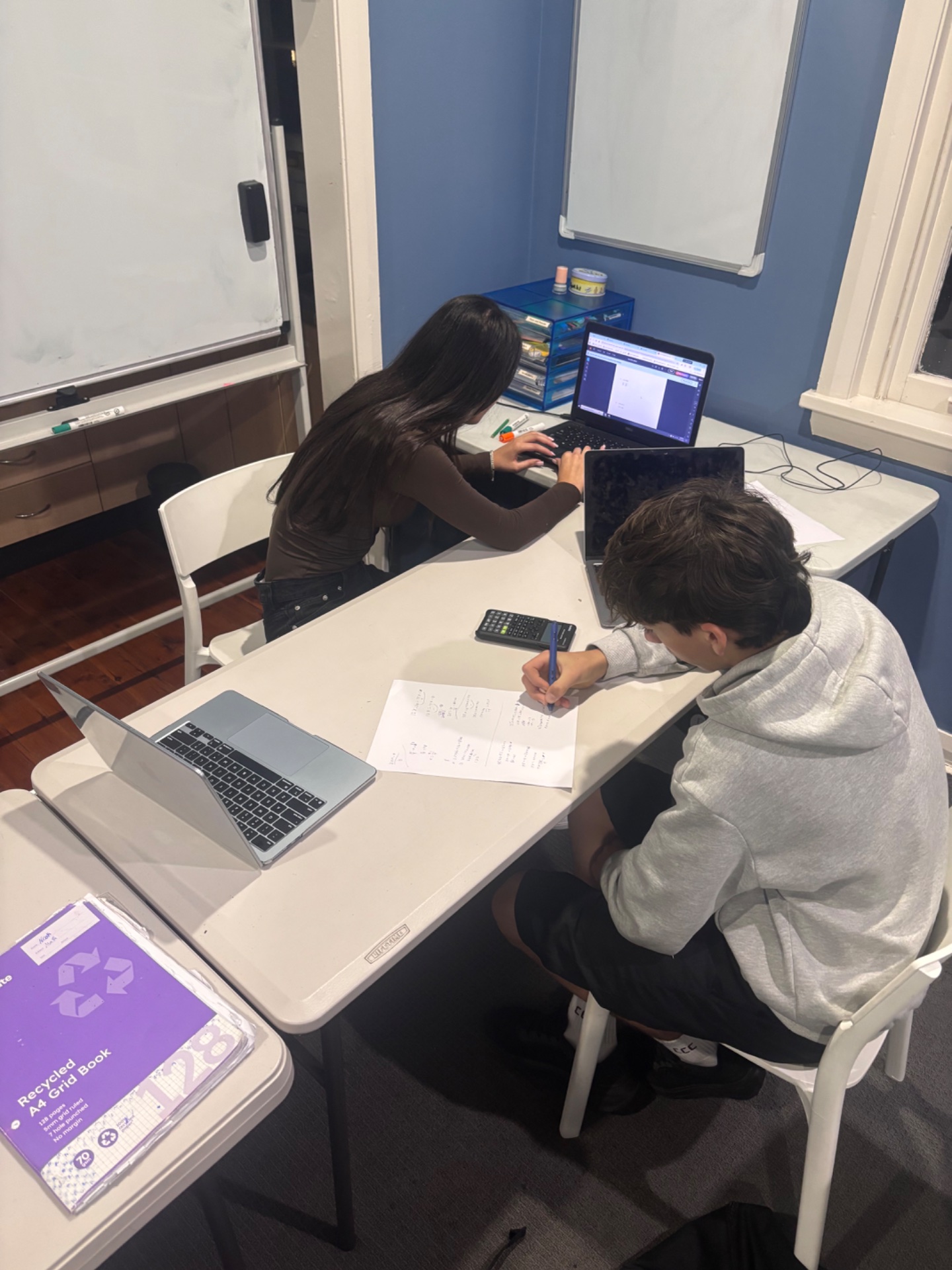
Today, I had the great opportunity to observe Annabelle act as a cover tutor and teach year 8 maths.

During my observation, I watched Annabelle tutor a Year 8 maths student who was working on indices, algebraic expressions and solving equations. They appeared to be preparing for an upcoming assessment task so there was much importance on understanding certain concepts. As a newer tutor, she presented herself very professionally and created a welcoming environment for the student from the beginning of the lesson. I noticed that she was friendly and approachable, which seemed to help the student feel comfortable asking questions whenever they became unsure.

One thing that stood out to me was Annabelle’s ability to explain concepts clearly without overcomplicating them. When teaching indices, she broke down each rule step by step and regularly checked the student’s understanding before moving on. Rather than simply giving answers, she encouraged the student to attempt each question independently first and then guided them through any mistakes. This appeared to build the student’s confidence throughout the lesson.

I also observed how patient she was when the student struggled with algebraic equations. Instead of rushing through explanations, she used multiple examples and related the concepts back to previous questions so the student could identify patterns. Her communication skills were strong, and she maintained a calm and encouraging tone during the entire session.

Another positive aspect of the lesson was her organisation. She transitioned smoothly between topics and ensured the student stayed focused and engaged. I noticed that she balanced support with independence well, allowing the student enough time to think critically before stepping in to help.

Overall, the observation was valuable because it highlighted the importance of patience, clear communication and adaptability when tutoring students in mathematics.

Overall, this was a great lesson to observe and i commend Annabelle for her welcoming and approachable nature. Well done.

James Petrakis
Time Management Challenges

Post Image

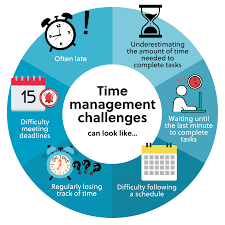
Time management is an important skill all students need to develop. Students from a young age should learn this skill. Time management is the ability to plan how much time is spent on different activities so the entire task can be completed within a set time frame. Students need to learn how they can balance their time so they can maximise the marks they receive. They will learn that if they spend too much time completing one task, it will have a flow on effect and will also impact their ability to complete other tasks. They will learn how the mark allocation will help them determine how much time they spend on each question or task. Time management is crucial for all students to learn from a young age. In primary school, students get introduced to this idea when they have to complete a school task in a set amount of time. Students learn not to spend too long on a question they are stuck on as they may not finish the test. Students learn to keep an eye on the clock so they can effectively manage their time. They are also taught to leave enough time at the end of a test to check over the work. This allows them to make sure they’ve completed each question and it gives them a chance to fix any spelling or grammar mistakes. Throughout primary school students can practice their time management skills completing class activities. They can also practice these skills under exam conditions when they take NAPLAN, ICAS, OC and selective school tests. Students in high school also practice these skills when they complete exams and tests.

For students, effective time management is an essential skill as it helps them balance their homework, study, personal life and extracurricular activities. When students manage their time well, they are able to complete assignments and homework on time, prepare for exams, attend co curricular activities and still have time social activities.

Overall, time management is a crucial skill all students need to learn and apply.

Ashley Cohen

Choosing Year 11 & 12 Subjects Wisely

Post Image

Choosing your subjects before going into Year 11 is one of the most critical decisions a student faces in their school life. Students often feel significant pressure to “get it right”, which is why I’ve put together a couple of tips from my experience.

Pick the subjects you love
This is undoubtedly one of the best pieces of advice I found when it came to picking subjects. Since you have to study these subjects (most of them) for the full two years, it is essential that you are picking subjects that you enjoy and would be happy to study for the full two years. This means enjoying the classes, the content you cover, as well as being willing to sit down and study for several hours.

A thing to ignore to a certain degree here is scaling; while it does play a role in your marks, you want to be choosing your subjects primarily based on what you enjoy and are good. You don’t want to find yourself in a situation where you pick a subject that is “high scaling”, and you eventually find yourself out of your depth because it is a lot more difficult than you expected.

Start with your goals
An important consideration when selecting your subjects is to ensure that they align with your goals beyond school, whether that may be based on what you want to study at university or potential career paths. It is key to consider what subjects will provide you with the necessary skills while also helping you get into a specific degree, which then assists in entering the industry you wish to work in. Prerequisites may be a critical roadblock in helping you get into your dream degree, so it is essential to ensure you meet these.

Overall, there is no perfect formula when picking Year 11/12 subjects, but these two tips served me well and ultimately led to a set of subjects I thoroughly enjoyed and felt I could thrive in during Year 12.

Hayden McCarthy

Needing to reflect as a tutor

Post Image

Tutoring is more than simply explaining concepts or helping students complete homework. It is a continuous journey of growth, learning, and self-improvement. One of the most valuable ways tutors can develop their skills is by learning from other tutors. Every tutor has unique teaching methods, experiences, and perspectives that can inspire others and improve the overall learning experience for students.

When tutors share ideas with one another, they gain new strategies for explaining difficult topics. For example, one tutor may use visual examples to teach mathematics, while another may focus on storytelling or real-life applications. By observing and discussing these techniques, tutors can discover approaches they may not have considered before. This not only strengthens their teaching abilities but also helps them adapt to different learning styles among students. Learning from other tutors also builds confidence and professionalism. New tutors, especially, can benefit from the advice and encouragement of experienced educators. Watching how skilled tutors communicate with students, manage challenges, and maintain patience can provide valuable lessons that cannot always be learned from textbooks or training sessions. Through collaboration, tutors become more prepared to handle a variety of academic and personal situations. Another important aspect of growth is feedback. Tutors who are open to constructive criticism from their peers are more likely to improve over time. Feedback allows tutors to reflect on their strengths and identify areas where they can grow. Instead of viewing criticism negatively, successful tutors use it as an opportunity to develop and become more effective educators.

Collaboration among tutors also creates a supportive community. Tutoring can sometimes feel isolating, especially when working independently. Connecting with other tutors encourages teamwork, motivation, and the sharing of resources. This sense of community helps tutors stay inspired and passionate about helping students succeed. In conclusion, growth as a tutor comes not only from teaching students but also from learning from fellow tutors. By sharing ideas, accepting feedback, and supporting one another, tutors can continuously improve their skills and become better educators.

William Kelleher

Between Minds

Post Image

Education is often imagined as a straight road: lesson, homework, test, result. But tutoring reveals something far stranger. Learning is less like building a wall and more like exploring a maze where every student carries a different map.

One student may solve algebra perfectly but freeze when asked to explain their thinking. Another may write creative stories yet believe they are “bad at English” because of one poor grade years ago. Tutoring exposes the hidden psychology behind education: knowledge is emotional as much as intellectual.

An interesting paradox exists in modern education. Schools measure answers, but tutors often teach confidence. The greatest breakthroughs rarely happen when a student suddenly understands content. They happen when a student realises they are capable of understanding. That shift changes everything.

Tutoring also reveals how differently humans experience time. In classrooms, learning moves collectively. In tutoring, time stretches and contracts. A concept explained in thirty seconds can unlock months of confusion, while a simple question like “Why do we do it this way?” can spark a twenty-minute philosophical discussion. Education becomes less mechanical and more human.

There is also an abstract beauty in watching knowledge transfer between people. A tutor is not simply delivering information like a machine. They are translating ideas into the language of another mind. Sometimes that language is humour, diagrams, stories, or even silence. Good teaching is adaptation.

Perhaps this is why tutoring feels so personal. It sits at the intersection of psychology, communication, patience, and trust. Beneath every worksheet is a student trying to make sense not only of equations or essays, but of themselves.

In that way, education is not really about producing perfect students. It is about slowly teaching people that confusion is temporary, curiosity is valuable, and growth is possible.

Nicholas Michailou

Why Tutoring Should Complement School Learning

Post Image

A great private tutor does more than simply help a student finish homework. The best tutoring complements what is happening at school and gives students the confidence to walk into class feeling prepared, supported, and capable.

One of the most effective ways to do this is by reviewing the topics covered at school each week. Many students leave class with small gaps in understanding that can quickly build up over time. A tutor can slow things down, explain concepts in a different way, and give students the opportunity to ask questions they may not feel comfortable asking in a classroom setting. This reinforcement helps turn confusion into clarity before problems grow larger.

Tutoring can also be used to preview upcoming topics. Spending even a short amount of time introducing a new concept before it appears in class can make a huge difference to a student’s confidence. Instead of seeing completely unfamiliar content for the first time at school, students already have a basic understanding and feel more ready to participate in lessons.

Another important strategy is aligning tutoring sessions with school assessments and learning goals. Rather than teaching unrelated material, tutors should use class notes, worksheets, and teacher feedback to target exactly what the student is working on. This creates consistency between school and tutoring, helping students feel supported rather than overwhelmed.

Most importantly, tutoring should build independence. The goal is not for students to rely on a tutor forever, but to develop the confidence and study habits needed to succeed on their own. When tutoring complements school learning in a structured and supportive way, students often become more motivated, engaged, and self-assured both inside and outside the classroom.

Mateus Heslin

Legal

Post Image

Legal Studies is a subject that goes far beyond memorising cases and legislation it’s about understanding how the law shapes society and how to think critically about justice, rights, and responsibilities. However, many students struggle with the volume of content, complex terminology, and exam-style writing required. This is where tutoring can have a powerful impact.
A good Legal Studies tutor helps to break down difficult concepts into clear, manageable ideas. Topics such as the structure of the court system, principles of criminal law, or the role of precedent can feel overwhelming in a classroom setting. One-on-one tutoring allows these ideas to be explained step-by-step, ensuring students truly understand rather than just memorise.
Tutoring also builds essential skills that are crucial for success in assessments. Legal Studies exams often require students to analyse scenarios, apply legal principles, and construct well-structured arguments. A tutor can guide students in how to write high-quality responses, use legal terminology effectively, and interpret questions correctly. This targeted practice can significantly boost confidence and performance.

Another key benefit is personalised support. Every student learns differently some may need help with essay writing, while others struggle with case studies or exam timing. Tutoring sessions can be tailored to focus on individual weaknesses, helping students improve more efficiently than in a general classroom environment. Importantly, tutoring encourages deeper engagement with real-world issues. Legal Studies is not just theoretical; it relates to current events, social justice debates, and everyday life. A tutor can connect course content to contemporary examples, making learning more interesting and relevant. Ultimately, tutoring in Legal Studies is about more than improving grades. It equips students with critical thinking skills, clarity in communication, and a stronger understanding of the legal system tools that are valuable well beyond the classroom. Legal studies is a skill that can help for many things in the future.

Hugo Nihill

What a Good Tutor Actually Does

Post Image

There is a common misconception that tutoring is simply teaching, but slower. That the tutor’s job is to deliver the same information as the classroom teacher, only with fewer students and more patience. This misunderstands the role entirely.

A good tutor is not a slower teacher. A good tutor is a diagnostician. Before explaining anything, the effective tutor must first understand where the student’s comprehension has broken down. Is the student struggling with fractions because they never solidified their understanding of multiplication? Is the essay weak because the student cannot construct a thesis, or because they have never learned to organise an argument? The surface problem is rarely the root problem.

This diagnostic work requires the tutor to listen more than they speak, at least in the early sessions. Ask the student to work through a problem out loud. Watch where they hesitate. Note which errors recur. A pattern of mistakes is far more informative than a single wrong answer, because the pattern points back to the underlying gap in understanding.

Once the gap is identified, the tutor’s approach must be tailored to the individual. Some students are visual learners who respond to diagrams and colour-coded notes. Others prefer to hear concepts explained in plain language, stripped of jargon. Still others learn best by doing, working through example after example until the method feels instinctive.

Crucially, a good tutor also attends to confidence. Many students who seek tutoring have already decided, on some level, that they are simply not a maths person, or not a good writer. This belief is often the biggest obstacle to progress. The tutor who can gently dismantle that self-limiting story, through small, carefully sequenced wins, does more lasting good than any number of worksheets.

Misha Fry

Mod C Struggles

Post Image

The tutor starts by asking the student what they actually care about. No preamble, no context-setting — just a direct question. From there she runs a brainstorm, not a polished one, but a messy back and forth where she is visibly filtering through what the student offers, looking for something usable. She is working out what the student has to write with before they have worked it out themselves. She tests a few directions. Some get dropped quickly. When something has potential she stops and presses on it — asking the student to say more, to go further back, to be more specific. She is looking for the story underneath the story, the detail that carries genuine feeling rather than the one the student thinks they are supposed to write about.
Tips come in as she goes. She explains how to ground a scene in the senses, how to let a moment breathe rather than over-explain it, how to trust that a specific detail does more work than a general statement. She is not running through a checklist. She raises each point because something the student has said has made it relevant right now. The vignette work is hands on. The tutor suggests a setting, the student responds, and together they figure out what version of it is worth building. She is showing the student how to construct a scene from the inside out — starting with one concrete image and expanding from there. The discussion throughout is direct. The tutor says plainly what is working and what is not. The student pushes back occasionally and the tutor either adjusts or holds her ground and explains why. It is a functional working relationship rather than a performance of encouragement.

Joseph Katz

Observation

Post Image

Watching Maya work through an Ancient History essay with her student was a good reminder that strong tutoring is often more about clarity and direction than simply knowing lots of information. The session focused on structuring an essay about Mount Vesuvius, but most of the lesson was really about helping the student think more carefully about how to present an argument.

What stood out first was how clearly Maya understood the difference between useful information and unnecessary information. The student initially seemed tempted to include everything they knew, especially around topics like trade and agriculture, but Maya kept bringing the discussion back to the actual focus of the essay: religion and culture. She explained that essays become much stronger when they stay tightly connected to the question. Rather than just saying “leave that out”, she carefully explained why certain points mattered more than others and how HSC markers are usually looking for relevance and judgement rather than quantity.

Her patience also shaped the entire session. Whenever the student asked a question, Maya slowed down and gave detailed explanations instead of rushing to move on. She often repeated ideas in slightly different ways until the student fully understood them. The session never felt tense or overly formal, which made the student much more willing to ask questions and test ideas out loud.

Another thing Maya did well was explain how evidence should actually function inside an essay. She was not treating quotes or historical examples as things to memorise and drop in randomly. Instead, she consistently linked evidence back to the argument being made, explaining that every example should help prove something to the marker. As someone who studies maths rather than history, this was probably the most interesting part to watch because it made essay writing seem much more logical and structured than I had expected.

Overall, Maya came across as both knowledgeable and approachable. She clearly knew the content well, but more importantly, she knew how to guide a student through the thinking process behind a strong response rather than simply giving them answers.

Freddie Le Vay