

First Education

Why starting tutoring early makes all the difference

Post Image

A lot of people think tutoring is something you only turn to when things start going wrong. But starting tutoring early, even when a student is doing fine, can actually make a huge difference later on.

When you start early, it’s not about catching up, it’s about staying ahead. Students get the chance to properly understand topics as they learn them instead of rushing through and hoping it sticks. This builds a really strong foundation, especially in subjects like maths and English where everything builds on previous knowledge.
It also helps students develop good study habits from the beginning. Things like staying organised, revising regularly and knowing how to approach homework don’t always come naturally. Learning these skills early means students don’t feel overwhelmed when school starts getting more serious in later years.

Another big benefit is confidence. When students understand what’s going on in class, they’re more likely to participate, ask questions and actually enjoy learning. That confidence carries through into exams and assessments, which can make a big difference in results.

Starting early also takes the pressure off. Instead of trying to fix problems quickly before exams, students are consistently supported the whole way through. It turns tutoring into something positive and routine, rather than something stressful.
For parents, it also means fewer surprises. You’re not waiting until report cards show a problem. You’re staying on top of things the entire time.

At the end of the day, tutoring isn’t just a backup plan. When started early, it becomes a tool that builds strong habits, confidence and long term success. It’s a simple step that can make school feel a lot more manageable from the start.

Eireyna Papinyan

Top 5 study habits for acing higher HSC Mathematics

Post Image

1. Practice maths daily
Maintain a daily streak of maths. The amount of time spent should match your level:
– Mathematics Advanced (2U): 30–45 minutes daily outside class (45–60 minutes for stronger results).
– Mathematics Extension 1 (3U): 45–60 minutes daily (60–75 minutes for high marks).
– Mathematics Extension 2 (4U): 60–90 minutes daily (90+ minutes during exams or for top performance).
Short, consistent daily sessions are more effective than infrequent long study blocks.
2. Repeat questions
Repeat questions regularly to strengthen methods and reduce exam mistakes. Reworking problems after a delay improves recall and accuracy.
Maintain a book of errors (or digital log):
– Record every question you get wrong or lose marks on
– Write the correct solution step-by-step
– Note the reason for the mistake (e.g. misread question, wrong formula, algebra error, timing)
– Re-attempt the question later without notes
– Repeat until confident with the question type
This builds a targeted system that focuses on actual weaknesses rather than general revision.

3. Understand where you are losing marks
Use test feedback and your error log to identify patterns in mistakes.
Common categories include:
– Algebra or arithmetic slips
– Misinterpretation of questions
– Incorrect formula selection
– Incomplete working (lost method marks)
– Time pressure or rushing
– Topic gaps (e.g. trig, calculus, probability)
Tracking these allows revision to focus on the most frequent causes of mark loss.

4. Simulate exam conditions
Regularly practise under exam-like conditions to build performance under pressure:
– Timed past papers or sections
– No notes or formula sheets (unless allowed)
– Quiet, uninterrupted environment
– Strict marking afterwards
This improves speed, accuracy, and decision-making.

5. Use questions with written solutions
Worked solutions improve both understanding and efficiency when used actively:
– Predict the method before checking
– Check quickly if your approach is correct
– Complete the question if on track
– Study full solution only if stuck
– Record and reattempt later without notes
This strengthens problem recognition and long-term retention.

Elise Nordon

The Importance of Time Management and Breaks

Post Image

Exam blocks can be incredibly daunting, and oftentimes diving headfirst into studying seems like the best way to stay on top of exam stress and complete all of the revision that is needed to ace tests. However, as someone who approached trials in this manner but completely revamped her approach to studying for the HSC, I can assure you that this is almost never an effective approach.

There are many ways to approach studying and usually it feels less daunting to plan your study breaks. The best way that I have found to do this is to, on a large piece of paper, create headings of all of the subjects for which you need to study and add subheadings under each one with all of the tasks that must be completed before the exam. From here, I have found that allocating tasks to days before the exam and putting them in a calendar was the best way for me to stay on track.

However, this method must be coupled with effective time management throughout the day. Most importantly is planning breaks. It sounds trivial, but it is highly common for students to finally get into a rhythm of studying and forget to take breaks, often burning themselves out before an exam and enforcing unhealthy habits of skipping meals and losing sleep. The best way that I found to counter this was to plan my day hourly. I typically worked best when I mimicked my school bell times: working for 2 hours and then taking a half an hour break to eat and have a short walk around. However, each student is unique and will have different capacities for studying. Some other methods include the pomodoro technique which features a 25-5 minute or 50-10 minute work-break split.

It usually takes some time for a student to find their rhythm and they shouldn’t be discouraged. Good luck with upcoming exams!

Shahaf Liraz

The Day Confusion Became a Superpower

Post Image

Here’s a thought you don’t hear often in classrooms: confusion might be the most underrated part of learning. Not something to avoid. Not something to rush past. Something to use. In tutoring, there’s a moment I’ve started to recognise, the pause after a student says, “Wait… I don’t get it.” It’s easy to see that as a setback. But it’s actually the beginning of something more interesting. That moment is where curiosity can take over, where questions start to matter more than answers.

Instead of treating confusion like a problem to fix quickly, what if we treated it like a clue? When a student leans into that uncertainty, asking why, testing ideas, even getting things wrong on purpose to see what happens, they’re no longer just memorising. They’re thinking. They’re building something that lasts longer than any formula or model answer. Some of the strongest learners aren’t the ones who get it right the first time. They’re the ones who are willing to sit in that uncomfortable space a little longer and figure their way out. It’s less about speed, more about direction. As tutors, the goal isn’t to eliminate confusion. It’s to make it safe. Useful. Even a little bit exciting. Because once a student realises that not understanding something isn’t a dead end but a starting point, they stop seeing learning as a test of ability, and start seeing it as a process they can actually control. And that shift? That’s where things get interesting.

Isabella Naumovski

Why is science important?

Post Image

There seems to be a generally accepted notion that science is important for the world. While I completely agree with the ways in which science will shape our world, I also think it is incredibly important for students and their brain development. Choosing to study a science for the HSC may not be the obvious choice for some students, but at least engaging in the sciences in junior years is incredibly advantageous.

Science encourages curiosity in a way which no other subject does. Biology explains the way living things, including ourselves as humans, function. It allows us to appreciate incredibly intricate systems, the way they function, and understand the logic behind their design. Students engaging in biology may gain a deeper understanding of the way in which the living creatures around them interact with one another and how the food that they eat impacts them. In doing so, students understand the importance of causality: how one thing impacts another, a crucial lesson applicable in all aspects of life!

Chemistry (my personal favourite!) explains how molecules interact at the atomic level. Similarly to biology, chemistry explores how systems function and how chemicals interact with one another. It allows students to understand the intricacies of interactions on a molecular level and teaches them to appreciate how even tiny changes can create massive change.

Physics is science on a whole new level. It describes the entire world, encompassing chemistry and, of course, biology in its theorems. Physics encourages students to take a step back and look at the big picture, it allows them to think very logically about the world and be perceptive about all of the invisible things occurring around them without their awareness.

Science has the potential to change the world, that has always been true. But it also has the potential to change lives on a more personal level, creating people who are perceptive, logical, and curious.

Shahaf Liraz

How to Study Better!

Post Image

Here’s the thing, studying harder is not always the same as studying better. If you are sitting at your desk for hours, tired, stressed and barely remembering anything, the problem might not be your effort. It might be your routine.

Research has shown that exercise can improve focus, memory and mood. Even a short walk, a game of sport, or a quick workout can increase blood flow to the brain and help you feel more alert. That means exercise is not “wasting study time”. It can actually make the time you spend studying more effective. After moving your body, it is often easier to concentrate, solve problems and stay motivated.

Naps can help too. Studies on sleep and learning show that short naps can improve memory and help your brain process information. When you learn something new, your brain needs time to organise it. A nap gives your brain a reset, especially when you are exhausted after school. The key is to keep it short. A 20 to 30 minute nap can help you feel refreshed without waking up groggy. So instead of forcing yourself to study non-stop, try building smarter breaks into your day. Study for a focused block, then move around. Go outside, stretch, shoot hoops, or take a quick walk. Later, if you feel drained, take a short nap before getting back into work.

This does not mean you should use exercise or naps as an excuse to avoid studying. It means you should treat your brain like something that needs energy, rest and balance. Good study habits are not just about textbooks and notes. They are also about sleep, movement and looking after yourself. If you want better results, do not just ask, “How many hours did I study?” Ask, “Was my brain actually ready to learn?”

Nabil Harrar

Why everyone should read Socrates

Post Image

Socrates is a household name, and without doubt one of the greatest figures in Greek/Western philosophy alongside Plato and Aristotle. Socrates’ teachings are preserved in the accounts of Plato and Xenophon – two of his disciples. The main ‘Socratic dialogues’ , as his teachings are known, include the ‘Apology’, the ‘Phaedo’ and ‘Crito’. The ideas that Socrates explores in these dialogues are perennial and his methods of thought can be universally applied to all logical problems.

The first reason why everyone should read Socrates is because of his timeless thought and ideas. Socrates tackled not simply the greatest and most problematic questions of his day, but of all time. These include puzzles such as “what is justice?” and “what is beautiful?” We find in the dialogues that no one can really answer the questions, including Socrates in some cases. However, what he shows us is that most people don’t really know anything. Socrates famously said “The only thing I know is that I don’t know anything.” He criticised people who claimed to know things, such as when Euthyphro announced that he was pursuing a pious cause by prosecuting his own father for the murder of a slave. Socrates manages to prove that Euthyphro was not being pious because he cannot provide a definition of piety.

The second reason is that Socrates was revolutionary in his philosophical method. He pioneered the method of ‘Socratic questioning’, where repeated questions and analogies can eventually reveal the true nature of something. In the ‘Phaedo’, he manages to convince his followers that the soul exists through repeated questioning. For example, can one acquire wisdom? If yes, does wisdom originate from the body? If the body is a carnal object, prone to inaccuracy through finite senses and relies on merely physical observation, how can it possibly attain wisdom of an eternal nature, i.e. objective truth? Thus, wisdom must come separate from the body; the soul. From here, Socrates goes on to explain why death is desirable, as the soul can attain pure wisdom separate from the hindrance of the body.

Go and read Socrates!

Raphael Dokos

Observation

I observed Kaeley’s session, where she ensured her student was engaged throughout the session and was effective in balancing fun and learning. She used games such as uno to make the session fun while also turning this into teaching, explaining relationships between numbers and building on maths skills. When explaining difficult or confusing terms/ideas, she was calm and understanding with the student and tried different ways to explain to ensure that the student understood. She continually checked in with the student and answered any questions in depth to make sure her understanding was complete. It is clear that there is a good relationship between the student and tutor, allowing them to enjoy the session and engage in effective learning even when playing games.Kaeley used a whiteboard to help the student visualise how to convert different measurements and provided visuals to assist in her understanding of how the ideas work, which is very important to understand why something is happening.

Overall, this was a very effective and useful tutoring session that covered the ideas of measurement and basic mathematical concepts. The incorporation of games for students in a younger age group can be very effective in maintaining motivation and focus throughout the session and makes the dedicated learning time more productive. Using diagrams and drawings to visualise concepts allows the student to understand the difficult ideas in different ways that improves memory and concept retention.

Maddie Manins

Learning Times-Tables

Post Image

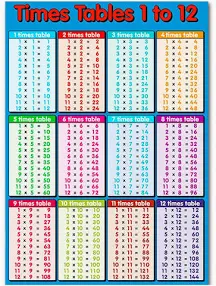
It’s crucial for all students to learn their times-tables, as it’s an essential mathmetical skill they need to develope. Students need to understand what multiplication means and how they can apply it in real life. Students can understand hwo multiplication and division work by using visual diagrams, so they can visually understand how the principle applies. They can also use arrays, drawings and counters, so they can understand how multiplication visually works. Once students understand how multiplication works visually, it makes it easier for them to understand why they need to learn their times-tables.

Students start elarning their, 1,2,5,10 and 11 times tables. Once they learn these times tables, they progress and start learning their 3 and 4 times-tables. They can then learn their 9 times-tables using their fingers to help them. Students then learn their 6, 7,8 and 12 times-tables, as these are the hardest for studnets to learn and understand.

It’s better for students to understand why they need to learn their times tables, rather than just memorising them. This means that they can find it easier to apply their times tables in the real world. Students should practice their times-tables at home every day, so they can reinforce what they have learnt. The more they practice their times-tables, the mroe confident they will feel, when they test themselves. Students who don’t understand their times-tabels, shouldn’t be discouraged, as it takes practice and time to fully understand how they work and why they are important.

Students can use maths games and quizzes to help them practice their times-tables. They should also practice their times tables under timed conditions, where they test thei accuracy and their speed. They want to maximise their accuracy in a quick time frame.

Ashley Cohen

Progress You Can’t See

Post Image

Learning rarely feels inspirational in the moment. It’s often slow, repetitive and sometimes frustrating. But that’s exactly what makes it powerful. One of the most overlooked truths about learning is that progress is usually invisible, until it isn’t. A student might struggle with a concept for weeks, feeling like nothing is sticking. Then suddenly, something clicks. What looked like no progress was actually quiet, steady growth beneath the surface. Like building muscle or learning a language, the real change happens long before you notice it. As a tutor, I’ve seen this transformation happen countless times. Students who once said, “I’m just bad at this” begin to approach problems differently. Not perfectly, but with more confidence, more patience and more willingness to try and that shift in mindset is often more important than the correct answer itself.

Learning isn’t about being naturally “smart”. It’s about being willing to sit with discomfort. It’s about asking questions when you’re unsure, making mistakes without giving up and understanding that struggle is not a sign of failure, it’s part of the process. Every error is feedback. Every challenge is an opportunity to grow.What’s truly inspiring is that learning is one of the few things entirely within your control. You can’t always control outcomes but you can control effort, attitude and persistence. Over time, those smalls, consistent efforts compound into real progress. So if you’re feeling stuck or discouraged, remember this, not understanding something today doesn’t mean you won’t understand it tomorrow. The fact that you’re trying, showing up and engaging with the material already puts you on the right path forward. Learning isn’t about getting it right the first time. It’s about not giving up before it finally makes sense.

Isabella Naumovski