
First Education

Tutoring English

Post Image

Tutoring English has shown me that the subject is often misunderstood by students as something rigid, when in reality it’s deeply interpretive and personal. Many students come in thinking there is always a single “right” answer, especially when analysing texts. What I’ve observed, however, is that their initial ideas are often insightful, they just lack the confidence or structure to express them clearly. A large part of tutoring English, then, becomes about validating their interpretations while guiding them to refine and support those ideas with evidence.

One of the most noticeable challenges is helping students move from basic comprehension to deeper analysis. They can usually summarise what happens in a text, but struggle to explain how or why it matters. I’ve found that breaking this barrier requires shifting their focus from “what” to “how”—how language creates meaning, how techniques shape tone, and how context influences interpretation. Once students begin to see texts as constructed rather than just written, their responses become more sophisticated and original.

Another key observation is how much vocabulary and expression impact performance. Some students understand a concept but can’t articulate it effectively, which limits their marks. Teaching them how to write analytically, using precise language, embedding quotes, and structuring arguments, often leads to noticeable improvement, even if their underlying ideas haven’t drastically changed.

Perhaps most importantly, tutoring English has highlighted the emotional side of the subject. Students can feel exposed when sharing interpretations, especially if they’re unsure. Creating a space where their ideas are taken seriously encourages them to engage more openly. Over time, I’ve seen that confidence in expressing an opinion is just as important as understanding the text itself, and often the key to genuine progress.

Lara Venn Jones
Being organised

Post Image

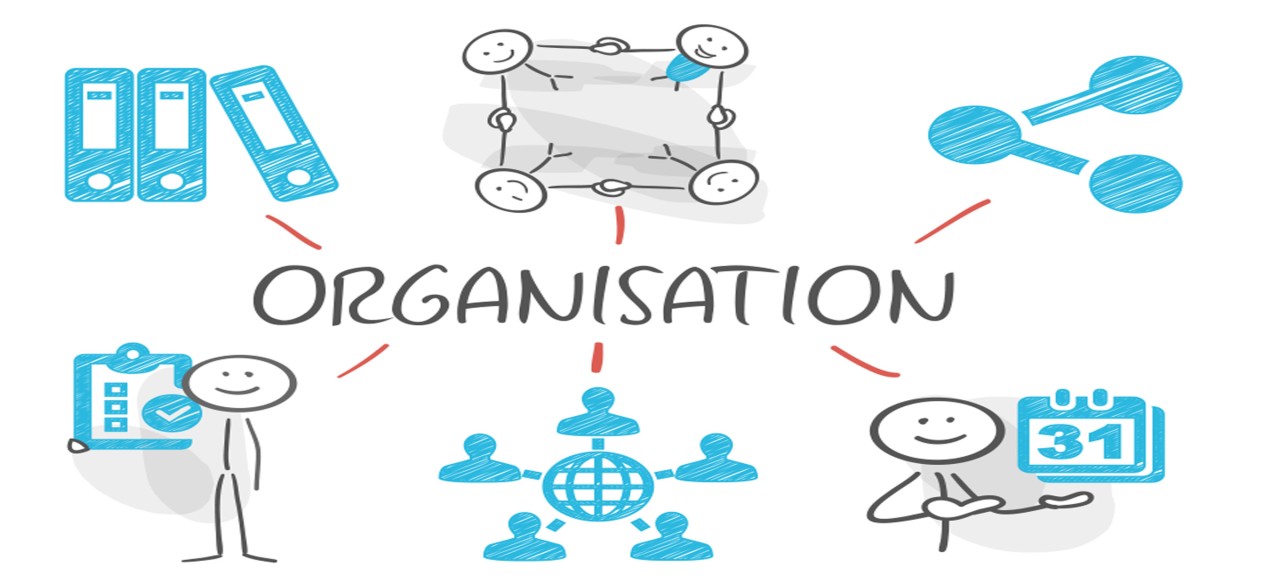
As a student, organisation was never something that came naturally to me. Whether it was procrastination, overestimating how much I could get done in a night, or simply not sticking to a schedule, I often found myself working reactively rather than proactively.

Ironically, it wasn’t school that taught me how to be organised it was tutoring.

At school, the consequences of disorganisation are largely individual. If you fall behind, miss a task, or leave things until the last minute, the impact tends to circle back to you. There’s a level of flexibility in that kind of independence, but also a kind of complacency. You can afford to be disorganised because, ultimately, you’re the only one directly affected.

Tutoring shifts that paradigm entirely. Being late to respond to a message doesn’t just inconvenience you; it affects a student waiting for clarification, a parent trying to coordinate schedules, or a centre manager relying on your reliability. Missing a session or failing to prepare doesn’t just mean lost marks, it means lost trust.

That shift in accountability forces a different mindset. Organisation becomes less about personal discipline and more about responsibility to others. In balancing university and tutoring, I’ve had to develop systems that I previously avoided, keeping track of sessions, planning ahead, responding promptly, and structuring my week with intention.

More than anything, tutoring has shown me that organisation isn’t just a skill, it’s a form of respect. Respect for other people’s time, expectations, and trust.

Cara Charalambous

How types of music influence your brain whilst studying

Post Image

When an individual studies, the brain triggers neuroplasticity which strengthens neural connections to form new neural circuits. These connections get stronger over time with repetition which allowing nerve impulses to travel faster and more efficiently. Music has been seen to have a noticeable influence on neuroplasticity by stimiulating brain regions that are responsible for emotion, memory and attention which facilitates the the creation of neural pathways and simultaneously strengths existing ones. With this being said, it has been shown that not all music is beneficial and the general literature consensus concludes that the best music to listen to is instrumental, low volume and predictable.

Lyrical music has been shown to have negative effects on cognitive performance as it often creates a distracting environment. The addition of another cognitive load puts stress on the language processing sensors of the brain hindering memory and reading comprehension. However, depending on the task being completed lyrical music may be beneficial, primarily in the context of less demanding tasks such as organising notes due to its ability to boost mood and therefore increase motivation.

Alternatively, more instrumental music such as classical, lo – fi beats or jazz creates a calmer environment, reducing cortisol allowing the brain to focus freely on an individual task without any other elements of distraction or neural load. In addition to this the complex tempo of instrumental type music synchronises the brains hemisphere through a phenomenon known as neural entrainment in which brain waves align with the melodic and rhythmic patterns of the music. This is known to improve focus and memory acting as a simple performance boost.

The type of music an individual listens to whilst studying, if chosen well, can have significant positive impacts on neuroplasticity and thus the brains ability to perform whilst studying. However if chosen poorly, music may hinder performance, primarily through the distraction of lyrics. It is important to consider the type of music you are listening to ensure you are benefiting the most from studying,

Deuchar Dezarnaulds

Aerodynamics

Post Image

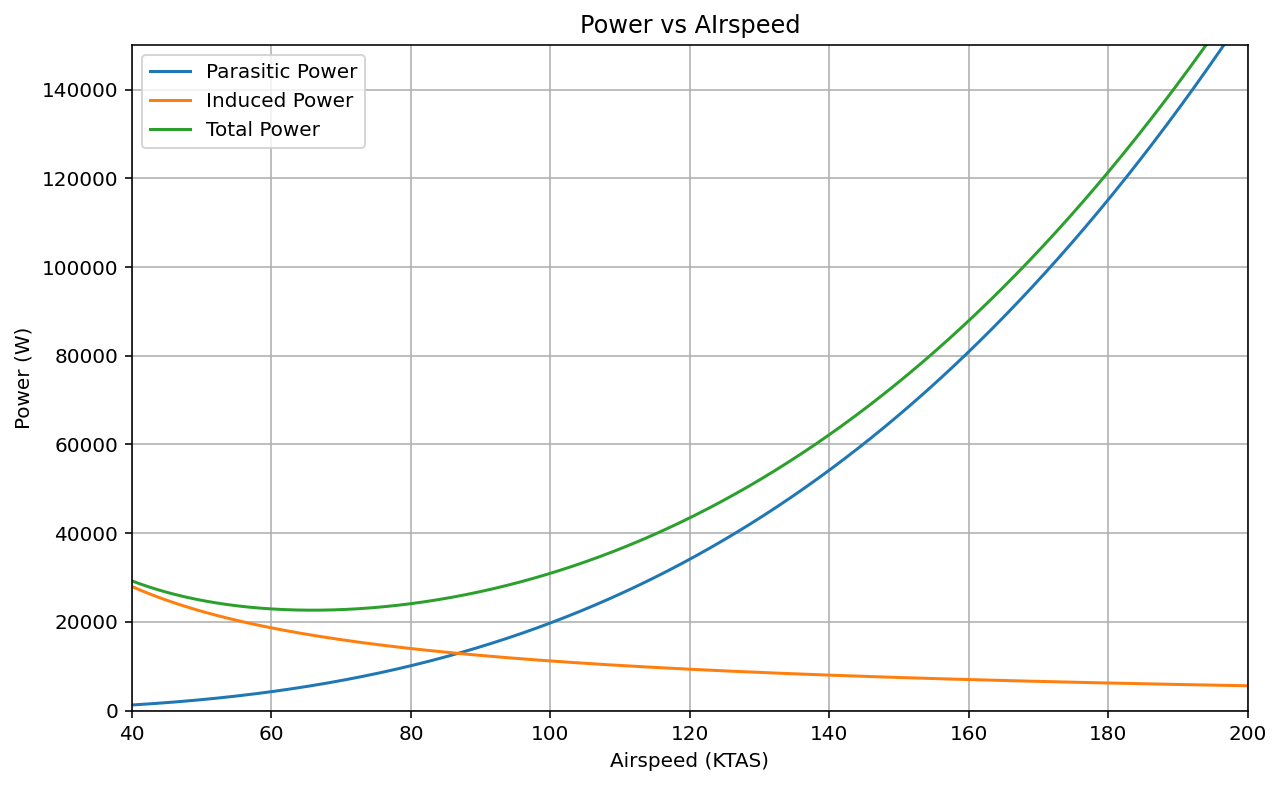
Aerodynamics is the study of how gases interact with solid bodies, and the type of impacts it has on drag, lift and thrust. It explain phenomenons such as why balls curve through the air, or how planes stay in the sky. At first glance, it seems like just another branch of physics, however one you get into the science, it actually is a careful consolidation of theory, experimentation and design to get both analytical and empirical results. At it’s core, this topic is all about managing airflow, where engineers boost efficiency by reducing skin and pressure drag that comes about the wake. Even though air is largely invisible, once you see and understand the type of effects due to turbulence, boundary layer separation and vorticies, you will never see the design constraints it holds in cars and planes again in the same way.

In the end, aerodynamics is about mastering the unseen, shaping air to work with us rather than against us.

Starsky Schepers

How to Take Notes That You Will Actually Use

Post Image

Most lecture notes never get looked at again. Students write them, file them, and rediscover them the night before an exam as a pile of incomplete sentences and mysterious abbreviations that no longer mean anything. If this sounds familiar, the problem is probably not your memory. It is your note-taking strategy.

The purpose of notes is not to transcribe what was said. A recording can do that. The purpose of notes is to help your brain process and encode information in real time, and to create a resource that helps you reconstruct understanding later. These are two different jobs, and good notes have to do both at once.

One of the most effective frameworks is the Cornell method. You divide each page into three sections: a narrow column on the left for cues and keywords, a wider column on the right for your main notes during the lecture, and a box at the bottom for a summary written in your own words after class. The summary section is the part most students skip, and it is the most important. Writing a summary forces your brain to consolidate what it just heard while the information is still warm.

Beyond structure, the single biggest improvement most students can make is to write less and think more. Instead of trying to capture every word, focus on capturing the logic. What is the main argument? What evidence supports it? How does this connect to what was covered last week? Notes that reflect your own thinking are almost always more useful than notes that reflect the speaker’s exact words.

Finally, review your notes within 24 hours. Research consistently shows that a short review the day after a lecture dramatically improves long-term retention. It takes ten minutes and it makes a measurable difference.

Misha Fry

Teaching Phonics to Year 1 Students

Teaching phonics in Year 1 is one of the most important steps in helping children become confident readers and writers. At this stage, students are moving beyond recognising letters and beginning to understand how sounds work together to make words. Phonics gives them the tools to decode unfamiliar words instead of guessing from pictures or memory.

A strong phonics lesson should be clear, short and practical. Young students learn best when they can hear, say, see and use the sound. For example, when teaching the sound “sh”, students should listen to the sound, practise saying it, identify it in words like ship, shop and fish, and then read and write simple words containing that sound. This helps them connect spoken language with written language.
Repetition matters. Human brains, apparently unsatisfied with learning things once, need regular practice. Daily phonics routines help students build automatic recognition of sounds and spelling patterns. Activities such as sound sorting, blending games, word building with letter cards, and reading decodable texts can make practice more engaging.

Blending is especially important in Year 1. Students need to practise saying each sound in a word and then pushing the sounds together. For example, c-a-t becomes cat. Segmenting is the reverse skill: students hear a word and break it into sounds before spelling it.

It is also important to use decodable readers that match the phonics sounds students have already learned. This lets children experience success because they are using skills they have been taught, not just guessing wildly and hoping literacy happens by accident. With explicit teaching, consistent practice and encouraging feedback, Year 1 students can develop strong phonics knowledge. These early skills create the foundation for fluent reading, accurate spelling and greater confidence across all learning areas.

Anthea Preketes

Travel is Education

Post Image

Travel has a unique way of expanding both perspective and understanding. It is often associated with new places, new people, and new experiences, but at its core, travel is also about commitment and intention. Whether it’s a long journey across countries or a short commute across suburbs, every trip requires time, planning, and purpose.There is a quiet beauty in the process of travelling. The anticipation before leaving, the organisation behind the scenes, and even the routine of getting from one place to another all contribute to the experience. Travel invites us to step outside of our immediate environment and engage with something different. It teaches adaptability, patience, and awareness qualities that extend far beyond the journey itself.

Even smaller-scale travel, like heading to a scheduled lesson or appointment, carries this same structure. Time is set aside, routes are planned, and energy is invested to ensure arrival at the right place, at the right time. These journeys may feel routine, but they still represent a conscious effort to show up and engage.
The beauty of travelling also lies in its one-directional nature. Once time has been spent on a journey, it cannot be reclaimed. A trip taken, whether long or short, becomes part of the day’s investment. This is why intention matters, choosing to travel somewhere means prioritising that destination over other possibilities.
In many ways, travel reflects respect for the destination, for the people involved, and for the purpose behind the journey. When both sides of an arrangement honour that commitment, the experience feels seamless and worthwhile. When that intention is missing, the journey can feel incomplete, as though the purpose behind it has been lost. Ultimately, travel is more than just movement. It is a reflection of how we value time, effort, and connection. Whether it leads to a new country or simply across town, every journey carries meaning, and that meaning is shaped by the intention we bring to it.

Angelina Castelli

Observation on Bearings

Post Image

Watching Thomas teach bearings was a useful reminder of how much sequencing matters in maths tutoring. The lesson was not just about getting the right answer, it was about helping the student understand what each angle represented before calculating.

The most valuable part of the lesson was watching how Thomas connected bearings to triangle geometry. Once the diagram was drawn, the question became less about memorising a “bearings method” and more about using angle facts properly. The student had to recognise corresponding angles, angles on a straight line, and finally the angle sum of a triangle. This reaffirmed something I have noticed through tutoring: students often struggle less with the final calculation and more with translating the diagram into familiar maths.

Thomas also gave the student time to explain their reasoning, rather than immediately correcting mistakes. That made the lesson feel more collaborative and helped reveal where the confusion actually was. It reminded me that good tutoring is not about showing how quickly you can solve a question. It is about slowing the problem down enough for the student to see the structure themselves.

Overall, observing the lesson reinforced the importance of clear diagrams, repeated key rules, and patient questioning. Bearings can look intimidating, but when compass directions, true bearings and triangle angle facts are linked carefully, the process becomes more logical.

Nabil Harrar

Engineering in Life

Post Image

Engineering sits at the quiet center of modern life. It’s there when your alarm goes off, when clean water runs from the tap, when a plane crosses the sky, and when a message travels instantly across the world. Most of the time, you don’t notice it, and that’s exactly the point.

At its core, engineering is about solving problems with constraints. You don’t get unlimited time, money, or materials. You work with what’s available and still aim for something that’s safe, efficient, and reliable. That balance—between creativity and practicality—is what makes engineering different from pure science.

There’s also a human side to it. Every design decision affects people, whether it’s a bridge that needs to withstand decades of use or software that millions rely on daily. Good engineering isn’t just about what work, it’s about what works responsibly.

It’s easy to think of engineering as equations and diagrams, but it’s really about impact. From renewable energy to medical devices to space exploration, engineers shape how we live now and what becomes possible next.

Starsky Schepers

Your Brain Is a Studio, Not a Storage Unit

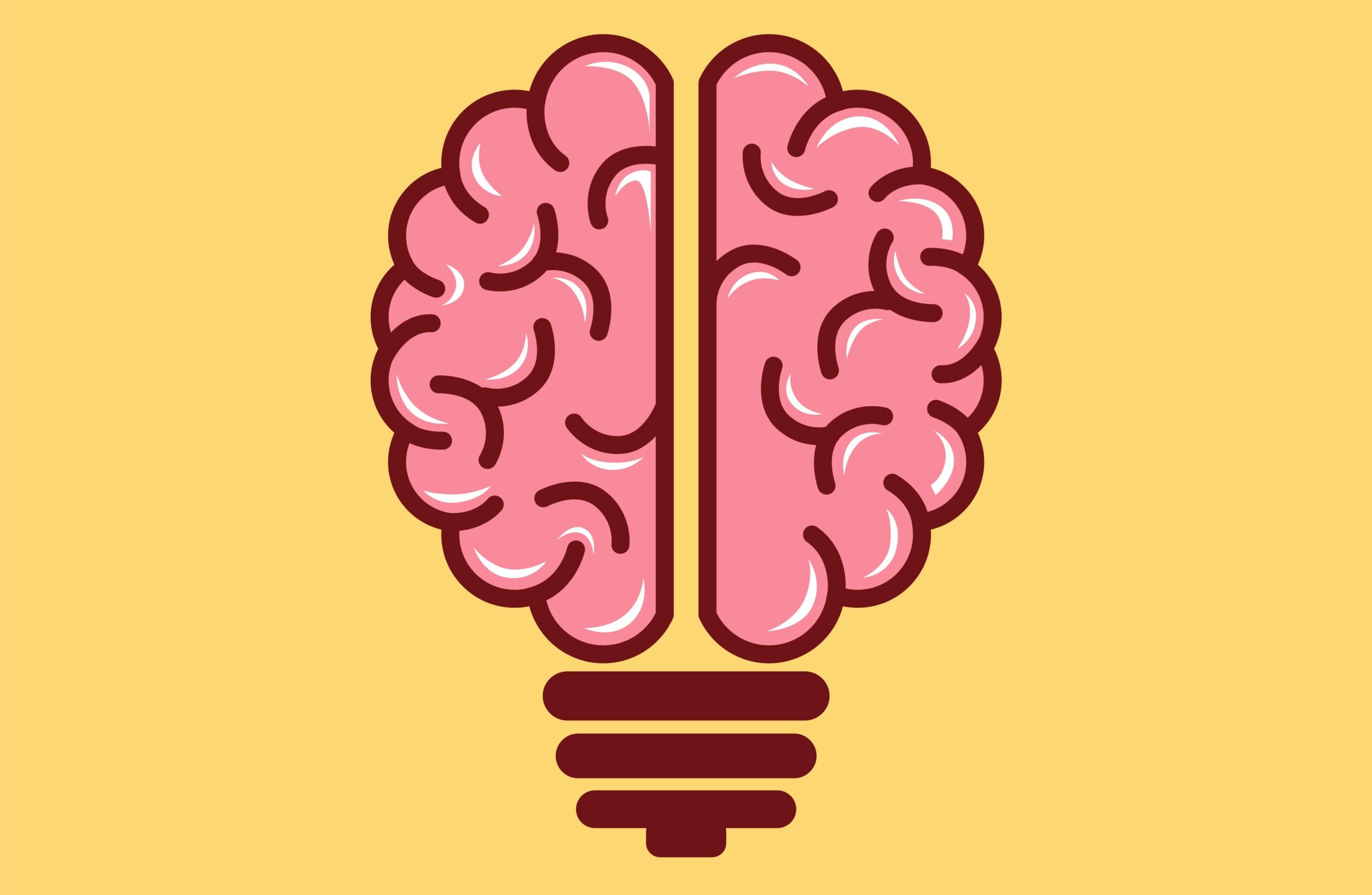
We’re often taught to treat learning like collecting. Gather the notes, memorise the facts, and store the information neatly for later. But what if learning isn’t about storage at all? What if it’s about creation?

Imagine your brain as a studio instead of a storage unit. A place where ideas are sketched, reshaped, layered, and sometimes completely scrapped before something meaningful emerges. In a studio, things get messy. There are half finished drafts, crossed out mistakes, and experiments that don’t quite work. But that’s not failure. That’s the process of making something original.

The same applies to learning. When you’re solving a problem, writing an essay, or trying to understand a concept, you’re not just recalling information. You’re building connections. You’re taking pieces of knowledge and turning them into something that makes sense to you. That’s creativity, not just memory.

Some of the most powerful learning moments come from getting it wrong first. Not because mistakes are “good” in a cliché sense, but because they force your brain to adapt. When something doesn’t work, your mind starts searching for a new pathway. That’s where real understanding is formed, not in perfect answers, but in the effort it takes to reach them.

As a tutor, I’ve seen students transform when they stop aiming for perfection and start engaging with the process. When they begin to ask, “What can I do with this?” instead of “How do I get this right?” everything changes. Learning becomes less about pressure and more about possibility.

So next time you sit down to study, don’t think of yourself as someone trying to store information. Think of yourself as someone creating meaning. Let it be messy. Let it take time. Let it be yours.

Because learning isn’t about how much you can hold. It’s about what you can make.

Isabella Naumovski