
First Education

Healthy Study Habits for Students

Post Image

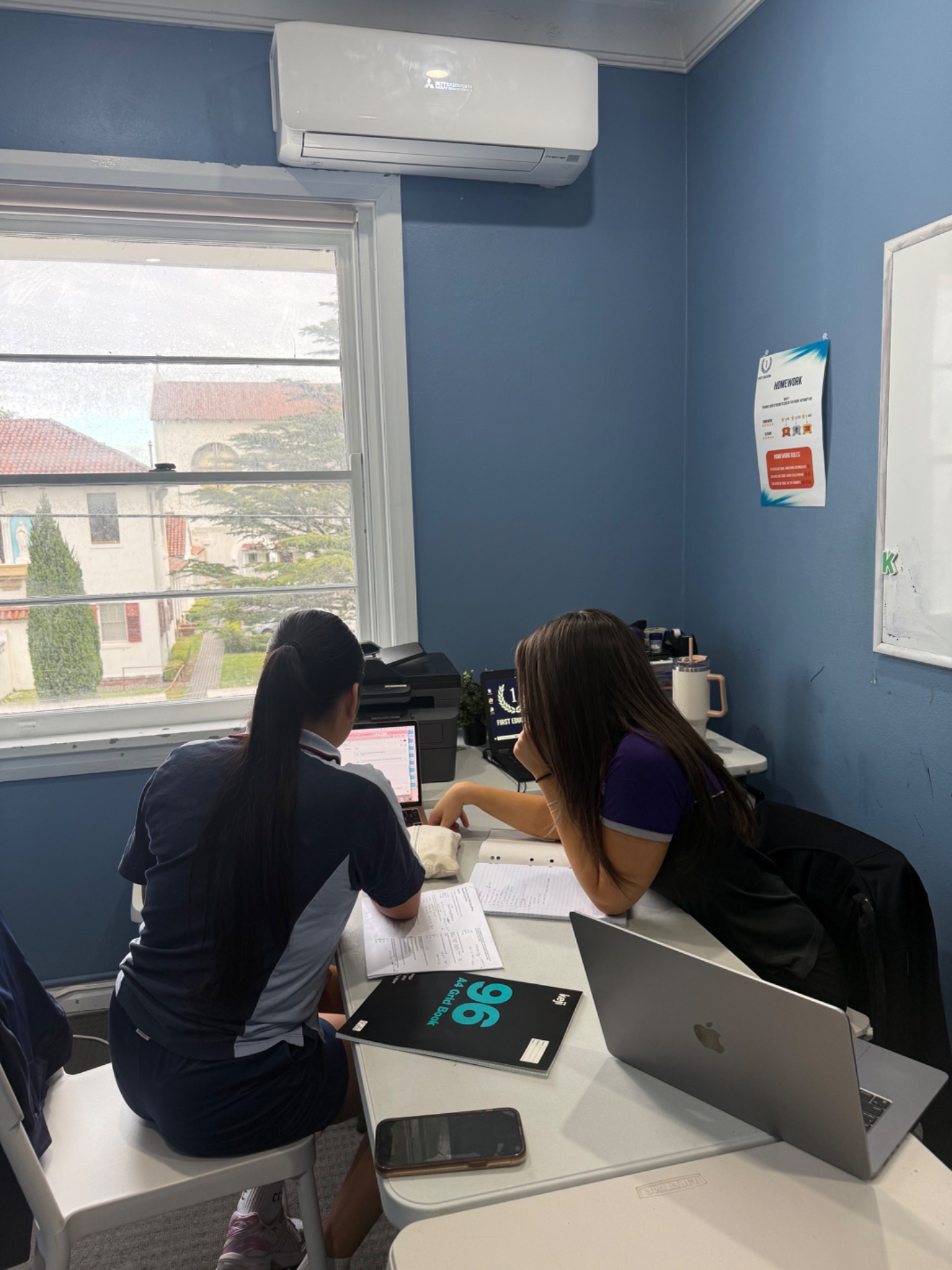
Healthy study habits are more effective than simply spending more time studying and cramming. Creating realistic and balanced habits can help students feel less overwhelmed, more organised, and more confident in their learning.

One important study habit is having a consistent routine. Setting aside regular time for homework, revision, or reading can make studying feel more manageable instead of leaving everything until the last minute. Short periods of focused study can make a big difference over time.

Another healthy habit is staying organised. Using a planner, writing down tasks, or breaking larger assignments into smaller steps can help students avoid feeling stressed or unsure about where to start. Organisation can also help students balance school with other activities and responsibilities.

Taking breaks is also a very important part of healthy studying. Many students think they need to study continuously to be productive, but this can actually lead to feeling tired, distracted, or frustrated. Short breaks between study sessions can help students recharge and maintain focus. Simple things like getting a snack, stretching, going outside, or taking a short walk can help refresh the mind before returning to work.

It is also important for students to recognise that rest matters just as much as productivity. Getting enough sleep, having downtime, and maintaining balance can support concentration and learning far more effectively than overworking.

As a tutor, I’ve noticed that students often perform better when they develop study habits that are realistic and sustainable, rather than trying to do too much at once and at the last minute. Healthy study habits are not about being perfect — they are about creating routines that support learning while also looking after wellbeing.

At the end of the day, studying should not leave students feeling constantly exhausted or overwhelmed. With healthy habits, students can build confidence, improve their learning, and create a more positive relationship with school.

Tamiah Mahoney

Observation

Today I observed Isabella working with her Year 11 student, April, on trigonometry involving right angled triangles and bearings. The lesson was highly engaging and demonstrated Isabella’s strong ability to explain complex mathematical concepts in a clear and structured way.

One of the most effective aspects of the session was Isabella’s use of diagrams and visual explanations. She carefully drew triangles and bearings on the board, labelling angles and sides clearly so April could visualise the relationships within each question. This made the problems feel far less overwhelming and helped connect the formulas to the diagrams in a meaningful way.

Isabella also did an excellent job reinforcing the importance of working methodically through each question. Rather than rushing to an answer, she encouraged April to identify the known information first, determine which trigonometric ratio was needed, and then solve step by step. This structured approach helped April stay organised and reduced mistakes.

Another standout feature of the lesson was Isabella’s questioning style. Instead of simply telling April what to do, she regularly asked guiding questions to encourage independent thinking. Questions such as “Which side are we solving for?” and “What does the bearing tell us here?” prompted April to think critically and apply her understanding rather than rely on memorisation alone.

When April was unsure, Isabella remained patient and calmly re explained concepts using simpler examples before returning to the original question. This created a very supportive learning environment where April felt comfortable asking questions and working through challenges.

Overall, Isabella delivered a very strong lesson. Her clear explanations, strong use of visuals, and ability to guide independent thinking helped April build confidence and understanding in trigonometry and bearings. I will definitely apply some of these teaching strategies in my own tutoring sessions.

Demetria Koutavas

Early primary teaching

Post Image

One of the biggest things that can be a struggle when teaching early primary school kids is focus. What kids wants to spend another hour after school learning more stuff, a factor that is exacerbated when a session is on the weekend. If even I find it hard working on the weekend, imagine how these kids feel. I digress. There’s a few ways you can try to combat this. One way is by having a break (singular) or breaks (multiple) through a session. Whether you have one break or two or three will depend per student. Some can work completely fine for 25 minutes whereas some can only manage to concentrate for 10. When I started doing this age group my instinct was to try to fight these attention deficits. But that’s not the way. You have to accept that the student can and will only focus for a certain amount of time and any time after that will just be spent desperately trying to get them to do work to no avail. So you resort to breaks. The breaks aren’t just sitting around doing nothing. Play a game, do the Worlde or something. It’s a way of keeping the student engaged in a different way and also making the session fun. If the sessions aren’t fun then the student will be even less eager to do work. It’s about finding the right balance. Some sessions will go by and you think, man we had time spent on breaks than we did doing work. That’s the nature of this business. Sometimes the students just won’t work for you. But I like to think that the time spent not working banks for next week, meaning the student will have more energy to focus since they didn’t spend it on the week before. Anyway I have now crossed the 300 word threshold and therefore I will get full pay.

Hugo Nihill

Observation

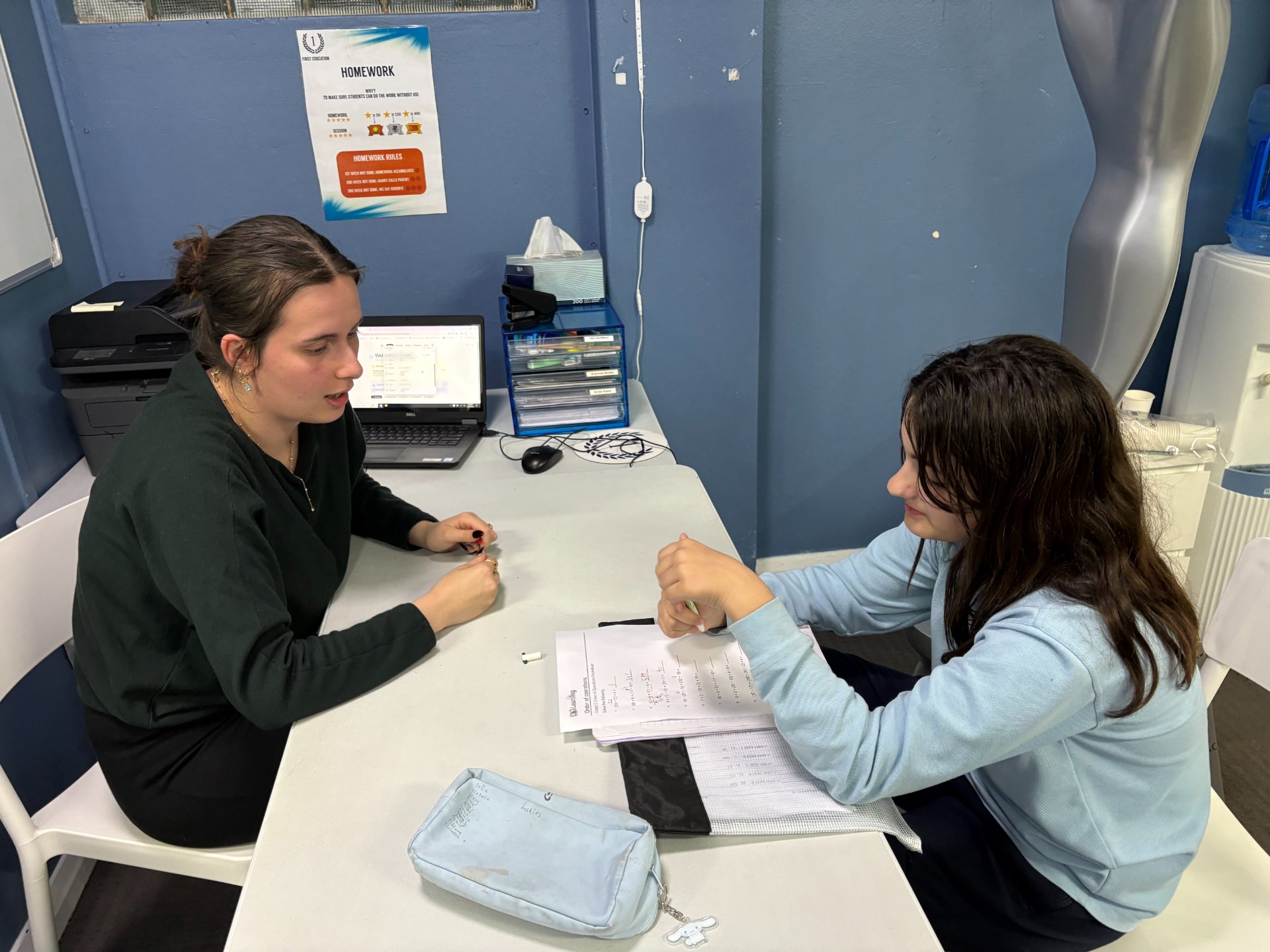
Today I observed Isabella working with a Year 11 student on area and perimeter. The session was well organised and demonstrated Isabella’s ability to explain mathematical concepts in a clear and engaging way.

One of the strengths of the lesson was Isabella’s ability to break complex problems into smaller and more manageable steps. Rather than jumping straight into formulas, she first ensured the student understood the difference between area and perimeter conceptually. She used simple explanations and diagrams to reinforce the purpose of each calculation, helping the student understand not just how to solve the questions, but why each method was used.

Isabella also made excellent use of the board throughout the session. She carefully drew shapes and labelled dimensions clearly, which provided strong visual support for the student. By working through calculations step by step on the board, she helped the student stay organised and follow the logic behind each solution.

Another positive aspect of the lesson was the way Isabella encouraged participation. She frequently asked the student questions throughout the working process rather than simply completing the questions herself. This kept the student actively engaged and allowed Isabella to check understanding as the lesson progressed.

When the student made mistakes, Isabella responded calmly and used them as teaching opportunities. She guided the student back through the process and helped identify where the misunderstanding had occurred, which created a supportive learning environment and encouraged confidence.

Demetria Koutavas

Observation

Post Image

From observing Hugo’s Session, I got a good idea of how Hugo actively engages his younger students in sessions while still keeping a strong positive environment for his student to learn and grow their knowledge in.

Firstly, Hugo started with a friendly and open mood, and held that atmosphere throughout the whole session, allowing him to keep the student constantly engaged in the work, while also preventing the session from moving into slow paced and lacking in work and growth.

When it came time for the student to complete an extended exercise or task, Hugo ensured the student’s active concentration and completion of that task with a small, friendly incentive which still revolved around the topic (e.g. English).

For example, when Hugo asked the student to complete a series of questions, he mentioned that afterwards, they could “both write down long words and compare to see who won.” not only is this an engaging incentive for a younger student, it also encourages the student to revise the English work that they had just completed, so that they can positively compete.

Furthermore, by rewarding the student (choosing a shorter word than the student), it allows Hugo to much more easily link into doing more work with positive reinforcement; it invites the student into continuing to complete similar work as they understand it both more clearly, and believe in their own competence slightly more.

Overall, Hugo made friendly jokes, often relating to the topics at hand, at times when the session began to slow down, to keep the student engaged, and from there chained onto more exercises. He ensured an environment perfect for a student, especially a younger one, to learn and prosper their education with appropriate engagement choices at appropriate times all the while keeping a positive, forward attitude in between.

Felix Panizza

Observation

Post Image

John began the session by reviewing and marking Samuel’s homework, identifying a few mistakes and explaining them thoroughly. They carefully worked through the errors to ensure Samuel understood the topic really well.

He then spent a large portion of the lesson reviewing Samuel’s Math exam from last term, focusing on equations and Algebra. This part of the session was very effective because it helped the student identify his mistakes and learn how to correct them. John carefully broke down the questions on the whiteboard to help the student visually and he was being patient and clear with the explanations. He also consistently linked the mistakes to the underlying mathematical concepts, helping the student recognise and refrain from recurring mistakes. Additionally, he reinforced the topic of expanding brackets, collecting like terms and cross multiplication with simplification by writing additional equations and algebraic questions on the board for the student to complete on his own. This encouraged Samuel to independently complete a few questions after using the modelling questions as a guide. This also helped build his confidence and ensured that he applies the methods independently.

The remainder of the session aligned with the student’s current class topic to ensure the student stayed up to date with school work and continued developing his mathematical skills.

Overall, John’s method of tutoring is very effective and he is a patient tutor who explains mathematical concepts thoroughly and in a way that is easy for the students to understand. His approach not only focuses on correcting students’ mistakes but helping them remember and apply the necessary methods independently with confidence.

Razan Rustom

Building Student Confidence through Rapport

Post Image

A big part of tutoring is helping students feel confident in themselves. A lot of students come into sessions already thinking they are “bad” at a subject, especially maths or science. When students feel embarrassed or nervous about getting answers wrong, it becomes harder for them to learn. That’s why building confidence is just as important as teaching the content itself. A tutor who is patient and encouraging can completely change the way a student approaches schoolwork.

Building rapport with students makes a huge difference in how comfortable they feel during lessons. Simple things like remembering their interests, asking about their week, and speaking to them respectfully help create a positive environment. Students are more likely to ask questions and stay engaged when they feel supported instead of judged. Strong rapport also helps tutors understand how each student learns best, which makes lessons more effective and enjoyable for everyone involved.

Confidence grows over time through encouragement and small successes. Praising effort rather than just correct answers helps students develop a growth mindset and become more willing to try difficult questions. Tutors should remind students that mistakes are a normal part of learning and improvement takes practice. Even small improvements can have a big impact on a student’s motivation. At the end of the day, students learn best when they believe they are capable, and a supportive tutor can play a major role in helping them reach that point.

Sophie McGrath

Observation

Post Image

Today, I observed Vicki tutor a Year 7 student on Shakespeare’s play, “A Midsummer Night’s Dream”, and her strategy made the student less intimidated by Shakespearean play format and helped her actually enjoy the play/English literature.

Instead of jumping straight into analysing quotes and literary techniques, Vicki focused on making the story enjoyable first. She described the play as “basically magical chaos,” which instantly made the student laugh and relax. Rather than treating Shakespeare like something overly serious and untouchable, she approached it as entertainment, which helped the student engage much more naturally with the text.

One thing that stood out was how interactive the lesson was. Vicki encouraged the student to read parts of the script aloud and even act out certain scenes. This made the dialogue feel less confusing and helped the student understand the emotions behind the words. The scenes involving Puck were especially effective because the humour and trickery kept the student interested throughout the lesson.

Vicki also constantly connected the play back to modern experiences. She compared the relationship drama in the play to “friendship group chaos,” which made the themes much easier for the student to understand and relate to. Instead of feeling like an old text with no relevance, the play started to feel surprisingly modern.
This is also building essential skills that will help the student all throughout highschool, where we try to appreciate texts context in the modern world, particularly how texts have universal themes. The universal themes make texts timeless, meaning they can have relevance to the human experience, regardless of context. This is why we can still analyse texts from the 15th/16th century today, and they still teach us some valuable lessons about the human experience.

Overall, observing this lesson showed how important engagement is when teaching Shakespeare to younger students. Vicki’s relaxed and interactive approach helped turn a difficult text into something fun, memorable and much less intimidating

Mary Diamond

How to Become a Better Learner in Everyday Life

Post Image

Learning is one of the most valuable skills a person can develop. It is not limited to classrooms or formal education; it happens every day, often in small and unnoticed ways. Whether you are picking up a new hobby, improving at work, or understanding the world more deeply, learning shapes how you grow and adapt. One of the most effective ways to learn is to stay curious. Curiosity pushes you to ask questions instead of accepting things at face value. When you wonder why something works or how it is done, you open the door to deeper understanding. This mindset turns everyday experiences into learning opportunities.

Another important habit is consistency. Learning does not happen all at once; it builds gradually over time. Spending even 20 to 30 minutes a day on a skill, reading, practicing, or reviewing, can lead to significant progress. Small, regular efforts are often more powerful than occasional long study sessions. It is also helpful to embrace mistakes. Many people fear failure, but mistakes are actually one of the best teachers. When something goes wrong, it highlights what needs improvement. Instead of avoiding errors, try to analyze them. Ask yourself what went wrong and what you would do differently next time. Different methods of learning can also improve results. Some people learn better by reading, others by watching, listening, or doing hands-on practice. Mixing these approaches helps reinforce knowledge in different ways. For example, combining reading with practice can make new information easier to remember.

Finally, reflection is key. Taking time to think about what you have learned helps solidify it in your memory. You might write notes, summarise ideas, or simply review your progress at the end of the week. Learning is not a destination, it is an ongoing process. The more you engage with it, the more confident and capable you become in handling new challenges. By staying curious, consistent, and open to mistakes, you can make learning a natural and rewarding part of your life.

Alicia French

Why Physics Builds Critical Thinking for Life

Post Image

Physics in Years 11 and 12 is not just about formulas, forces, electricity, or motion. It is one of the strongest subjects for teaching students how to think clearly under pressure. At this level, students are asked to move beyond memorising answers. They must interpret evidence, test assumptions, build models, and decide whether a conclusion is actually supported by data.

This matters because real life rarely gives neat questions with obvious answers. In physics, a student might predict how an object will move, design an experiment, collect measurements, notice errors, and then revise their explanation. That process is critical thinking in practice. It teaches students to ask: What do I know? What am I assuming? Is this result reliable? What else could explain it?

Years 11 and 12 physics also builds comfort with uncertainty. Students learn that being wrong is not failure; it is often the beginning of better reasoning. A failed experiment, an unexpected graph, or a calculation that does not fit the evidence forces students to slow down and think more carefully. That skill is useful in university, work, relationships, finance, health decisions, and public debate.

Another major benefit is problem-solving discipline. Physics problems often require students to break complex situations into smaller parts, identify relevant information, ignore distractions, and justify each step. This helps students become less reactive and more analytical.

Even students who do not become scientists gain something lasting. They learn how to question claims, evaluate evidence, recognise weak reasoning, and make decisions based on logic rather than guesswork. In a world full of misinformation, fast opinions, and shallow answers, physics gives students a mental toolkit that is practical far beyond the classroom.

Studying physics in senior high school helps students become better thinkers, not just better students.

Phillip Preketes