

First Education

Starting an Essay When You’re at a Roadblock

Post Image

Too often, students feel overwhelmed when starting to write essays and so they constantly feel unmotivated when given an essay question to answer. Here are some of my best strategies so that you can write essays confidently!

1. Do not start with writing your introduction first. Many times, the worst roadblock for students is that they believe they need to begin by writing their introduction perfectly. But this does not have to be the case! After you have planned your response, start with writing your body paragraphs and then write your introduction at the end. Since you will have already fleshed out your arguments, the introduction will become much easier to write!

2. Break down the essay question. Every essay question has valuable key words that can help you structure and plan the arguments you want to develop. Highlighting and brainstorming in regards to these key words will help you recognise what material is important to focus on and what is likely irrelevant.

3. Start with what you are most confident with. Instead of always starting with your first body paragraph, if your second body paragraph argument is the one you are most confident with, then start with that! This helps build momentum so that you will feel more confident as you continue writing the other sections.

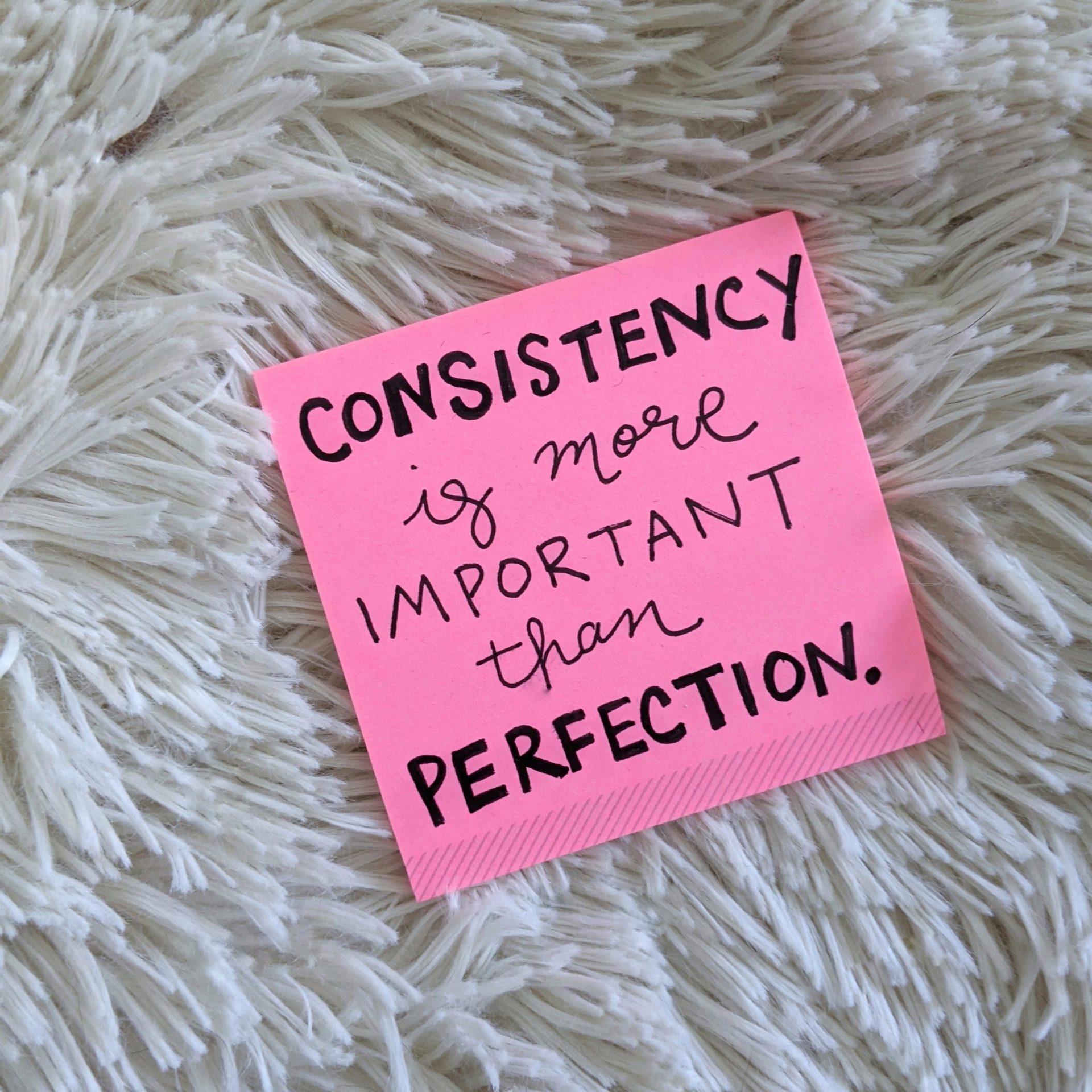
4. Most importantly, the first draft of an essay is never perfect! It is only in later drafts that everything starts to become more cohesive through the editing process.

Hopefully these strategies are helpful and remember: making a start on your essay, even if it isn’t perfect, is better than making no start at all!

Kristina McLean

Why Cranbrook Going Coed Actually Matters

Post Image

When Cranbrook School announced its move away from an all-boys environment into coeducation, it tapped straight into a debate plenty of Sydney families know well: does school gender mix make a difference?

First up, the big picture: there isn’t a clear academic winner. Major reviews summing up hundreds of studies — including research with more than 1.6 million students globally — find little to no difference in academic outcomes between co-ed and single-sex schools once you control for background factors like socio-economic status and teaching quality. Meaning boys and girls often do just as well regardless of school type. But look closer at Australian data and you’ll see patterns people cite. Exclusive analyses of the 2025 national NAPLAN results showed that single-sex schools, though only about 7 % of enrolments nationally, take a disproportionate number of spots in the top academic rankings. Forty-two of the top-performing schools are single-sex institutions.

Some specific subject-level trends show up too: girls from girls-only settings have historically been more likely to take advanced STEM subjects such as higher maths and chemistry compared with co-ed peers. Socially and culturally, co-ed schooling is argued to build everyday communication and empathy across genders — practical skills for uni, workplaces, relationships and life in Sydney and beyond.

So is co-ed “better”? Not necessarily. But the real world of friendships, mixed workplaces and social networks isn’t single-sex — and that’s exactly what co-ed high school is preparing students for.

Whether it’s academic results or life skills, the best choice always comes back to the individual student — not if the uniform is M or F.

Benjamin Tay

More than just a lesson

Post Image

Tutoring sits at an interesting intersection between education and human connection. Unlike classroom teaching, where one educator must manage many students at once, tutoring allows learning to become more personal and flexible. One consistent observation from tutoring sessions is how powerful this individual attention can be in reshaping a student’s confidence, not just their academic skills.

Many students arrive at tutoring believing they are “bad” at a subject. This belief is rarely due to a lack of ability; more often, it comes from gaps in foundational knowledge or negative classroom experiences. Tutoring creates a space where these gaps can be explored without judgement. When students realise that confusion is not failure but a natural part of learning, their attitude often changes. They become more willing to attempt questions, and mistakes are viewed as opportunities rather than setbacks.

A particularly effective tutoring strategy is guided questioning instead of immediate explanation. Encouraging students to talk through their thinking helps develop metacognition and allows misconceptions to surface naturally. This approach also gives students a sense of ownership over their learning. In subjects such as mathematics and English, it supports deeper understanding rather than simple memorisation.

Tutoring also highlights the importance of adaptability in education. Every student learns differently: some benefit from visual explanations, others from discussion or repetition. The ability to adjust pace, examples, and teaching style is one of tutoring’s greatest strengths and reflects what effective education should aim for more broadly.

Ultimately, tutoring is about more than improving grades. It helps rebuild confidence, encourage curiosity, and support students in seeing themselves as capable learners- an impact that often extends well beyond the tutoring session itself.

Alicia French

Observation

Post Image

I observed Joe tutor a Year 6 maths student today in algebra. The session began with him asking about the student about his week, spending 5 minutes to talk to him on a more personal level before launching straight into work. I think this approach really works especially with younger students because it establishes a more comfortable environment and shows them you’re interested in not only what happens inside the classroom but outside it too.

What also really stood out to me was how Joe handled mistakes. When the student incorrectly moved a number, he made sure that the student realised their mistake and then gave them similar questions like that to test their understanding until they didnt make that mistake again. He made sure the student didnt feel embarrassed which is attributed to his friendly demeanor and approach. By the end of the session, the student was clearly more confident and comfortable with algebra. He made sure to build up the students confidence and made sure the student believed he was capable of doing any algebra question thrown at him.

Overall, Joe made sure that the student was confident in himself and that translated into the student’s work and ability.

Annaliese Lakis

helping with silence

Post Image

In the fast-paced world of education, there is a common misconception that a “good” tutoring session is one filled with constant talking. We often feel the urge to fill every quiet gap with explanations, hints, or encouragement. However, I’ve recently been reflecting on one of the most powerful, yet undervalued techniques: The Strategic Silence.

When we ask a challenging question, the student’s brain begins a complex process of gathering the right information to answer the question. If we jump in after only three seconds to offer a hint, we effectively abort that mission. By practicing Wait Time, we signal to the student that we have confidence in their ability to find the answer.

I noticed this during a recent session on literary analysis. I was going through a worksheet with one of my students, where she was trying to identify the next number in a number pattern that was going up by 100. She found it difficult to identify the next number after 950, and we had answered a similar question a few minutes prior. Instead of telling her it was 1050, I sat in silence for a few seconds which allowed her to think and remember what I had explained a few questions prior and then got the answer all on her own.

I found that this works because it moves the responsibility of “doing the work” from the tutor to the learner. Ironically, rushing to help can make a student feel more pressured. A calm pause lowers the stakes. It also allows students to check their own logic before speaking it aloud.

As tutors, our success isn’t measured by how many problems we solve in an hour, but by how much independent thinking we facilitate. Silence isn’t a lack of progress; it is the sound of cognitive gears turning. Next time you’re tempted to jump in and “save” a student from a difficult thought, try counting to ten in your head instead. You might be surprised by the brilliance that emerges from the quiet.

Nicole Stamatelatos

Supporting a smooth transition from Primary to High School

Post Image

The transition from primary school to high school is an exciting milestone, but it can also be one of the most challenging stages for a student’s. Increased academic expectations, multiple teachers, heavier workloads, and new social environments can feel super overwhelming especially in the first year of secondary school.

This is when tutors can play a vital role in helping students navigate this change with confidence. One of the most important areas of support is academic readiness. We can reinforce core literacy and numeracy skills, address learning gaps early, and help students adjust to the faster pace and higher expectations of high school subjects. By previewing content and consolidating classroom learning, students are less likely to fall behind and more likely to participate confidently in class.

Beyond subject knowledge, tutors also help students develop essential learning skills. High school requires greater independence, organisation, and time management skills which we can assist in. Tutors guide students in planning assessments, managing homework across subjects, and building effective study habits.

Just as importantly, tutors provide emotional support during a time of significant change. Many students experience anxiety or a drop in confidence when starting high school. Regular tutoring sessions offer a safe, supportive environment where students can ask questions freely, build self-belief, and learn how to approach challenges with tutors who also recently experienced high school life and all the challenges that come with it.

With the right guidance, the transition to high school doesn’t have to be daunting. Tutoring helps students build confidence, independence, and strong learning foundations; setting them up not just to cope, but to thrive in secondary school.

Airi Yamanaka

The “Blueprint” Breakthrough: A Reflection on Tutoring Genetics

Post Image

There is a specific look a Year 10 student gets when they first encounter a Punnett Square: a mix of mathematical intrigue and biological bewilderment. In a recent tutoring session, we moved past the rote memorization of the “GCSE” or “Year 10” syllabus and dove into the “why” behind inheritance.

One of the greatest challenges in teaching Biology is the scale. We are asking students to visualize molecules—DNA, genes, and chromosomes—that they cannot see with the naked eye. To bridge this gap, I find that moving away from the textbook and toward the analogy of the “Architect’s Library” is a game-changer. I explain that the nucleus is the library, the chromosomes are the massive books, and the genes are the specific sentences that give instructions on how to build “You.”

During the session, we reflected on the concept of Alleles. The student struggled with why a “recessive” trait would just disappear in one generation only to pop up in the next. We treated it like a “battle of the volume knobs.” A dominant allele is a loud, booming voice; the recessive allele is a whisper. The whisper is still there (the genotype), but you can only hear it if the loud voice leaves the room (homozygous recessive).

This reflection reminds me that tutoring isn’t just about relaying facts; it’s about translation. By the end of the hour, the student wasn’t just filling out squares; they were predicting the eye colors of imaginary offspring with genuine excitement. For any Year 10 student, Biology shouldn’t feel like a list of Latin terms—it should feel like they are finally being handed the instruction manual for life itself. Whether we are discussing Mendelian genetics or the ethics of CRISPR, the goal remains the same: making the microscopic world feel monumental.

anthea preketes

Confidence

Post Image

When I first started tutoring, I majorly prioritised knowing the content and explaining it clearly. While that is an extremely important part of what tutors do, another more underrated priority I’ve discovered is building your students confidence first to make sure that my explanations stick.

A lot of the time, my students didnt struggle because they couldnt understand the work. They struggled because they didnt believe they could. I’ve had students who actually knew the steps to solve a problem, but still said “I’m bad at this” before even trying. Others would look at me after every line just to check they weren’t wrong. It wasn’t a knowledge or ability issue, it was self-doubt. So i ended up pivoting how i tutor and asked more leading questions to get them to explain the concept to me. Once they started getting more and more answers correct, they became more confident to try and get the answers right. They conversely were less discouraged when they got the answers wrong.

This shift also majorly changed the way I saw my role as a tutor. I stopped feeling like I had to be the one with all the answers and started focusing more on creating a space where students felt safe to think out loud and make mistakes. Sometimes that meant sitting back and letting the silence linger while they worked through a problem themselves. Those moments might feel small, but they’re powerful because I’ve realised that when students know they can solve something on their own, it sticks far longer than anything I could explain.

Annaliese Lakis

Study Tips for High School Students!

Post Image

Has your teacher been telling you to study constantly and you feel you can’t escape the study cycle? Well here are some easy tips to get you on track with your studying!!

Firstly I recommend creating a study timetable to allocate time effectively for each subject. In this timetable it is also essential to include time for yourself. This may include going to the gym, or planning when you might read your favourite book or play sport for your local team. It is important to plan your days as it gives you a sense of organisation and structure to your studying schedule. It is also essential to not allocate huge amounts of time which you may not be able to stay focused on for that long. Ensuring to designate your time effectively is essential for proactive studying.

Secondly, continuing to take regular breaks is essential in allowing your brain to recover and process the information. A break may include going to the bathroom or eating some food to relax and allow your brain to absorb everything you just learnt. Avoid using your phone for prolonged periods of time during these breaks as it can throw your schedule off and lead you to endless doomscrolling which is the worst case scenario.

Thirdly it is essential to study in ways which you are most familiar with. There is no point adopting study techniques which don’t match your learning style as it will lead you to become less interested in learning. Techniques may include using bright colours and specific stationary to creatively present your work. Or alternatively wearing noise cancelling headphones may eliminate distractions and allow for you to focus on the work at hand. We are all different so our techniques will vary, but it is important to find the best way which works for you.

In conclusion, using study techniques which work best for you are extremely important in laying down foundations and seeking success in the future in all academic endeavors!!

Happy studying!!

Flora Carabitsios

Legal Studies – the effectiveness of law

Post Image

One of the key questions of legal studies is ‘how effective is the law?’ It’s one that students studying the subject will have to grapple with over and over again, and for all different areas of law (workplace, international, criminal, family, etc.). The thing is, the law is never perfect. It’s trying to be, but it’s maybe impossible to ever truly get there. The key things for students to acknowledge here are: does it uphold the rule of law? does it make justice accessible for society and individuals? is it efficient? does it prevent crime? is it known amongst the public? All these things are fairly big questions. Key factors you can look for to ascertain effectiveness are media response and statistics. If there is backlash from the public and from the media then that probably reveals that the law, whatever it is, isn’t sufficiently reflecting the values of society at that time. Which is the role of law, to reflect the values of society. Statistics are also a very good indicator of effectiveness. If the law has led to an increase in a certain type of crime, or an increase in the displeasure that individuals have in dealing with the law, then maybe the law isn’t coming to just and fair decisions. There will always be issues with law, the world is far too complex and unique for legislation to be perfectly suited to deal with every situation and circumstance. But, that is why it’s important to study them. So that you can see where and why laws are failing and how they should be changed. I try to impress on students the importance and the ‘interesting-ness’ of this task. Hopefully it can get them involved and actually eager to look at laws and at data in order to come to their conclusions rather than the ones their teacher has told them to come to.

Hugo Nihill