

Throughout my experience as a tutor, I have observed a significant shift in the way students engage with learning. Contrary to popular belief, the issue is rarely a lack of access to information. Rather, it is an increasing discomfort with intellectual uncertainty.
Modern students exist within an environment of unprecedented convenience. Answers are available within seconds, explanations are instantly accessible, and digital platforms are designed to minimise waiting. While these advancements have undoubtedly enhanced educational accessibility, they have also reduced opportunities for students to engage in one of the most valuable aspects of learning: sustained cognitive struggle.
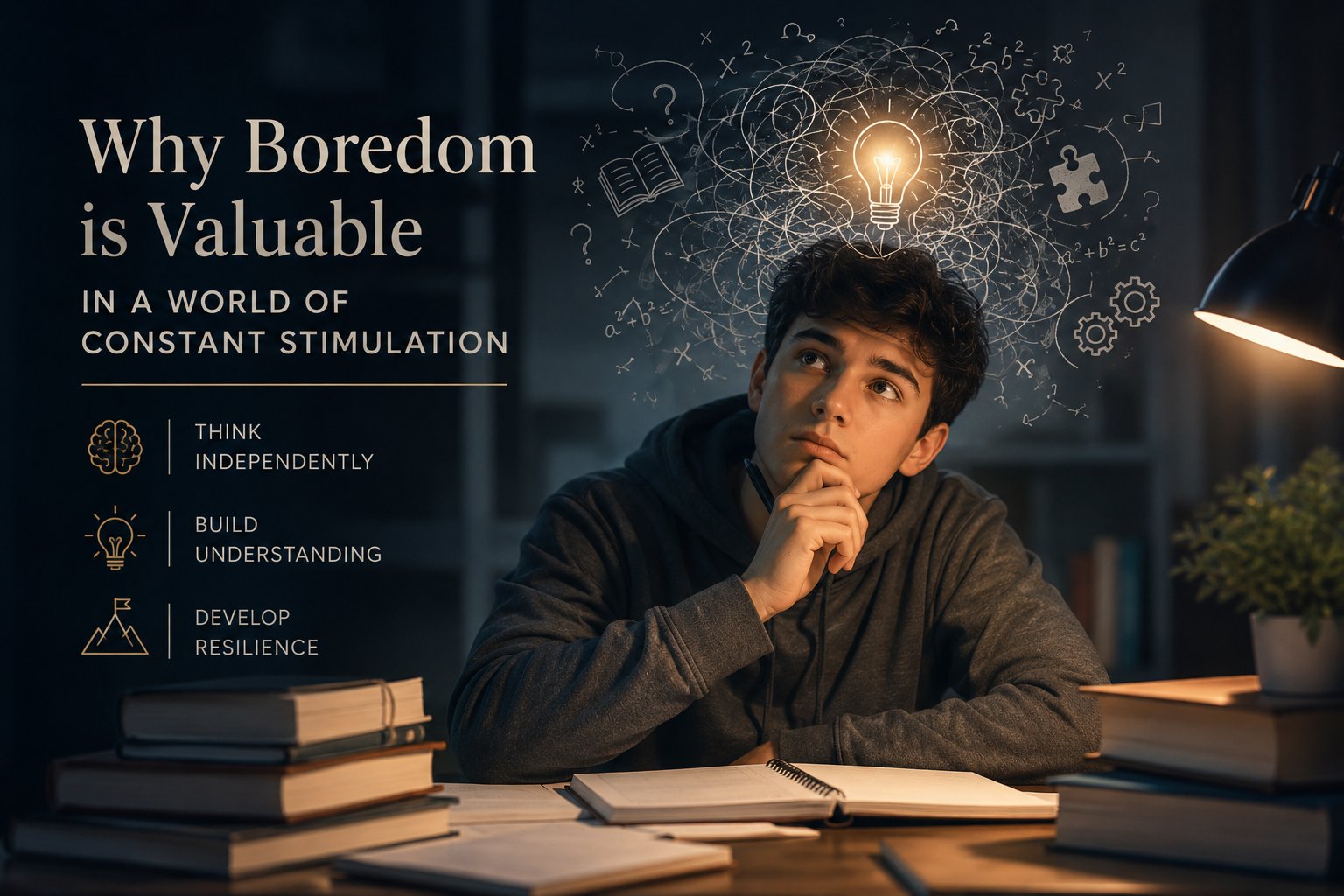
The concept of boredom is often viewed negatively. However, boredom, or more accurately, the absence of constant stimulation can serve as a catalyst for deeper intellectual engagement. It is within these moments of uncertainty that students are compelled to analyse, hypothesise, question, and problem-solve independently. Before the rise of artificial intelligence and instant digital assistance, students were often required to rely on their own reasoning when resources were unavailable. Today, tools can analyse texts and generate explanations within seconds, reducing the need for independent thought.
As tutors, we frequently witness students abandon challenging tasks after only a brief period of difficulty. The expectation of immediacy has conditioned many learners to perceive confusion as failure rather than a necessary stage of understanding. Yet educational growth rarely occurs through the passive reception of answers. Instead, it emerges through grappling with ideas, testing possibilities, and refining thinking. It is often these moments of discovery, the “light bulb” moment, that foster genuine curiosity and engagement.
Perhaps the role of educators is not simply to provide answers, but to create environments where students learn to think critically when answers are not immediately available. In doing so, we prepare learners not only for examinations, but for the complexities of the world beyond them.
Vicki Synesios