

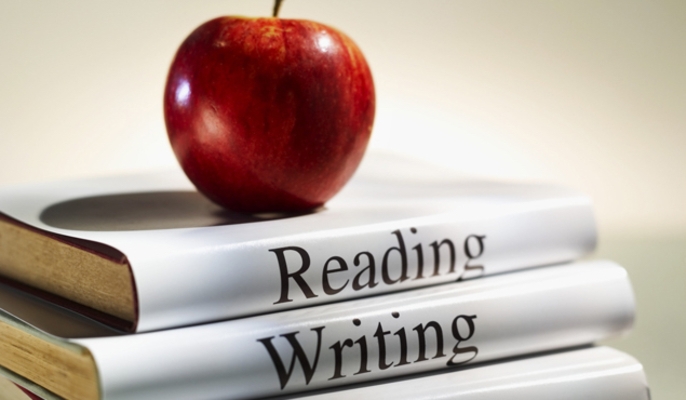
What does Reading to Write even mean?
The three words that make any year 11 English students’ skin crawl just at the mere thought of them – ‘Reading to Write’. English teachers (at my school, at least) seemed to consider this module the Holy Grail of senior English, constantly stressing its importance to our studies, claiming that it would shape how we consider texts in future.
I struggled to share their enthusiasm. I remember the sheer frustration of countless lectures given by my English Advanced teacher where she attempted to explain the module but I struggled to comprehend the importance of the words she was saying. Having completely forgotten about this experience as a student, I am currently reliving it as a tutor alongside my three year 11 English students, both Standard and Advanced. Suddenly, the module not only makes sense, but it seems ingenious to me and I understand why my teacher’s eyes lit up at the mention of it.
Throughout a student’s entire educational journey from K-12, the importance of reading books is stressed for many reasons: it improves fluency in reading, instills correct spelling, expands vocabulary, teaches higher grammatical and punctuational skills, and encourages an active imagination. While these skills may seem trivial to some, as a tutor I have come to realise how crucial all of these are to any subject, including technical subjects such as mathematics and sciences. When students read texts and respond to them in a way which does not resemble an essay, but rather a reinterpretation of their stylistic and thematic concerns, all of their English skills are heightened. By first reading a text, all of the above skills are enforced. By annotating a text and pointing out language and form techniques, analytical skills are practiced. By brainstorming story ideas and drawing upon literary techniques practiced by masters of the form, students appreciate the craft of writing (subtle foreshadowing) and are able to apply these proficiencies to other aspects of the English course, especially the ability to analyse texts.
However, I maintain the stand that this particular English module remains translatable among other disciplines. As a motivation and contextualisation of the importance of maths, a wise man (Harry Mav) once said, “if your brain is a muscle, maths is the gym.” I agree with this entirely as maths practices logical reasoning. Here, I extend this notion to say “if comprehension is a muscle, Reading to Write is the gym.” The Reading to Write module forces students to deconstruct texts, to dissect them if you will, and engineer them back together. There is no better way to understand literature and criticise it than to be on the other side of the pen, tracing plotlines and motifs onto crisp, exam-lined paper.
Shahaf Liraz