

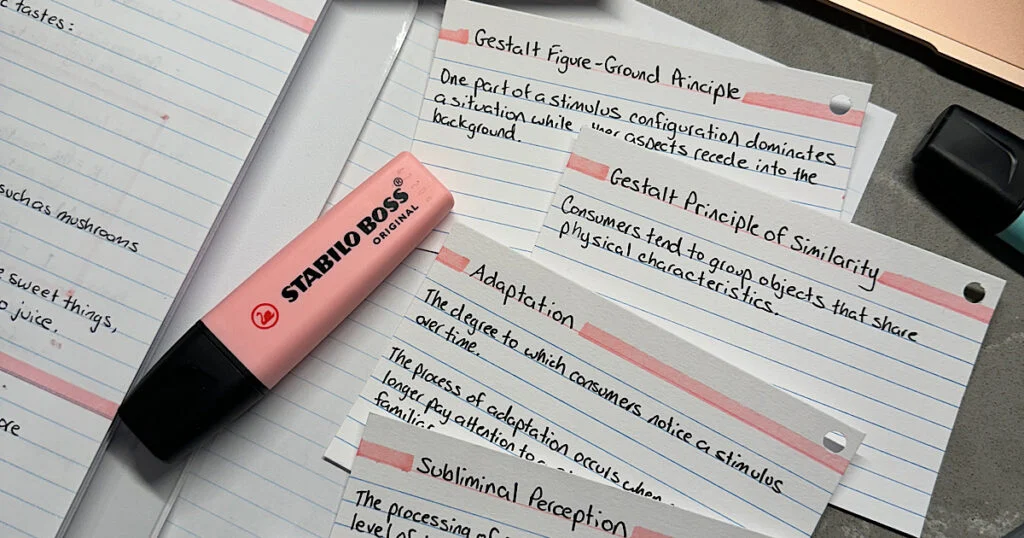
HSC physics demands more than understanding, it requires retention. With a syllabus spanning mechanics, waves, electricity, and modern physics, the volume of formulas, definitions, and conceptual relationships can feel overwhelming. Spaced repetition is the study technique that makes it manageable. Spaced repetition works by reviewing material at increasing intervals over time. Rather than cramming everything the night before, you revisit content just as you’re about to forget it, which is the moment where memory consolidation is most effective.
For HSC physics this is particularly powerful. Take projectile motion as an example. The relationships between initial velocity, angle, time of flight, and range involve several interconnected formulas. Reading over them once gives you surface level familiarity but creating flashcards that ask you to derive each formula or solve a quick numerical problem is the kind of repeated retrieval that makes those relationships stick permanently.
The technique works just as well for conceptual content. Cards that ask you to explain the photoelectric effect or describe why a charged particle moves in a circle within a magnetic field train you to construct clear exam ready explanations rather than just recognise them when tested.
Justin Ho