

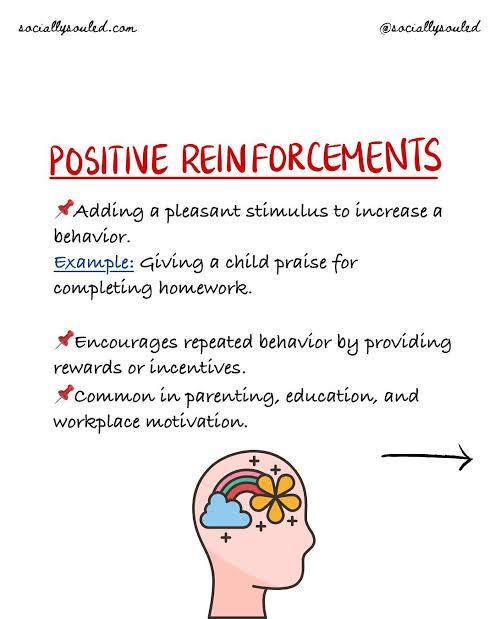
Having reflected on tutoring strategies, I came to value the importance of being encouraging as a tutor which I can implement through positive reinforcement strategies. Positive reinforcement plays a powerful role in tutoring because it shapes not just what students learn, but how they feel about learning. When I think about effective tutoring, I don’t just picture explaining concepts clearly. I also see the importance of creating an environment where students feel noticed, and motivated to keep trying. Positive reinforcement helps build that environment in a natural and meaningful way.
In my experience, students often come into tutoring sessions carrying some level of doubt or frustration. When their efforts are acknowledged, whether it’s through simple praise, encouragement, or recognising improvement, they begin to shift their mindset. Instead of focusing on what they can’t do, they start to see what they can do. This shift is subtle but important. It encourages persistence, especially when tasks become challenging.
Research in education consistently highlights that students respond better when effort is recognised rather than just outcomes. Reflecting on this, I’ve noticed that when I praise a student for trying a new strategy or sticking with a difficult problem, they become more willing to take risks. They are less afraid of making mistakes, which is essential for real learning. It also helps build trust between tutor and student, making the learning relationship more collaborative rather than evaluative.
However, positive reinforcement needs to be genuine and specific to be effective. Simply saying “good job” repeatedly can lose meaning. I’ve found that pointing out exactly what a student did well, like their reasoning or improvement, feels more authentic and impactful. It shows that I am paying attention and that their effort matters.
Ultimately, positive reinforcement is not about constant praise, but about guiding students to recognise their own progress. It helps them develop confidence and independence over time. As a tutor, this reminds me that my role is not just to teach content, but to support students in believing they are capable of learning it.
William Kelleher