

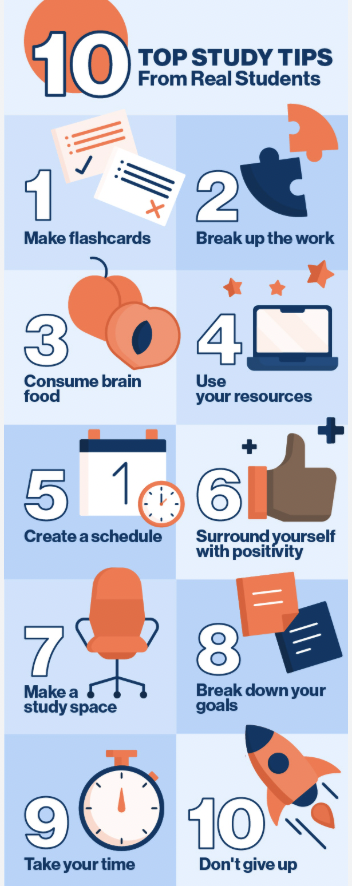
Being productive isn’t about studying for ten hours straight or pulling all-nighters before an exam. It’s about using your time properly and building habits that actually work long term. Anyone can feel “busy”. Not everyone is productive.
The first thing I’ve learnt is that clarity creates productivity. Before you even start studying, know exactly what you’re doing. Instead of saying, “I’m going to study Business,” say, “I’m revising financial strategies and answering two past HSC short-answer questions.” Specific tasks stop you from wasting the first 30 minutes figuring out what to do.
Time blocking is another game changer. I work in focused blocks — usually 45 to 60 minutes — with short breaks in between. During that time, my phone is on Do Not Disturb and nowhere near my desk. Multitasking is a myth. If your brain is switching between TikTok and a textbook, you’re not studying properly. Deep focus for shorter periods beats distracted studying for hours.
Active study always wins over passive study. Reading notes feels productive, but it’s low impact. Instead, test yourself. Write answers without looking. Teach the content out loud. Do past paper questions under timed conditions. If you can’t recall it without your notes, you don’t truly know it yet.
Your environment matters more than you think. A clean desk, good lighting and minimal noise make it easier to lock in. Productivity isn’t just discipline — it’s design. Set up your space so focusing becomes the easiest option.
Another big tip is starting before you feel ready. Motivation usually follows action, not the other way around. Tell yourself you’ll do just ten minutes. Once you start, momentum builds naturally.
And finally, protect your energy. Sleep properly. Eat properly. Train. See your mates. Burnout isn’t productive. Sustainable effort is. At the end of the day, productivity isn’t about doing more. It’s about doing what matters, consistently. Build small, focused habits, and the results compound over time.
Sara Theocharidis