

Every student learns maths differently. Some students find it easier to have questions broken down step by step in a formulaic way, while others grasp concepts better through patterns and intuition. In a recent tutoring session, I was reminded of just how important it is to adapt to a student’s learning style.
My student was struggling with trigonometry, particularly understanding sine and cosine beyond just plugging numbers into equations. At first, I explained the unit circle in a structured way, defining angles, coordinates, and key values. However, even as my student said that they understood, I noticed that when trying to apply the knowledge to new problems on their own, they were not able to use the concepts.
So, I shifted my approach. Instead of numbers and formulas, I took a different approach. By explaining, it as a wave in a more graphical form, my student quickly was able to grasp the new concepts and after some practice, was able to apply it to new problems.
Furthermore, once he visualized the concept, the equations made more sense. We then graphed sine and cosine together, reinforcing the connection. By the end of the session, he wasn’t just solving problems—he was predicting patterns before even using his calculator.
This session was a reminder that maths isn’t just about numbers; it’s about seeing connections. Some students need real-world analogies, others need visual aids, and some learn best in a purely formulaic way. No one way is incorrect, they are all paths to the same solution. A good tutor doesn’t just teach a topic—they find the right language for each student’s mind.
In the end, the best teaching isn’t about making students memorize facts. It’s about making them see maths in a way that feels natural to them. Once that happens, the numbers start to make sense on their own.
Samuel Lotter


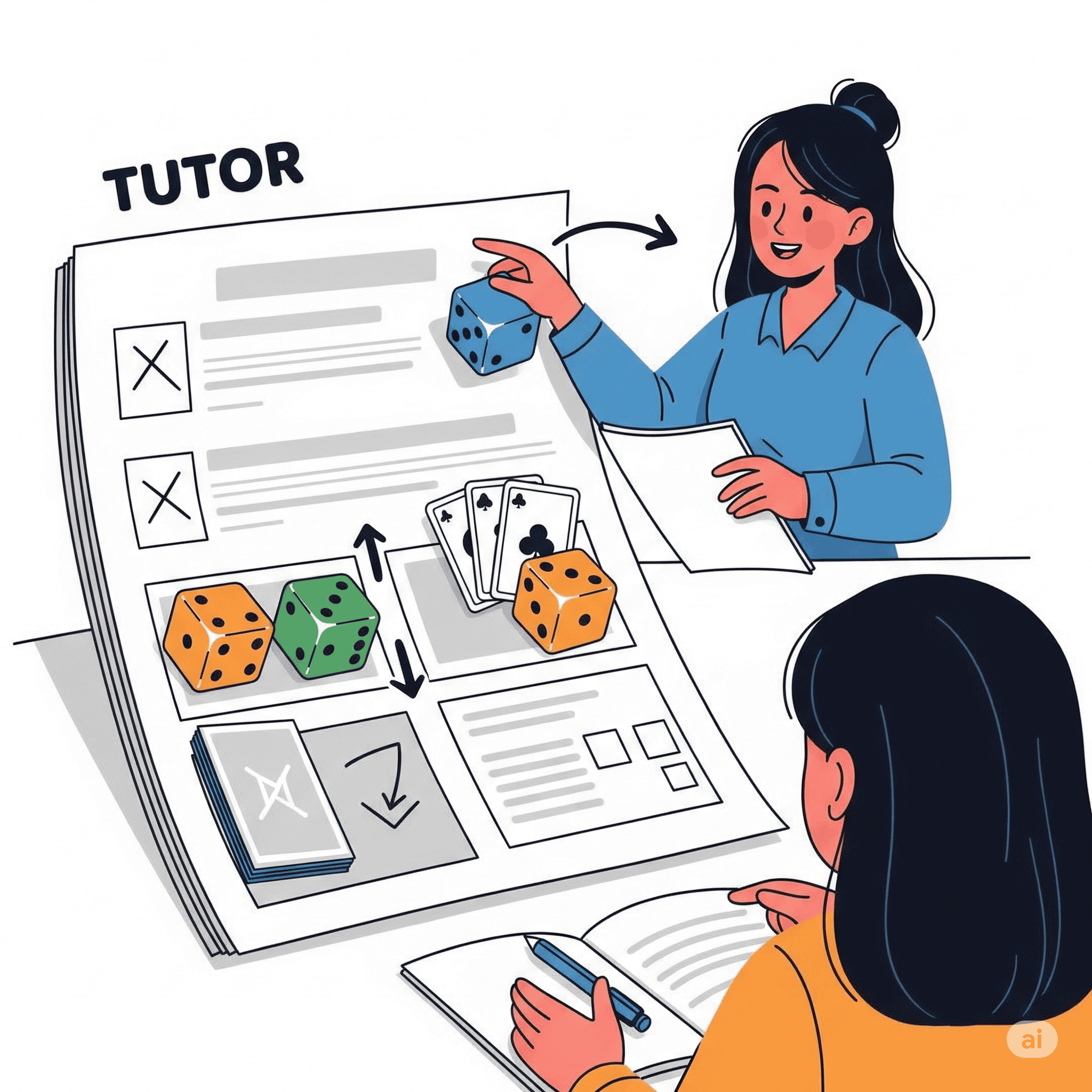
I wanted to talk about how AI, and ChatGPT can greatly enhance tutoring by automating the creation of worksheets, questions, and study plans tailored to each student’s needs. For example, by typing in a few easy prompts of exactly what you need, ChatGPT can generate customised worksheets that target those areas for improvement, create a range of questions, easy to hard. This can save us so much time and provide a steady stream of relevant practice materials without too much outside /extra time and manual preparation. I found this particularly useful with a year 1 English comprehension student I had last year. I would ask ChatGPT to create a short paragraph using his key spelling words, and this made it really easy to create targeted reading practice that reinforced his vocabulary/school spelling lists while keeping him engaged. It streamlined my lesson preparation, allowing me to focus more on guiding his understanding of the content rather than wasting time crafting my own paragraph from scratch. This approach supported creating a customised lesson that was both effective and enjoyable for him.