

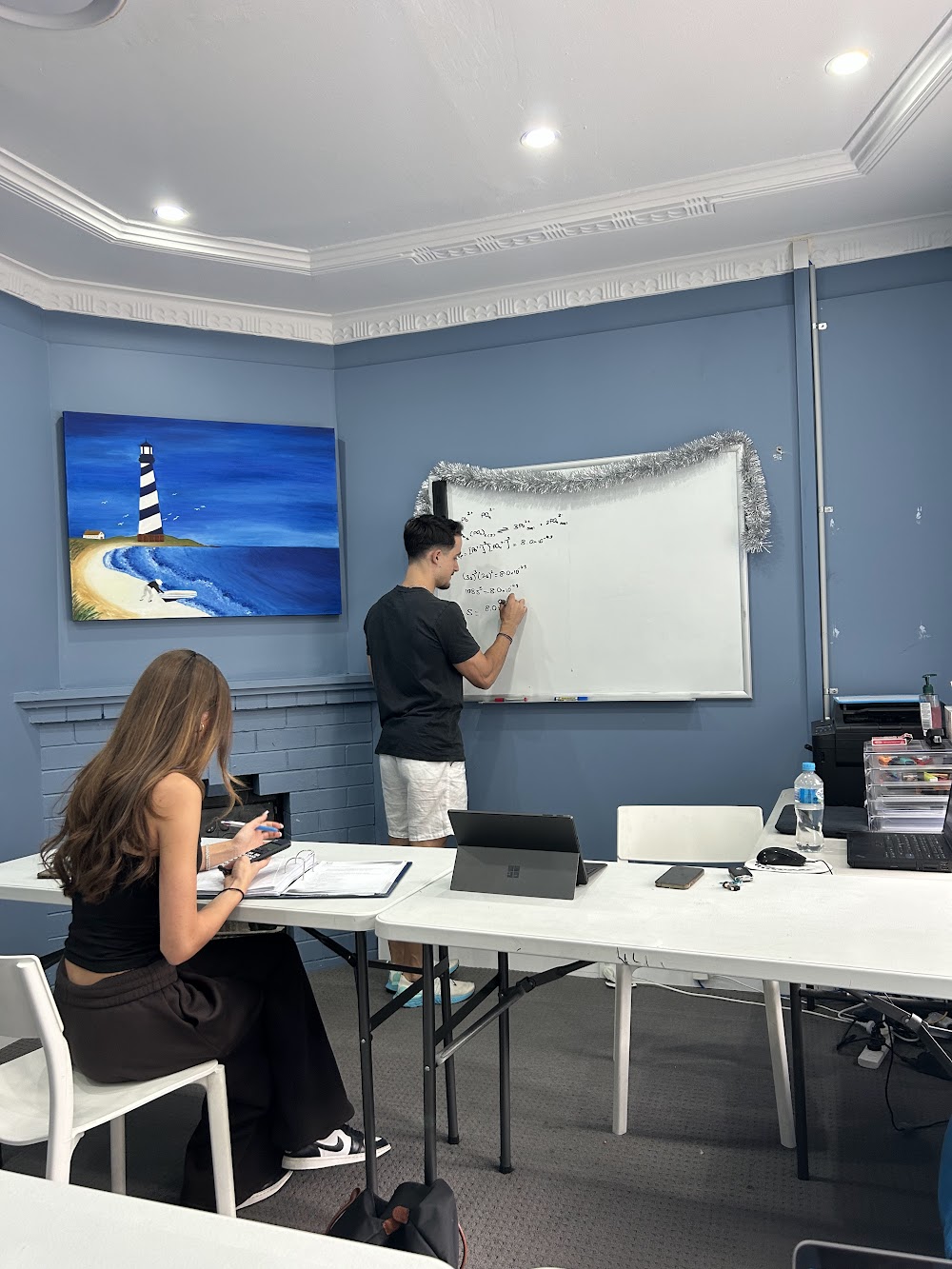
Today, I had the opportunity to observe Chris’ Chemistry session, which focused on the topic of solubility equilibria, specifically the solubility product constant (Ksp). The lesson was structured in a clear way, allowing the student to build confidence and understanding as the session progressed. Chris began by revisiting the fundamental concept of Ksp, ensuring the student understood what the solubility product represents and how it is used to predict the formation of precipitates and determine the solubility of ionic compounds in solution. This brief recap set a solid foundation before moving into more complex problem-solving.
Chris then introduced a series of sample questions designed to reinforce the student’s conceptual understanding and develop their analytical skills. He worked through the first few problems alongside the student, modelling the step-by-step approach needed to set up equilibrium expressions, substitute values, and perform calculations accurately. Throughout this process, Chris paused to check for understanding, encouraged the student to verbalise their reasoning, and clarified any misconceptions immediately. His explanations were concise and accessible, helping the student grasp the relationships between ion concentrations, molar solubility, and the numerical value of Ksp.
After demonstrating several examples, Chris gave the student the opportunity to attempt similar questions independently. This shift from guided practice to individual work allowed the student to actively apply what they had learned, building both competence and confidence. Chris remained supportive and attentive, stepping in with prompts when necessary but still giving the student space to think critically and work through challenges.
Overall, the session was highly effective and well-structured. Chris balanced explanation, demonstration, and independent practice, creating an engaging learning environment that strengthened the student’s understanding of Ksp.
Alexander Nikitopoulos