

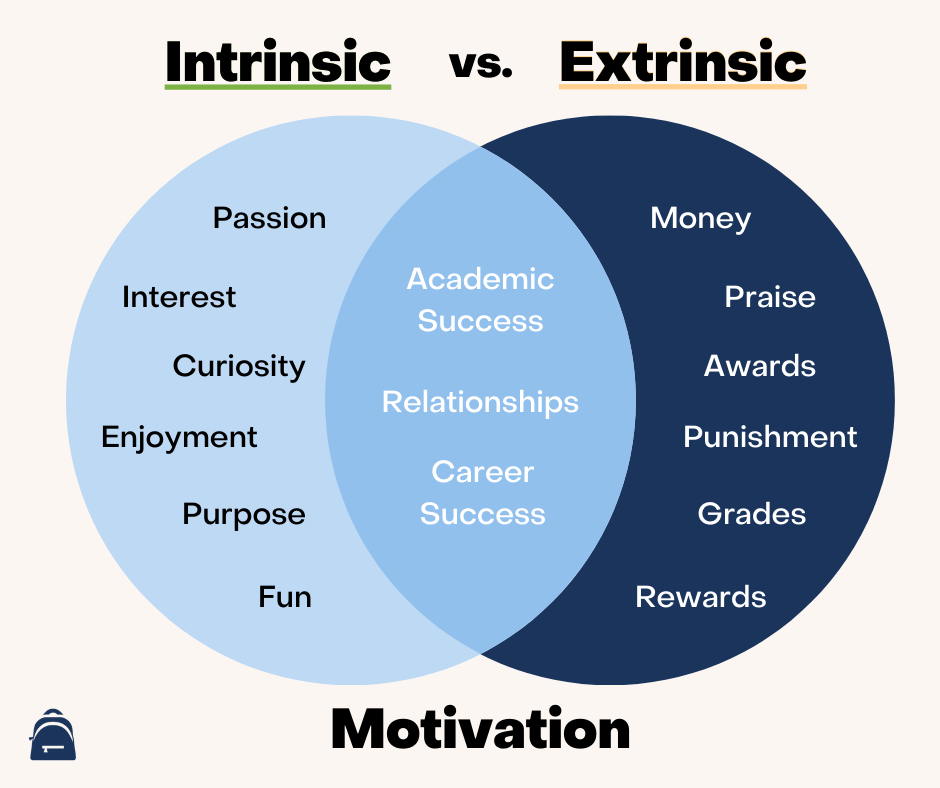
Understanding the difference between intrinsic and extrinsic motivation is essential for tutors to holistically support students in their learning. No student is the same, and it’s important to understand how students learn best to enhance the effectiveness of each lesson.
Extrinsic motivation comes from outside the student. It’s driven by rewards, expectations, and pressure: getting a high grade, earning screen time, impressing a parent, or avoiding consequences. These motivators can be helpful when a student feels stuck or uninterested. They provide structure, accountability, and a clear reason to begin a task. But they also have limits. Extrinsic motivators often create short bursts of effort rather than sustained curiosity, and once the reward disappears, so does much of the drive.
Intrinsic motivation, however, grows from within the student. It appears when they feel curious, engaged, or personally connected to what they’re learning. A student might enjoy solving puzzles, feel proud of improving, or recognise how a skill supports their future goals. Intrinsic motivation encourages deeper learning, persistence, and confidence, but it can take time to develop, especially if a student has experienced frustration or self-doubt.
So why is every student different? Because motivation is shaped by countless factors: personality, past experiences, family expectations, confidence levels, and even subject preference. A reward that energises one student may do nothing for another. A topic that sparks curiosity in one learner may overwhelm someone else.
That’s why effective tutoring isn’t one-size-fits-all. Tutors must identify what each student values, what obstacles they face, and what kind of support helps them feel capable and empowered. The goal is to use extrinsic motivation strategically while nurturing intrinsic motivation over time.
Jessica Ciappara