

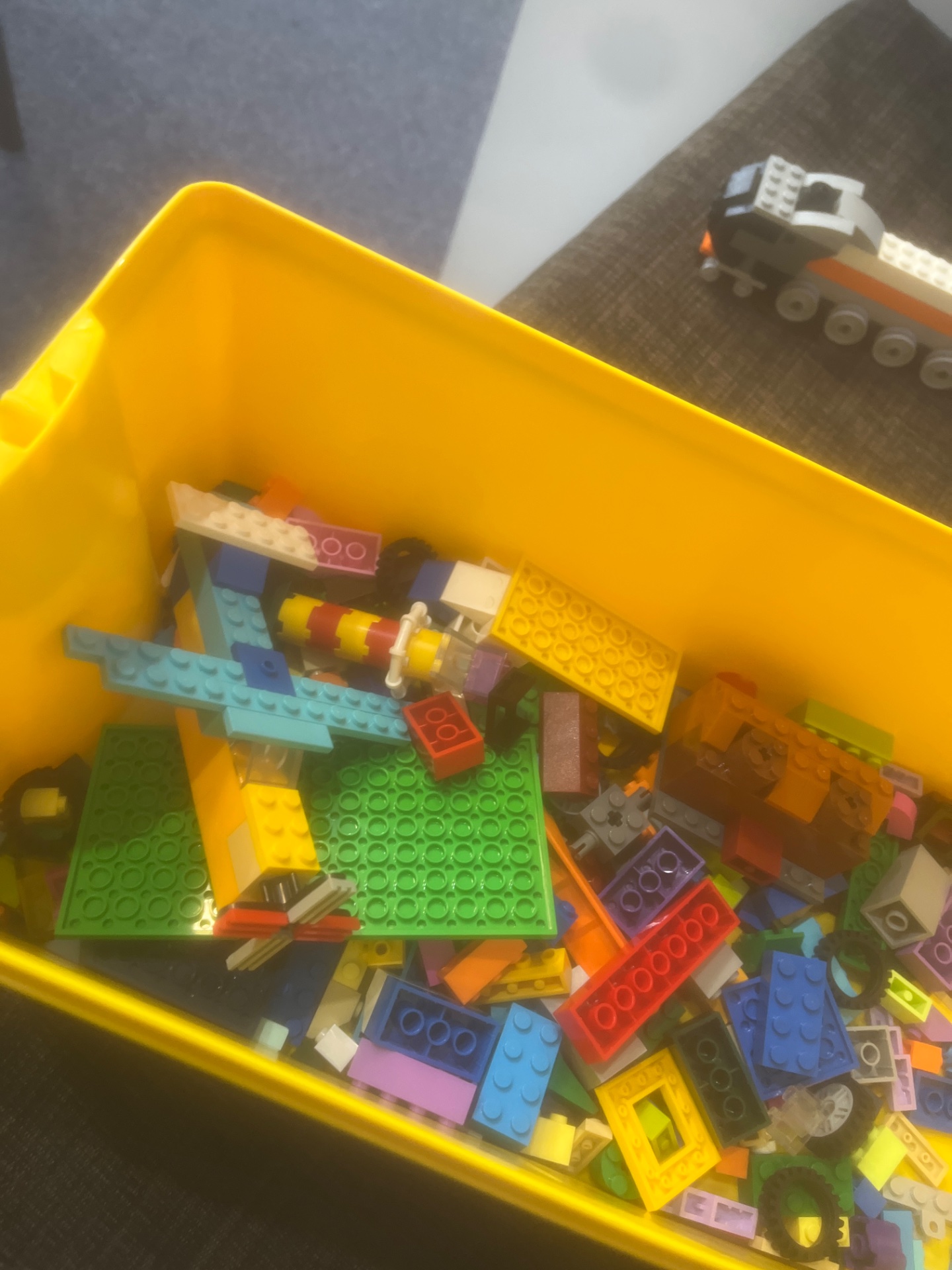
There’s something almost magical about a pile of Lego bricks. Before a single piece is snapped together, the possibilities are endless. That open-ended potential is exactly why Lego has become one of the most powerful tools a tutor can reach for. Traditional tutoring often centres on worksheets and repetition. These have their place, but for many, abstract concepts only click when they can be touched. Lego transforms ideas into something physical. Fractions become brick ratios. Story structure becomes a three-act tower. A historical timeline becomes a street of buildings, each representing an era. When students build, they aren’t just absorbing information; they’re making decisions, testing ideas, and owning their learning.
One of the greatest gifts Lego gives a learner is a consequence-free relationship with failure. A wall that collapses isn’t a red mark on a page, it’s feedback. Pull it apart, try again. This iterative mindset, so central to creative thinking, is exactly what tutors want to cultivate. Lego quietly teaches resilience without ever having to lecture about it.
Conversation as a Learning Tool
Building with Lego is naturally collaborative. A tutor working alongside a student with a shared set of bricks creates a different dynamic than sitting across a desk. Questions flow more freely. Ideas get voiced. The bricks become a shared language, making it easier to explore concepts together rather than deliver them top-down. Lastly, Creativity isn’t a soft skill, it’s the engine behind critical thinking, innovation, and adaptability. When tutors introduce Lego into sessions, they’re not just making learning fun (though they absolutely are). They’re building the habits of mind that help students thrive far beyond any single subject. Sometimes, the best lesson plan starts with an empty baseplate and no instructions
Lewin Fairbairn