People usually think that forgetting means you didn’t learn something, but apparently cognitive science says the opposite. Forgetting is not a flaw in many cases; it is an important part of how memory becomes stronger, lasts longer, and becomes more useful over time.
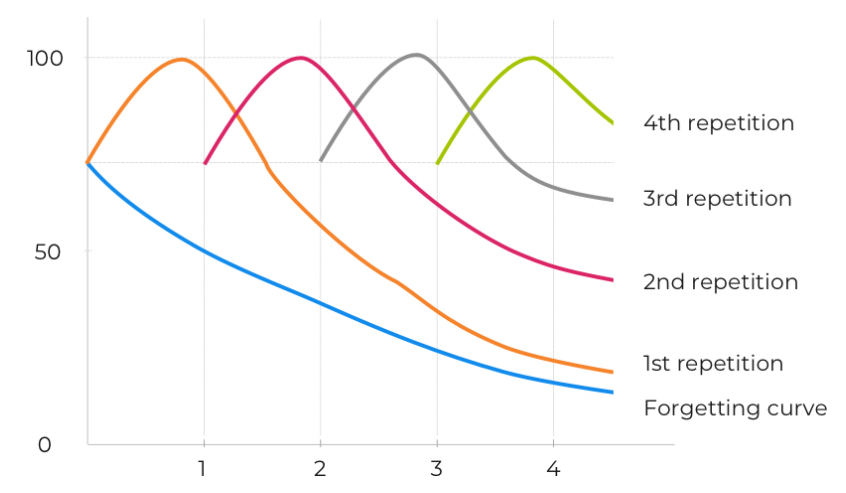
The spacing effect is one of the most well-known results in educational psychology. Students remember things better when they learn them over time instead of all at once. Some forgetting has already happened when a student goes back to the material after a break. This “desirable difficulty” makes the brain work harder to put the information back together, which strengthens neural pathways and helps you remember things for a long time. On the other hand, cramming often provides people a false sense of mastery, and the information quickly fades after the test.
Retrieval practice is closely related to this phenomenon. It means actively recalling information instead of just reviewing it. When students use quizzes, flashcards, or practice questions to try to remember something, they are not just checking what they know; they are also strengthening the memory itself. It’s important to note that the effort involved in retrieval is important. It is actually better if it is difficult to remember the information. The brain is changing how it stores information, making it easier to retrieve later.
This leads to an unexpected thought that memory loss can be advantageous. When people forget some things, it allows them a chance to learn more when they review. Every time you forget something and then remember it, it becomes more stable and less likely to be forgotten again. Learning is not a linear process, it’s a cycle of losing things and rebuilding them.
The meaning is clear for both teachers and students. Learning should not try to get rid of forgetting completely, but instead work with it in a smart way. If you are to space out your study sessions, use low-stakes testing, and give yourself time between reviews, forgetting can go from being a problem to a useful learning tool.
Angelina Castelli