

First Education

Balancing Expectations: Supporting Students Through Incremental Progress

Post Image

Managing parent expectations while supporting a student with significant comprehension delays requires a delicate balance of honesty, empathy, and strategy. I encountered this particular challenge with a Year 9 student who struggled to answer even the most basic of test questions. When working with such a kid, it’s critical to acknowledge where they are in their learning journey and to celebrate incremental progress. I focused on engaging the student by connecting syllabus content with her personal interests, making lessons relevant and helping her see the value of learning.

For example, I introduced basic literature analysis using topics she enjoyed, building her foundational understanding while maintaining her interest and motivation.
Instead of overwhelming her with classroom content beyond her current capabilities, I gradually bridged her foundational skills to curriculum-aligned material, ensuring she wasn’t distressed or disheartened. This approach involved breaking down complex tasks into manageable, modular steps—simple yet achievable goals that restored her confidence after years of academic struggle. Giving clear, step-by-step instructions and asking her to repeat them ensured comprehension and accountability. Repetition, at whatever level necessary, reinforced her understanding and slowly built her ability to engage with test questions.

Equally important was managing her parents’ expectations. They understandably wanted her to excel, but I explained that our immediate goal wasn’t high test performance but building her basic skills and confidence. I emphasised that success would come in stages, starting with answering single questions correctly before tackling larger challenges. Keeping parents informed about her small victories helped them appreciate the progress she was making, even if it wasn’t yet reflected in test scores. By prioritising the student’s emotional and academic needs while maintaining open communication with her parents, we were able to create a supportive environment where she could begin to thrive.

Thea Macarthur-Lassen
Observation

Post Image

Observing Grace’s English lesson provided an insightful look into effective teaching strategies in a contemporary classroom. Grace demonstrated a well-structured approach to lesson delivery, maintaining a balance between direct instruction and student engagement. The lesson focused on exploring literary techniques in poetry, with a specific emphasis on fostering critical thinking and interpretative skills.

The session began with a clear outline of learning objectives, ensuring students understood the purpose and relevance of the lesson. Grace used a mix of visual aids, such as annotated excerpts and multimedia presentations, to illustrate key concepts. Her ability to integrate technology seamlessly into the lesson was particularly noteworthy, as it kept the students attentive and facilitated diverse learning styles.

A highlight of Grace’s teaching was her skill in eliciting student responses. Through open-ended questions and scaffolded prompts, she encouraged deeper analysis of the texts. Students were given the opportunity to collaborate in small groups, discussing themes and techniques before sharing their findings with the class. This collaborative approach not only reinforced understanding but also fostered a supportive and inclusive learning environment.

Grace’s classroom management was also impressive. She maintained a calm and authoritative presence, setting clear expectations for behavior and participation. The transitions between activities were smooth, ensuring minimal downtime and maximum productivity. Furthermore, her ability to provide constructive feedback in real-time helped students refine their interpretations and build confidence in their analytical abilities.

Overall, the lesson reflected Grace’s commitment to student-centered learning. Her ability to create a dynamic and intellectually stimulating environment was evident in the students’ active participation and the quality of their responses. Observing her lesson offered valuable insights into the practical application of pedagogical theories, highlighting the importance of adaptability, clear communication, and fostering an atmosphere that celebrates critical inquiry and collaboration.

Corey Porter

Why Shakespeare is so important?

Post Image

As a student, when I started studying Shakespeare, I hated it. It was really difficult to wrap my head around and the ideas trying to be communicated were so complex. But Once I stepped back and looked at how he was trying to communicate very simple ideas, my writing drastically improved. Now I see Shakespeare not as a compulsory prescribed text BUT as a very good avenue for important lessons about life and the world.

I now see a lot of students absolutely fume about the fact they have to study Shakespeare and they walk in, grumpy asking about his importance. I try to explain but what I have found is I need to show and not tell. So I start analysing with them and as we go I relate the ideas in Shakespeare to ideas in the real world, to things they have noticed. This really helps them understand what they are reading instead of reading it for the sake of it. The turnaround of most if not all of my students is really shocking. Once explained they understand what he is saying despite the funky language he may be using. And I use this as a way to teach them to analyse any text whether it’s a short answer source in Common Mod or a creative stimulus in mod C.

Ultimately by confronting the difficulties in reading and understanding Shakespeare, I have helped my students improve their overall understanding of a multitude of texts which results in an even bigger improvement. So despite any lack of enthusiasm in the beginning, I find customising the experience of reading and analysing texts to suit your student is always best and makes sure they improve in grades and in their views/beliefs about how to find meaning in texts.

Olga-Liana Athanasatos

Observation

Post Image

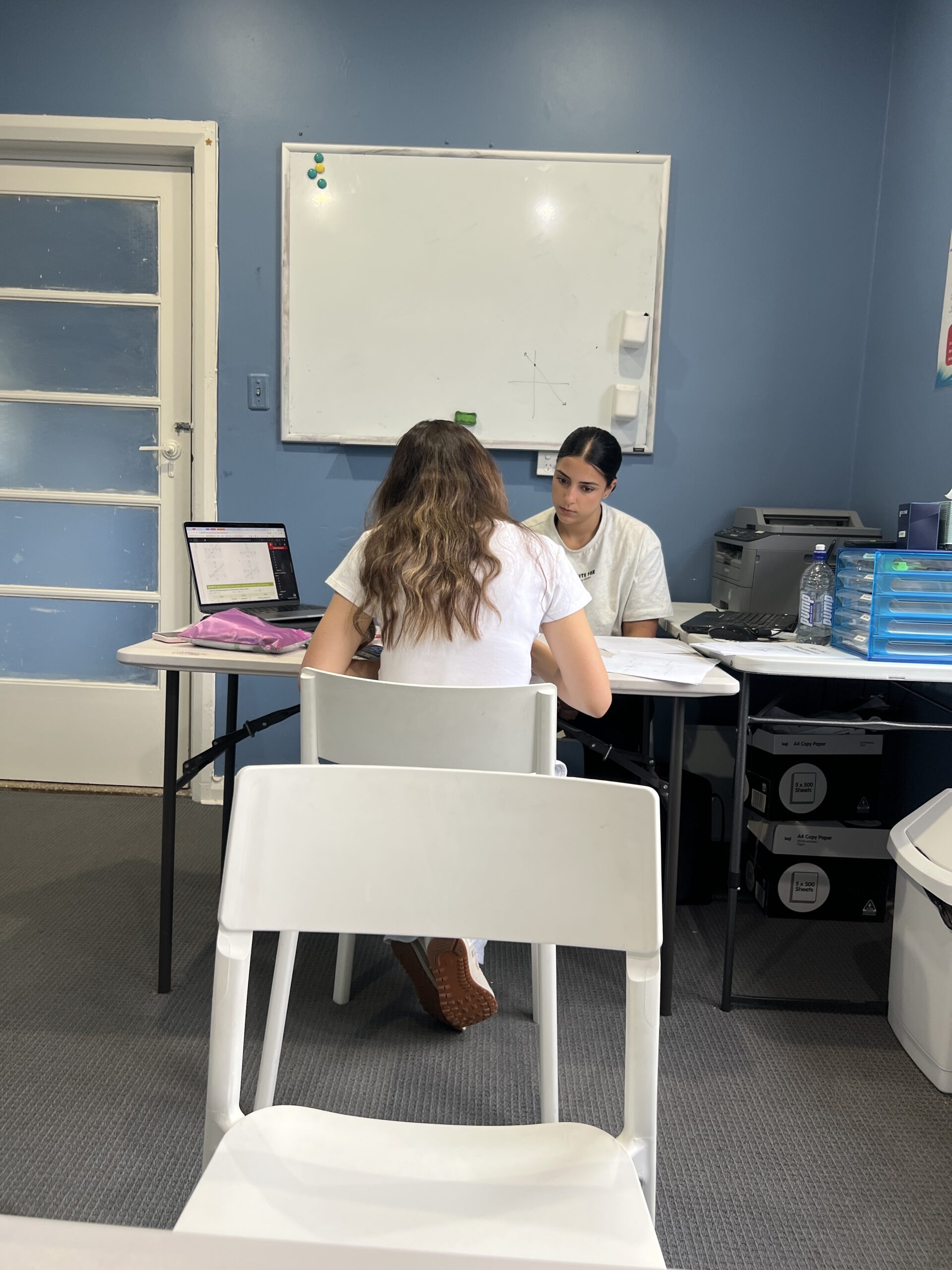
I had the opportunity to observe Rheanna as she tutored a student in Math, and it was an eye-opening experience. From the moment the session began, I noticed how approachable and patient she was, setting a comfortable tone for the student. Rheanna didn’t just dive straight into solving problems; she first asked the student where they felt stuck and encouraged them to verbalize their thought process. This approach immediately made the student feel heard and understood, which seemed to reduce any anxiety they might have had. As she worked through the problems, I saw how she used a combination of questioning and guided examples to help the student reach the answers on their own, rather than simply giving them the solutions. I was impressed by how she broke down complex concepts into smaller, manageable steps, ensuring the student grasped each part before moving forward. Rheanna also rephrased difficult instructions in simpler terms, which seemed to make a significant difference in the student’s comprehension. Throughout the session, I could see how her feedback was both constructive and encouraging, reinforcing the student’s confidence. I learned that tutoring isn’t just about explaining the material—it’s about building a rapport, creating a safe space for mistakes, and fostering a mindset of problem-solving and self-reliance. By the end of the session, it was clear that the student had not only understood the concepts better but was also more confident in approaching new problems. Watching Rheanna in action showed me how effective teaching requires patience, empathy, and a thoughtful, adaptive approach

Nabil Harrar

Observation

Post Image

I got the opportunity to observe Jemima’s Maths session! She did such a good job explaining the area and the circumference of a circle to her high school student. She made sure he understood the formulas by getting him to draw diagrams and by getting him to write the formulas down next to each diagram. She got him to draw the sector, segment, radius, diameter first so he understood all the components of the circle before attempting the Maths questions.

When explaining the theory she would draw the formula and the diagram in a book so he could see clearly how he could answer the question.

She then went through some practical questions including his school homework questions so he was able to apply the theory they had previously gone through in a practical sense. By doing the textbook questions he was able to practice different questions arhat asked him to find different parts of the circle.

She would let him attempt the questions first . Then she would check his working out to make sure he was on the right track. When he had any errors in his working out she would write out the working out in her textbook which made it clear for him to understand and see where he went wrong.

Jemima would also go step by step through the working out. She would also give him hints so he could come to the answer himself rather than her just working it out in front of him.

Her student was a visual learner so it was great to see how she was able to cater towards his needs. She also asked her lots of questions to help clarify his understanding and to double check he was on the right track. Jemima did such a great job and should be so proud of herself! Great session! Such a pleasure to observe. Keep it up!

Ashley Cohen

Observation

Post Image

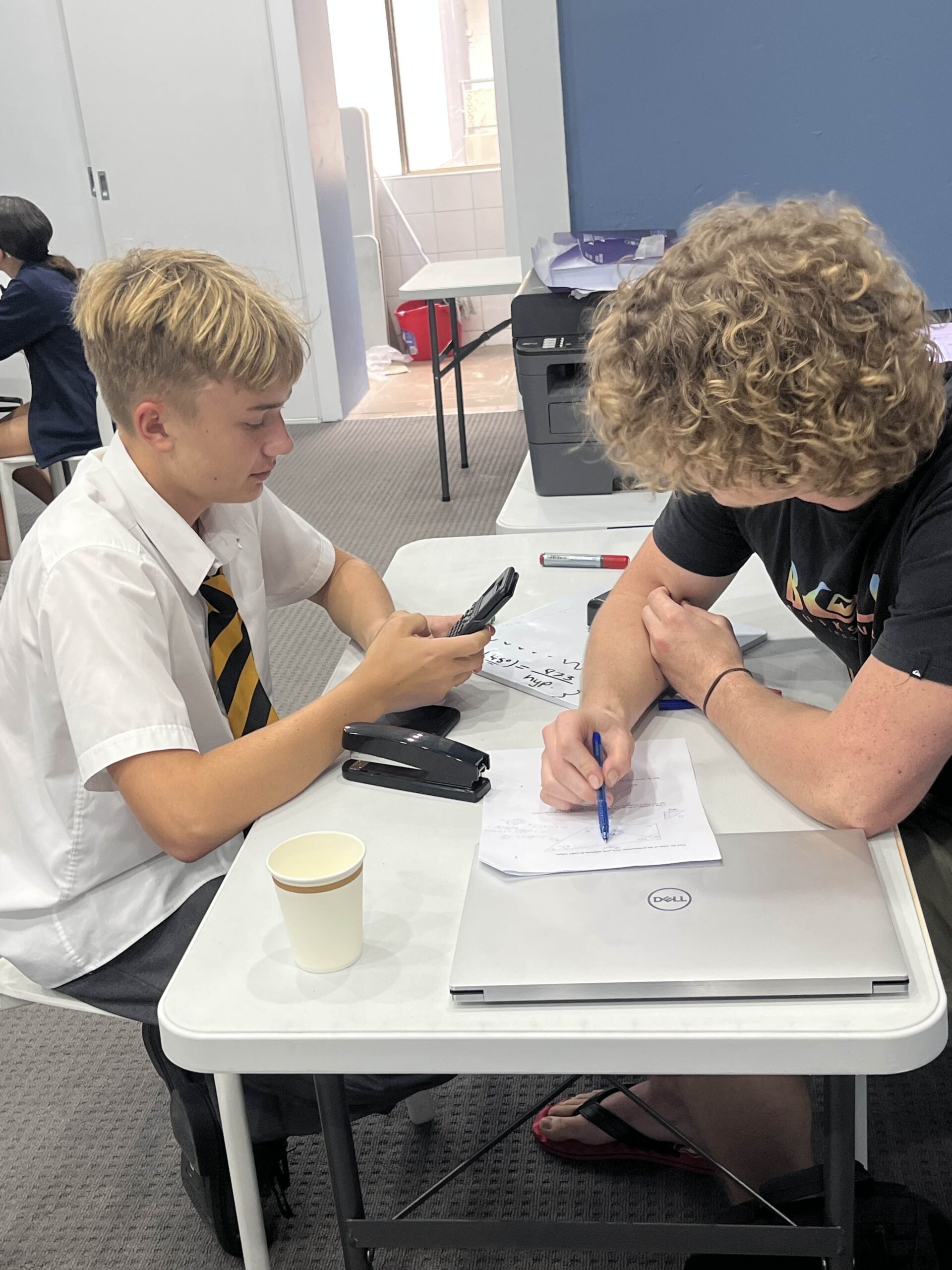
In today’s session with Jack, a Year 9 student, Cameron skilfully introduced the topic of trigonometry, focusing on the foundational concepts of sine, cosine, and tangent. Cameron’s ability to simplify complex mathematical ideas into digestible explanations was particularly effective, allowing Jack to grasp the material with confidence.

One of Cameron’s strengths during the session was his use of clear and structured teaching methods. He began by introducing the basic definitions of sine, cosine, and tangent using the mnemonic SOH-CAH-TOA. Cameron reinforced this by drawing a right-angled triangle and labelling its sides to demonstrate the relationships between the angles and side lengths. This visual approach helped Jack understand how trigonometric ratios are calculated and where they are applied in real-world contexts.

Cameron excelled in fostering Jack’s engagement by asking targeted questions, such as “What side is opposite the angle?” and “Which ratio would you use here?” These questions encouraged Jack to actively think through the steps, rather than passively following instructions. Cameron also provided immediate feedback, ensuring Jack corrected any misconceptions on the spot. For instance, when Jack initially struggled to determine the correct angle to use in a problem, Cameron guided him with a hint rather than directly providing the answer, promoting problem-solving skills.

From this session, I learned the importance of using incremental challenges to build student confidence. Cameron started with straightforward examples, like finding a missing side, and gradually introduced more complex problems involving angle calculations and word problems. This progression kept Jack motivated and reduced frustration.

Another highlight was Cameron’s use of real-life applications to keep the material relevant. He explained how trigonometry is used in fields like engineering and architecture, sparking Jack’s interest and showing the practical value of what he was learning.

Overall, Cameron’s combination of structured teaching, engaging questioning, and real-world connections made this session highly effective. It demonstrated how a tailored approach can significantly improve a student’s understanding and enthusiasm for mathematics.

Thank you Cameron and Jack!

Pasquale Simone Mendoza

Observation

Post Image

I had the pleasure of observing Lottie’s Year 4 writing lesson from 7-8pm. The session was a well-structured blend of reviewing informative texts and introducing the fundamentals of narrative writing. Lottie’s thoughtful guidance and ability to make the learning process enjoyable stood out as she worked closely with her student.

The lesson began with Lottie marking the student’s homework on informative texts. Her feedback was concise and clear, highlighting strengths while addressing areas for improvement. This efficient approach allowed the student to quickly understand how they could refine their writing, using a ‘show don’t tell approach’. From there, Lottie seamlessly transitioned into narrative writing, inviting the student to become involved in a creative way, as they too then understood how to add depth to their own sentences.

To help the student develop how they construct sentences and their narrative skills, Lottie provided written examples for comparison. These examples illustrated how to transform simple sentences into more vivid and detailed ones. For instance, she expanded a sentence like “The girl walked to school” into “The girl strolled down the bustling street, her backpack bouncing as she hummed a cheerful tune.” Lottie also emphasised the importance of language devices in creative writing. She reminded the student how similes, metaphors, and sensory descriptions could bring their stories to life. To put this into practice, Lottie offered the student a choice of writing prompts, encouraging ownership of the task. The student selected their favourite and began crafting an opening, focusing on setting the scene.

A key highlight of the session was Lottie’s discussion about creating engaging settings. She explained how to use descriptive language to establish atmosphere and draw readers into the story. By asking questions like, “What would your character hear, smell, or feel” she guided the student to think critically about their setting.

Therefore, the student had gained confidence in their narrative writing abilities, leaving with a strong understanding of how to create detailed, engaging stories. Lottie’s encouraging and practical teaching approach ensured the lesson was both productive and enjoyable. Thank you Lottie!

Eleni Nicholas

Observation

Post Image

Observation of two mathematics lessons, one for a Year 12 and one for a Year 10: Probably the most important thing for a tutor is the ability to connect with students, which luckily is something which both the tutors I observed for this session and tutors in past observations have mostly been extremely successful in achieving. From what I can see there are 3 big main reasons why being able to connect with a student is so helpful when tutoring them across all subjects. Firstly, being able to become pseudo friends with a student makes the session overall less boring for the student. If you are actually enjoying a conversation with someone you are going to pay more attention and absorb more from the conversation. Additionally, making the lesson less like a chore reduces the incentive to just get through the lesson so they can go do something else. Secondly, a comfortable student is more likely to ask the tutor questions. If it is too awkward to bear talking with a tutor, they are not going to ask any questions, and questions are incredibly important for judging the progress and understanding of the student. Thirdly, it makes the student more able to take criticism. If you don’t like someone, you are going to be more predisposed to just ignoring any criticisms out of hand, not because of any ideas on your part but just because the person you don’t like is making them, and this of course applies to students as well. Especially for subjects with less concrete solutions such as English, if every time you try to point out an error the student has this knee jerk reaction of ignoring the criticism their going to struggle to grow their understanding from the lesson. For tutoring, regardless of subject, connection is the foundation upon which understanding of the topic rests.

Dimitri Wyatt Sikes Williams

The Power of Building Relationships in Tutoring

Post Image

Academic material is definitely crucial in tutoring, but one factor that is frequently overlooked is the tutor-student interaction. While methods, topic, and curriculum offer the foundation for sessions, it is the relationship fostered by a tutor that has the potential to profoundly improve a student’s educational experience.

Reflecting on my own views and experiences, I’ve realised that trust and rapport are essential components of good tutoring. Unlike traditional classroom settings, tutoring allows students to form one-on-one relationships. This unique interaction enables the tutor to identify not only the student’s academic skills and shortcomings, but also their learning preferences, interests, and motivations.

For example, I’ve witnessed how incorporating a student’s passions into lessons may increase participation. When fractions are applied to areas they are interested in, such as baking or soccer statistics, a struggling student’s engagement is increased. This is more than just a strategy for making studying enjoyable; it demonstrates to the student that their interests are important and that learning can have a meaningful impact on their lives. From personal experiences, one of my students enjoys Minecraft, and we were learning to write narratives, so I allowed his story to take place in a Minecraft universe. His enthusiasm for the narrative inspired his interest in writing and encouraged him to be inventive with the details.

Encouragement and positive reinforcement play an important role in connection building in tutoring. Many students seek tutoring because they have academic concerns or are afraid of failing. A simple, honest acknowledgement of their efforts, such as “I see how hard you’re working on this,” can make a huge difference. These simple moments of encouragement help to cultivate a growth mentality in students, teaching them to value effort and progress over perfection.

Building relationships may not be clearly stated on any syllabus, yet its value extends well beyond any particular class. It serves as a reminder that education is about more than simply what we educate students; it is also about how they feel about themselves and their potential.

Isabella Garofalo

Breaking Down Big Goals

Post Image

Big goals are exciting—they inspire us to dream big. But they can also feel overwhelming. This is something I grapple with often. Whether it’s getting the motivation to do a task, finishing a project or improving my skills, the hardest part is knowing where to start. Over time, I’ve learned some strategies to help make the process less daunting.

The first step is clarity. Instead of vague goals like “do well in school,” define them specifically. For example, “Raise my math grade from B to A this semester” is clear and measurable. With a well-defined endpoint, it’s easier to create a roadmap.

Next, break the goal into smaller milestones. For instance:

Review past test topics.
Practice problems for 20 minutes daily.
Schedule weekly tutoring sessions.
Each milestone should feel achievable, offering a sense of progress without overwhelm.

Deadlines are crucial but challenging for me. Without them, procrastination is inevitable. Assign deadlines to each milestone. For example:

Week 1: Identify weak topics.
Week 2: Start revising one topic per day.
Stick to the schedule but adjust as needed.

Celebrate small wins. Completing a chapter or mastering a concept is worth acknowledging. Small rewards, like a treat or break, can keep motivation high.

Finally, reflect and adapt. If a step feels too big, break it down further. Adjusting plans is part of the process. Progress isn’t always linear, but moving forward, no matter how small the steps, is what matters.

Big goals are daunting, but breaking them into manageable parts makes them achievable. Start small, and watch the progress build. What’s one goal you’re tackling? Try this approach—you’ll be surprised at how far it takes you.

Allegra Pezzullo