First Education

Helping Kids Discover Their Potential

Post Image

If a person were to list their expectations of being a tutor, saying ‘increasing a child’s confidence’ would not be one. I think this is an aspect of tutoring which is not discussed enough. Whilst our jobs are primarily to educate, education cannot come without confidence, and a belief that a child is even smart enough to learn.

There’s something truly special about being part of a child’s learning journey. While I can understand that there is a curriculum which needs to be followed and tests which need to be studied for, the most valuable tool a tutor can give to a child is the belief that they can learn. They can study for a test, or complete an assignment, or answer difficult questions.

Education isn’t just about academics. It’s about shaping character, building confidence, and sparking curiosity. When we encourage kids to ask questions, think creatively, and explore their ideas, we’re giving them tools they’ll use for life. And honestly, there’s nothing more rewarding than seeing a shy child grow into someone who believes in themselves.

Of course, it’s not always easy. There are days when patience runs thin and progress feels slow. Sometimes you can see the potential so clearly in a student, but they are unable to see it themselves – which can often be the most frustrating part. But over time, it is almost inevitable that progress will happen.

At the end of the day, teaching is about planting seeds in a garden you might never see grow. But even if you don’t see the growth, the journey was meaningful all the same.

Maya Weizman

Observation

Post Image

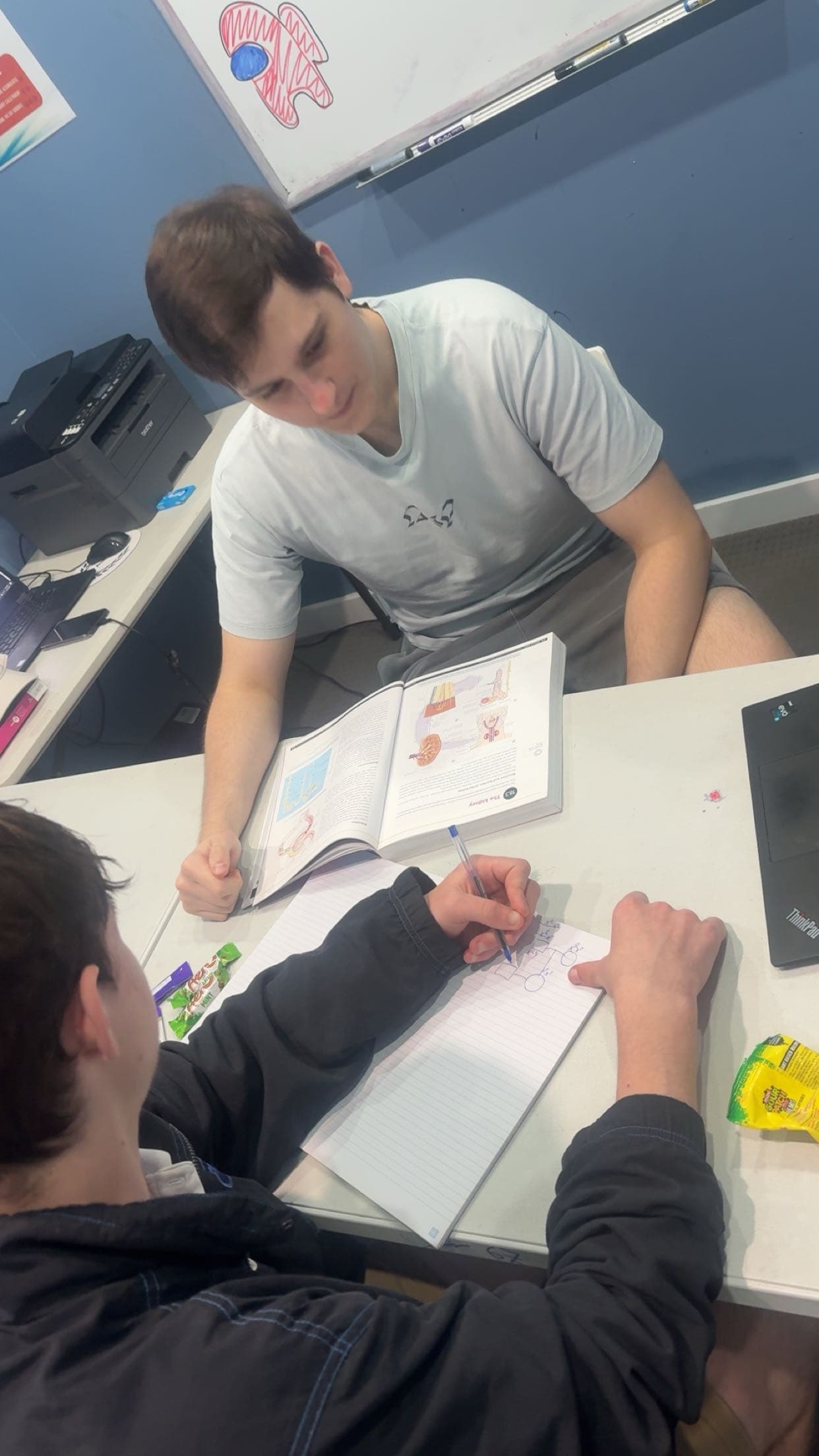
I was able to observe Hugo’s year 8 maths session today ! What really stood out to me was his way of explaining the question in a way his student could understand. From the very beginning, when his student showed confusion, he was able to rephrase the question or break it up into smaller steps she was able to do. Rather than simply providing the answer, he guided the student through the reasoning process, asking questions that encouraged critical thinking and independent problem-solving. I also appreciated the way he was able to do this without sounding strict or intimidating. He was able to explain the steps to her in a friendly way, still maintaining banter while doing so. It was obvious to me how much she seemed to enjoy the sessions with him ! His patient and friendly demeanour helped maintain a supportive learning environment and encouraged the student to stay engaged and ask questions without hesitation or without feeling embarrassed.

Another strength I noticed was Hugo’s ability to identify where the student’s misunderstanding stemmed from. Instead of moving on quickly, he paused to address these gaps directly, reinforcing the foundational skills needed for the topic. His flexibility was evident as he was quick to adjust his methods depending on how the student responded or what resonated with her.

Overall, Hugo’s teaching style was interactive, student-focused, and built understanding rather than memorisation. It was clear that the student walked away happy and much more confident with the topic !

Annaliese Lakis

Observation

Post Image

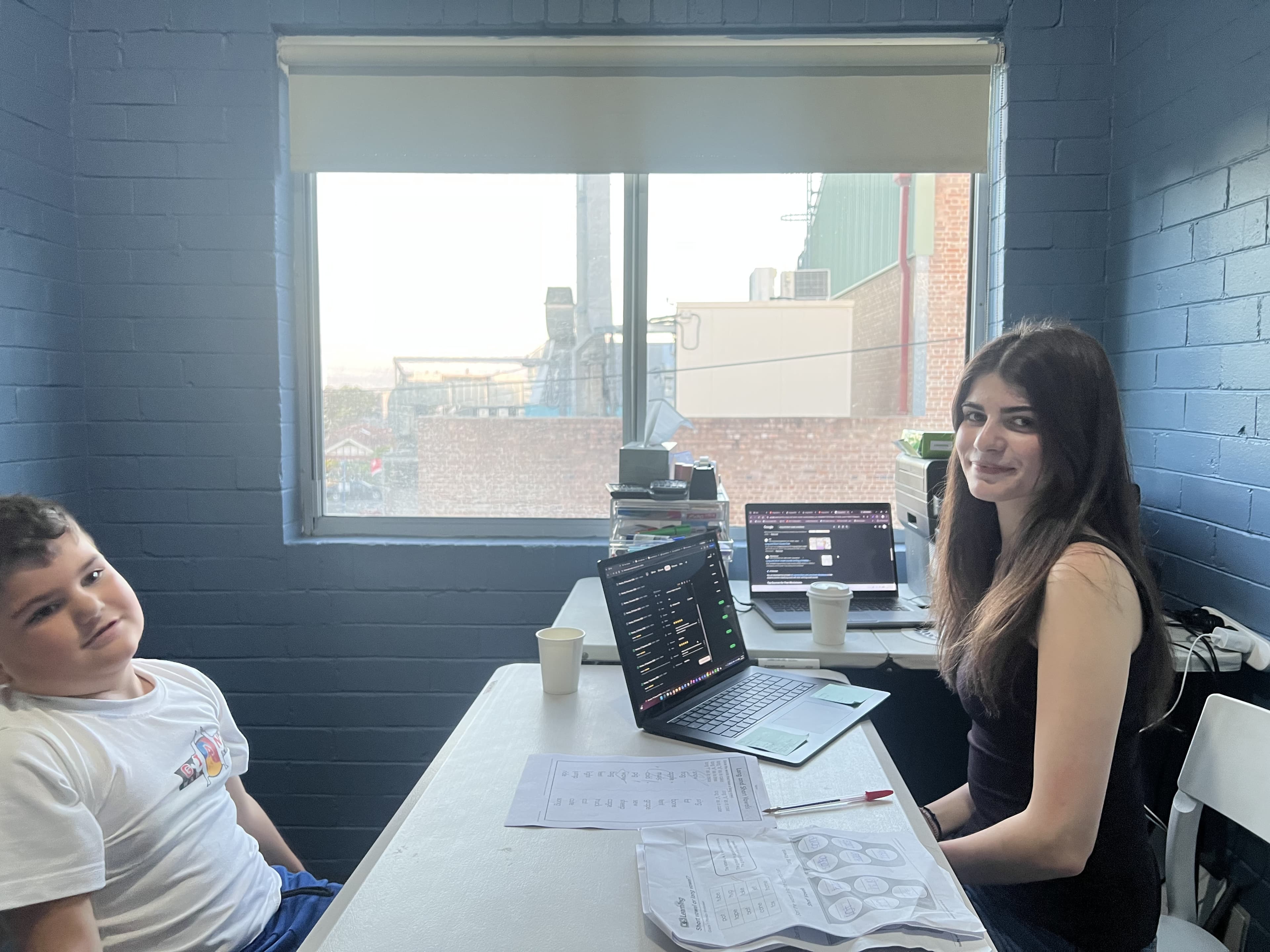
Today I observed Dimitra tutoring a Year 6 student. The session focused on revising Geography, particularly mapping skills such as interpreting map symbols, understanding scale, and using grid references. Throughout the lesson, Dimitra maintained a calm, patient, and engaging teaching style that fostered a positive learning environment. She began the session by encouraging the student to recall prior knowledge from previous lessons, using questioning techniques to activate background understanding and make connections to new content.

Dimitra guided the student through a series of Geography worksheets, carefully explaining each concept and providing clear, step-by-step demonstrations where necessary. She incorporated visual examples, such as maps and diagrams, to make abstract ideas more concrete and relatable. Her explanations were well-paced and tailored to the student’s level of understanding, allowing the student time to process information and ask questions.

To reinforce learning, Dimitra provided targeted practice questions and offered constructive feedback, prompting the student to reflect on their reasoning and correct any misconceptions. She checked for comprehension regularly by asking the student to explain their thought process, which encouraged active participation and deeper understanding.

The student appeared engaged, confident, and motivated throughout the session, responding positively to Dimitra’s supportive and encouraging approach. By the end of the lesson, the student demonstrated improved accuracy and confidence in applying mapping skills independently. Overall, Dimitra’s effective use of scaffolding, visual aids, and positive reinforcement contributed to a productive and enjoyable learning experience.

Nicole Stamatelatos

The ever-evolving nature of Economics

Post Image

Economics is one of the most dynamic and constantly evolving subjects in the world. Unlike static disciplines that rely on fixed laws, economics changes with every shift in society, technology, and politics. What makes it so fascinating is that it reflects human behaviour and yet humans are never predictable.

From global financial crises to the rise of digital currencies, each new event reshapes the way we understand supply, demand, and decision-making. Economists are continually developing new models to explain how people respond to incentives, how markets adapt, and how policies can create growth or inequality. This constant movement keeps economics both challenging and engaging to study.

Students of economics aren’t just learning formulas or theories, they’re learning how to think critically about real-world problems. Every chart, statistic, and policy has a story behind it, revealing how individuals and nations make choices that affect millions.

Because the economy never stands still, neither does economics. It is a living, breathing discipline that evolves with the world around it and that’s what makes it endlessly interesting to explore, question, and understand.

Nabil Harrar

Year 3 maths

Post Image

Teaching math to a 3-year-old can be a fun and engaging experience. At this age, children learn best through play and hands-on activities. Start with basic concepts like counting, number recognition, and shapes. You can introduce counting through everyday objects like toys or snacks, making it both practical and fun. For number recognition, use flashcards or point out numbers in everyday settings like books or clocks. Shape recognition is also important, so encourage your child to sort or match different shapes through play. Snack math is a great way to introduce simple addition and subtraction—count how many snacks your child has and then add or subtract a few. Additionally, math-based games like “Chutes and Ladders” help practice counting while providing entertainment. Reading books that include counting or shapes, such as The Very Hungry Caterpillar, is another excellent way to integrate math into storytime. By embedding math into everyday activities and play, your child will start building a strong foundation for future learning, all while having fun and discovering the world of numbers in a relaxed, enjoyable way.

Anthea Preketes

How to deal with back-to-back exams

Post Image

The worst thing about the HSC, or any exam season really, is finding out your timetable. If you’re lucky you might get a few days between exams, though you’re almost guaranteed to get two exams day after one another, or even on the same day. Here’s how I came to deal with it through both the high school and the HSC:

1. Mixed Study Daily (Retention)
The most important part, and this applies to all subjects too, is that you spend time on BOTH subjects on the days leading up to your two exams. This means that you’re actively growing your memory and comprehension across both subjects, and not losing any study on the downtime between spaced study sessions.

2. Burnout Between Exams (Sleep & Rest)
After an exam, especially a 3-hour one in the HSC, you’re going to be tired afterwards. Just with any normal studying and exam, you need breaks, and you definitely need sleep. Don’t neglect your own recovery to get in an hour or two more study for the next test, it’s almost always worth it to get that extra sleep. Getting proper sleep before an exam dictates how much of all the study you did is being used, it’s about getting your brain back to it’s full efficiency.

3. Study Time Allocation (Timetables)
Once again this is important for all exams, but especially significant when it comes to back-to-back exams. You need to be planning your studying for the days coming up to the two exams, as well as balancing this plan to your weaknesses and strengths + any little time you have between exams. Those last few days before your exams are especially crucial for memory and understanding, so utilise them well for both exams.

The effects of these three points on your performance are only amplified in unison with each other. They are just as important as each other, and are crucial to cementing all your hard work throughout the year despite horrible exam timing. Take from some who wished he followed this when it was his turn.

Felix Panizza

Felix Panizza

Surviving (and Thriving) Through the HSC Exams

Post Image

The HSC exam period can feel like one big blur of study notes, highlighters, and late-night panic. It’s totally normal to feel stressed. Surviving the HSC isn’t just about cramming; it’s about balance and time management, mindset, and self-care.

First things first: time management is crucial. Creating a simple study schedule that breaks down each subject into manageable chunks, and don’t forget to include breaks. Studying for hours on end without rest can actually hurt your memory and focus. A short walk, snack, or power nap can do wonders for your brain.

Focus on what you do know and practice exam-style questions to build confidence. This can include past papers under timed conditions and palm cards to remember quotes.

And when it’s all over? Celebrate! The post-HSC period is your time to unwind, reflect, and look forward to what’s next. The HSC is just one chapter, not the whole story.

Tamiah Mahoney

The Importance of Creating a Study Plan for You

Post Image

When it comes to studying and revising for exams (especially in year 12), a study plan is a necessary tool that can help tailor your lifestyle and better plan your days for optimal use of your time. Many students are told to study 3 hours per night but that approach doesn’t work for everyone; some may have after-school jobs or hobbies, which they certainly should not give up! Some students may find they are more productive with longer study sessions on the weekends rather than short sessions during the weekdays.
I like to tell my students that 2 hours per week should be dedicated per unit of a subject. So for a 2-unit subject, 4 hours should be dedicated throughout the week. By doing this, it ensures that each subject gets the right amount of attention and revision, rather than just focusing on the subjects that are most enjoyable.
By planning out a timetable, students are able to enjoy after-school activities and have a life outside of school while still studying an adequate time for each and every subject. This also prevents procrastination, as students know exactly what to do and when to do it, providing the motivation to just start studying.
For my students I usually tell them to use the study planner provided by NSW government (https://education.nsw.gov.au/content/dam/main-education/en/home/public-schools/practical-help-for-parents-and-carers/help-with-homework/Study-timetable.docx)
Using a planner can help with organisation and is such a useful tool during year 12 and even in the earlier years when students feel they are too unmotivated to study and just need that slight push to success!

Lily Powell

How to Organise Effective Online Tutoring Sessions

Post Image

Whilst working as a tutor, I have had a few students that I have taught online. This has presented me with the opportunity to think about how to ensure that the sessions are just as effective and engaging online as they would be in person. Here are some of my best tips for making sure online tutoring is a success!

1. Know which online platform you and your student like to use. At first, I used Zoom but the 40-minute time limit made it somewhat frustrating and disjointed to have to send a second link to the student to finish the rest of the lesson. My favourite platform now is Google Meet!

2. Get across all the features these video-calling platforms have. Trying out the screen sharing tool and whiteboard are always handy so you can be prepared when teaching your student.

3. Make use of the chat function! I am always sending through worksheets and resources through the chat function when I am teaching a student online. I also find that the chat function can be useful at the beginning of the session for you to write down the lesson plan, ensuring the lesson runs smoothly with the clear use of time blocks.

4. Find additional websites and tools to make online sessions fun! Quizlet and Kahoot are great for online students as it provides an engaging way to practice active recall. Even having some diagrams or slides prepared is always effective.

5. Encourage the students to give you feedback! Especially if you are running an online session for the first time or with a new student, ask them what they found beneficial and what could be improved. This also allows them to feel more comfortable as they can see that you are actively taking onboard their advice to ensure that lessons are effective, engaging and fun!

Kristina McLean

Tailoring Tutoring towards HSC prep

Post Image

Today I had the rare opportunity to slow down and reflect on what tutoring has taught me so far, especially during the midst of the busy HSC period. This time of year always brings a mix of pressure, motivation, and lots of emotions for the students; there’s so much at stake, and the stress of the exams can easily overshadow all the effort they’ve already put in. As a tutor, I’ve learned that my role isn’t just to help the students revise content or drill past papers, it’s also to help students stay calm, confident, and focused when it matters most.
During such a period, I’ve noticed that many students are already quite comfortable with material, what they really need is reassurance. When nerves set in, even the most capable students begin to doubt themselves. Even a small reminder like “you’ve prepared for this” can help to boost their confidence; a few encouraging words can shift a student’s mindset from panic to determination. This mindset carries over into their study behaviors: if they are confident, then they spend less time stressing and more time studying.
Another thing I’ve found helpful is creating space for reflection rather than constant correction. Instead of jumping in with the right answer, it’s important to push the students to find it themselves. This is achieved by prompting them with further questions, such as “Does that sound logical?” or “What do you think the marker is looking for here?”. Guiding students to spot and fix their own mistakes helps them develop independence, which is especially valuable in exam settings where they need to rely on themselves.
The HSC period can be overwhelming, but the best progress happens when students feel supported, yet capable on their own. Tutoring during this time isn’t just about improving marks, but about helping the students trust their preparation, so that they can approach each challenge with confidence.

Katreen Diab