

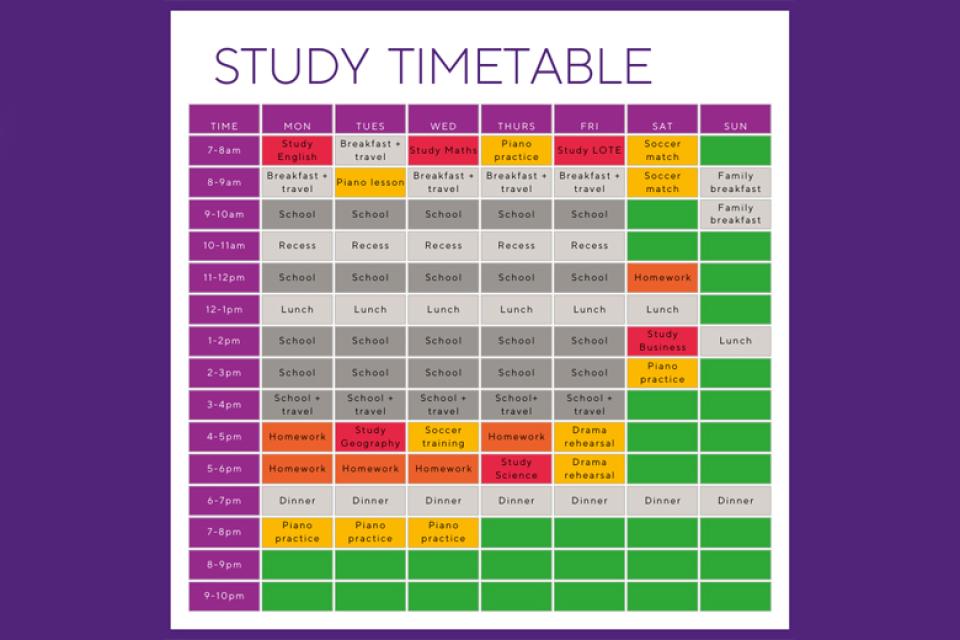
Many students know they should have a study timetable, but creating one that is realistic and effective can be challenging. A well-planned study timetable can reduce stress, improve organisation, and help students achieve their academic goals.
The first step in creating a successful study timetable is identifying all existing commitments. School, sport, work, family activities, and social events should all be considered before scheduling any study time. This ensures the timetable is realistic and sustainable.
Next, students should set clear goals for each subject. Rather than writing “study maths”, it is more effective to write specific tasks such as “complete algebra questions” or “revise fractions”. Clear goals make study sessions more productive because students are not wasting time deciding what to work on. They also provide a sense of achievement as tasks are completed.
Prioritising subjects is also important. Students should allocate more time to subjects they find challenging while continuing to maintain their strengths in other areas. A balanced approach helps prevent last-minute cramming and builds confidence across all subjects.
Breaks are another essential component of an effective timetable. A common strategy is studying for 50 minutes followed by a 10-minute break. This allows the mind to absorb information without becoming overwhelmed and can help students maintain focus throughout longer study periods.
Finally, a study timetable should be reviewed regularly. If a plan is not working, adjustments should be made. Flexibility allows students to adapt to changing workloads and commitments throughout the term.
Remember, the best study timetable is not the most detailed one, it is the one that students can consistently follow. By setting realistic goals, prioritising tasks, and maintaining balance, students can develop strong study habits that lead to long-term academic success. It is also important to recognise that not every study session will go to plan. If one evening is less productive than expected, students should not abandon their timetable altogether. Instead, they should identify the issue, make any necessary adjustments, and continue moving forward. One difficult night should not derail an entire week of progress. Consistency over time is what ultimately leads to success.
Ellie Tsoukalas