

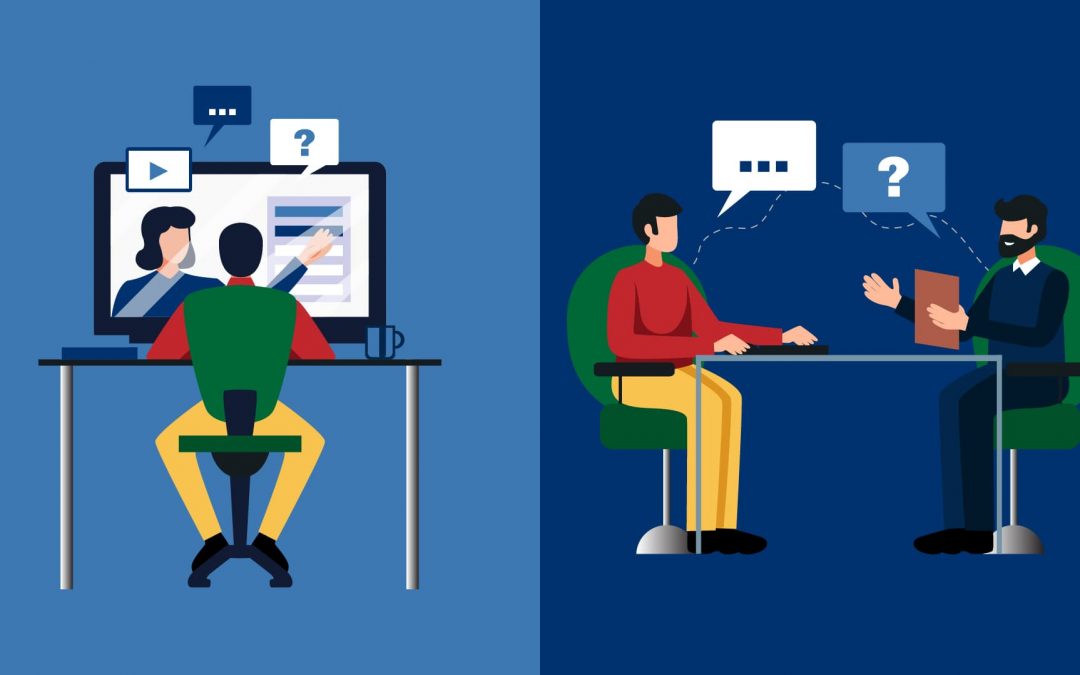
Over recent years, especially as a result of COVID and lockdowns, online tutoring has arisen as a convenient alternative to in-person tutoring due to its accessibility. However, when we look at this compared to in-person tutoring, is it really a better option than sitting down with a tutor face-to-face?
Online Tutoring
The flexibility and convenience of online tutoring are the two major positives when looking at online tutoring. You can remove travel times, meaning there is a wider range of options for session times, and the student can do the session from anywhere, whether this is at their house, at school or at the library.
In-Person Tutoring
The key benefits of in-person tutoring are both the physical presence and fewer distractions. A physical presence allows the student to receive more thorough feedback, where it is easier for the tutor to look at the work the student is doing in real-time, compared to the student doing the work and then having to show the tutor on a camera. This allows for immediate feedback, with the tutor being able to pick up on any mistakes or areas for feedback in the process, for example, when completing maths problems. This physical presence builds a stronger bond between the tutor and the student, building the student’s confidence over time.
In-person tutoring also removes the distractions of technology. The student is present at all times and is unlikely to be distracted by their laptop or phone.
What works best?
It really depends on the type of student when weighing up online tutoring versus in-person tutoring. A range of factors such as the age of the student, the subject of tuition, the student’s schedule and level of confidence. As an example, in-person tutoring may be more beneficial for younger students, as they can lose focus and engagement more quickly compared to senior students in Year 11 and 12. Overall, it is important to consider a range of factors, but in the long run, in-person tutoring will lead to more significant development in a range of areas.
Hayden McCarthy