

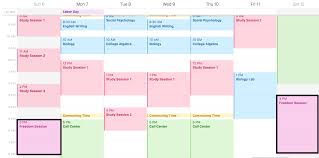
In all levels of education, we are almost never learning one subject at a time, we’re juggling a range of very different subjects all at once, and on top of that, varying difficulties, enjoyment and understanding across all of them. When it comes to choosing how to keep up and study alongside life, we need to balance between how much time we spend on each subject, trying not to fall into the habit of studying what easiest or most enjoyable or just even keeping up with classes as they come.
Firstly and quite importantly, we need to balance daily or weekly study from focusing on one single subject, or trying to cram in too many subjects in a certain amount of study time. While you may have different times to study across each day, you should ensure that you never only do one subject for many times in a row, or even spending a large session just doing one subject. If you don’t keep up with all of your subjects at once, you’re bound to fall behind on one, and it’ll only create a slippery slope.
At the same time, you can’t try and cram all your subjects into one study session. If you’re only spending 15 minutes on each subject and cycling, you’re never going to be able to actually grasp bigger concepts in that little time, and your study will be very inefficient. Instead, focus on at least one hour per subject at a minimum.
Furthermore, it may be a challenge to try to focus on all your subjects equally, even independent of the time frame. Some subjects might be more enjoyable, others may be more difficult and before you know it, you completely neglected the subjects that aren’t easy to get into. The best way to combat this is with study scheduling, if you plan weekly or bi-weekly, exactly what subjects you are going to study, and which hours/times of day you will, you won’t easily end up neglecting other subjects.
Felix Panizza