

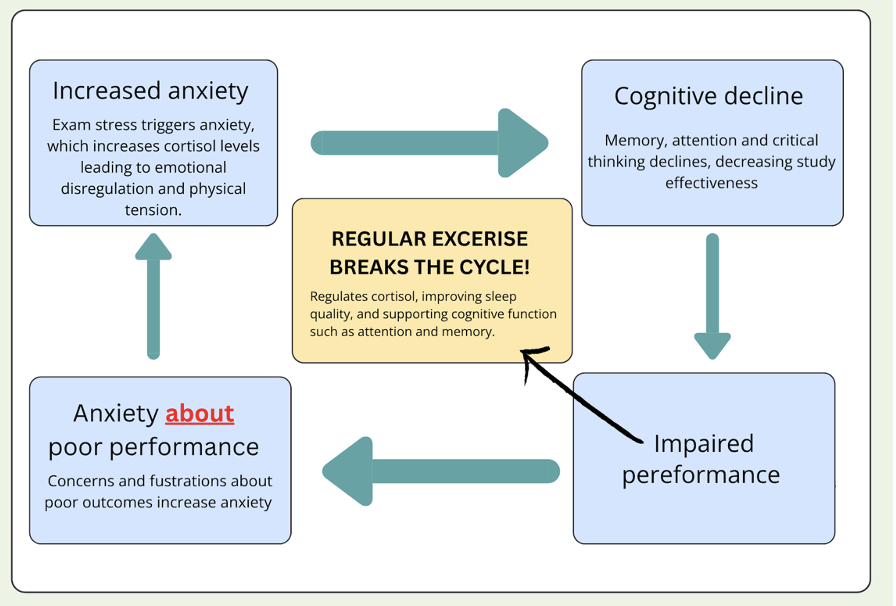
Exercise plays a key role in supporting cognitive function that becomes vulnerable under exam pressure. Elevated anxiety can impair working memory, slow information processing, and reduce attention span, all critical cognitive abilities during long study sessions and timed exams. When cognitive functions decline, students often experience a cycle where anxiety worsens performance, and concern about performance increases anxiety. Regular exercise helps break this cycle, by enhancing the brains systems responsible for concentration, memory, and executive control.
Exercise stimulates the release of endorphins and serotines, neurotransmitters that regulate mood and counteract the cognitive effects of high cortisol. Exercise also stimulates the parasympathetic nervous system, which counteracts the ‘fight-or-flight’ response triggered by anxiety, helping lower the heart rate and reduce muscle tension, helping adolescents return to a regulated state more quickly. This physiological response collectively supports clearer thinking and more stable focus, especially during extended study sessions.
Further, evidence from Frontiers in Psychology shows that adolescents who engage in aerobic activity such as running and swimming, experience significant reduction in self-reported anxiety levels, performing better on tasks requiring working memory and sustained attention compared with less active peers.
Additionally, exercise is shown to improve sleep quality, anxiety commonly disrupts sleep patterns, which negatively affects memory consolidation and problem-solving. A 2025 study reported that adolescents who exercise regular reported better sleep quality and lower pre-exam anxiety. This improvement in sleep contributed to sharper cognitive performance, steadier emotional regulation, and reduced stress load during demanding HSC periods.
Daniella Antoun