

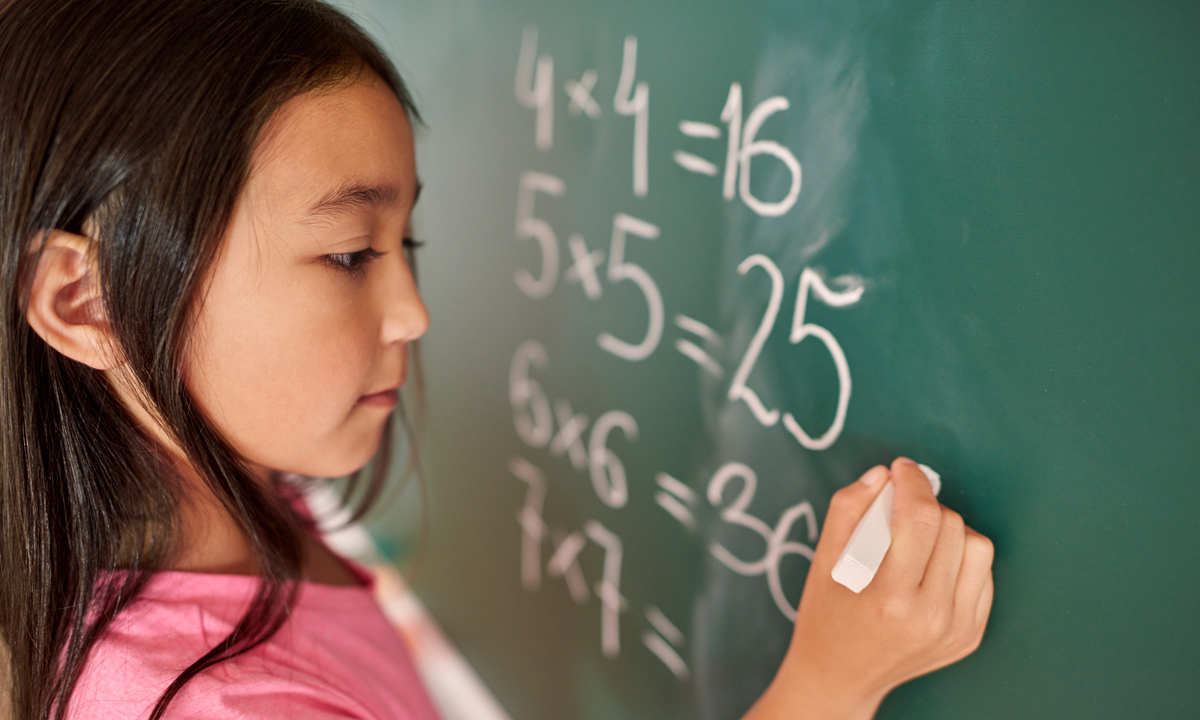
Many students move through school believing they are simply bad at maths. It is a label that often begins in the early years and slowly becomes part of how they see themselves as learners. At First Education we see this all the time. What is most striking is that the issue is rarely a student’s ability. It is usually a mix of confidence, missed foundations and the belief that maths is a talent you either have or do not have.
Maths is a subject built in layers, so even small gaps can grow over time. A student might have missed a key concept in fractions, struggled with place value in primary school or never learnt their multiplication facts with enough fluency. These gaps do not reflect intelligence. They are simply missing building blocks. Once those foundations are rebuilt, students usually feel more capable and begin to make progress far more quickly than they expected.
Another reason the myth persists is that maths often moves at a fast pace in class. Students who need a little more time to process new ideas can feel left behind. Tutoring helps slow things down and creates space for students to ask questions without fear of judgement. When a student finally experiences that moment of clarity, the shift in confidence is immediate. They start taking risks, attempting harder problems and engaging more in their lessons at school.
Mindset also plays a powerful role. Students who believe they can improve tend to try longer and bounce back faster when they get something wrong. Tutors help students reframe mistakes as part of learning rather than a sign they are not good enough. This change alone can open the door to steady improvement.
No student is destined to be bad at maths. With the right support and a patient approach, they can rebuild their foundations, grow their confidence and discover that they are far more capable than they ever realised.
Freddie Le Vay