

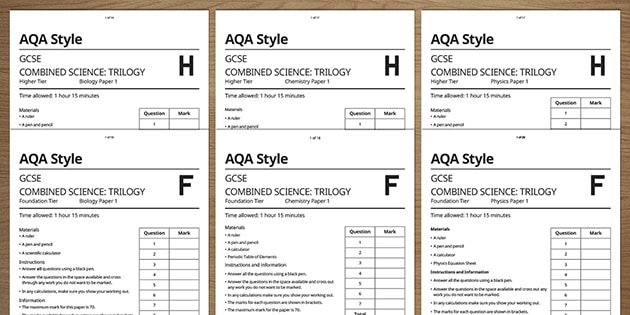
Most high school students revise by rereading their notes, highlighting sections of their textbook or rewriting information in a neater way, but these methods rarely lead to strong exam results because they give the illusion of understanding rather than proving it. Past papers are one of the most effective tools for achieving high marks because they allow students to practise the exact skills that are tested in real exam conditions.
When students complete past papers, they are exposed to the structure of the questions, the style of wording, the level of detail expected and the timing pressure that occurs in an actual exam. This removes the element of surprise and allows them to walk into the exam room knowing exactly what to expect. Past papers also reveal gaps in knowledge that notes cannot show. A student might think they know a topic well, but when they attempt a past paper, they often discover that they cannot explain a concept clearly or they cannot complete a question within the required time. Identifying these weaknesses early gives them a clear direction for further study. Another benefit of past papers is the improvement of exam technique.
Students also learn how to interpret command words such as explain, analyse or justify and they learn how exam markers award marks. This is crucial, considering that markers typically have less than a minute or two to mark a question, or an essay. This leads to more precise answers and reduces time wasted on unnecessary detail. Past papers also help students build confidence because each completed paper is a concrete measure of progress. A regular routine of timed practice reduces anxiety and increases familiarity with the subject. Students can start by completing one past paper each week, reviewing the marking guidelines and keeping track of common errors. Over time, this method results in stronger recall, sharper problem solving and better performance under pressure. Using past papers is not about working harder. It is about practising the exact task that will be assessed, which is why they are one of the most reliable ways to improve exam results.
Samin Hossain