

Highschool learning adapts towards how students utilise both short-term memory (STM) and Long-term memory (LTM). Both systems of the brain work differently, but support each other and play important roles in helping students understand new content, complete class tasks, and perform well in assessments.
Short-term memory acts like the brain’s “holding space.” It stores small amounts of information for a short period of time, often just a few seconds. Highschool students use STM constantly: remembering the steps of a math equation while working it out, keeping track of instructions the teacher gives at the beginning of an activity, or holding onto ideas while forming a paragraph in an English essay. Because STM has limited capacity, students can easily become overwhelmed if too much information is given at once. For tutors, this shows the importance of explaining concepts in small, clear stages and checking for understanding before moving forward.
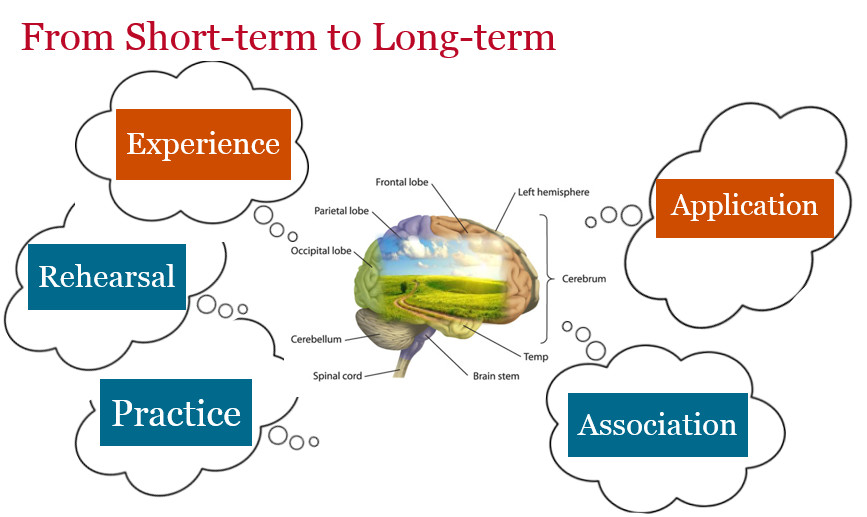
Long-term memory is where knowledge is stored more permanently. This includes facts, definitions, processes, formulas, and even personal experiences. When a student remembers how to solve equations from last term or can recall quotes from a novel during an exam, they are drawing on LTM. Effective learning involves transferring information from STM into LTM through repetition, meaningful practice, and active engagement. Strategies such as spaced revision, practice quizzes, and using examples from students’ everyday lives help strengthen these long-term memory pathways.
The connection between STM and LTM becomes especially important as students move into senior years. When core knowledge, like times tables, essay structures, or scientific terms, is firmly stored in LTM, students do not need to use valuable STM space to recall it. This allows them to focus on higher-level thinking, such as analysing texts, solving multi-step problems, and applying knowledge in new contexts.
Overall, STM helps students process information in the moment, while LTM gives them the foundation to build a deeper understanding. For highschool learners, strengthening both systems supports confidence, improves academic performance, and makes learning more efficient and enjoyable.
Tiana Tzoukas