
Why Students Remember Stories Better Than Lists of Facts
We don't have online enrolment because we'd like to talk to you first.
Please fill this in the form below, and then we'll walk the walk.
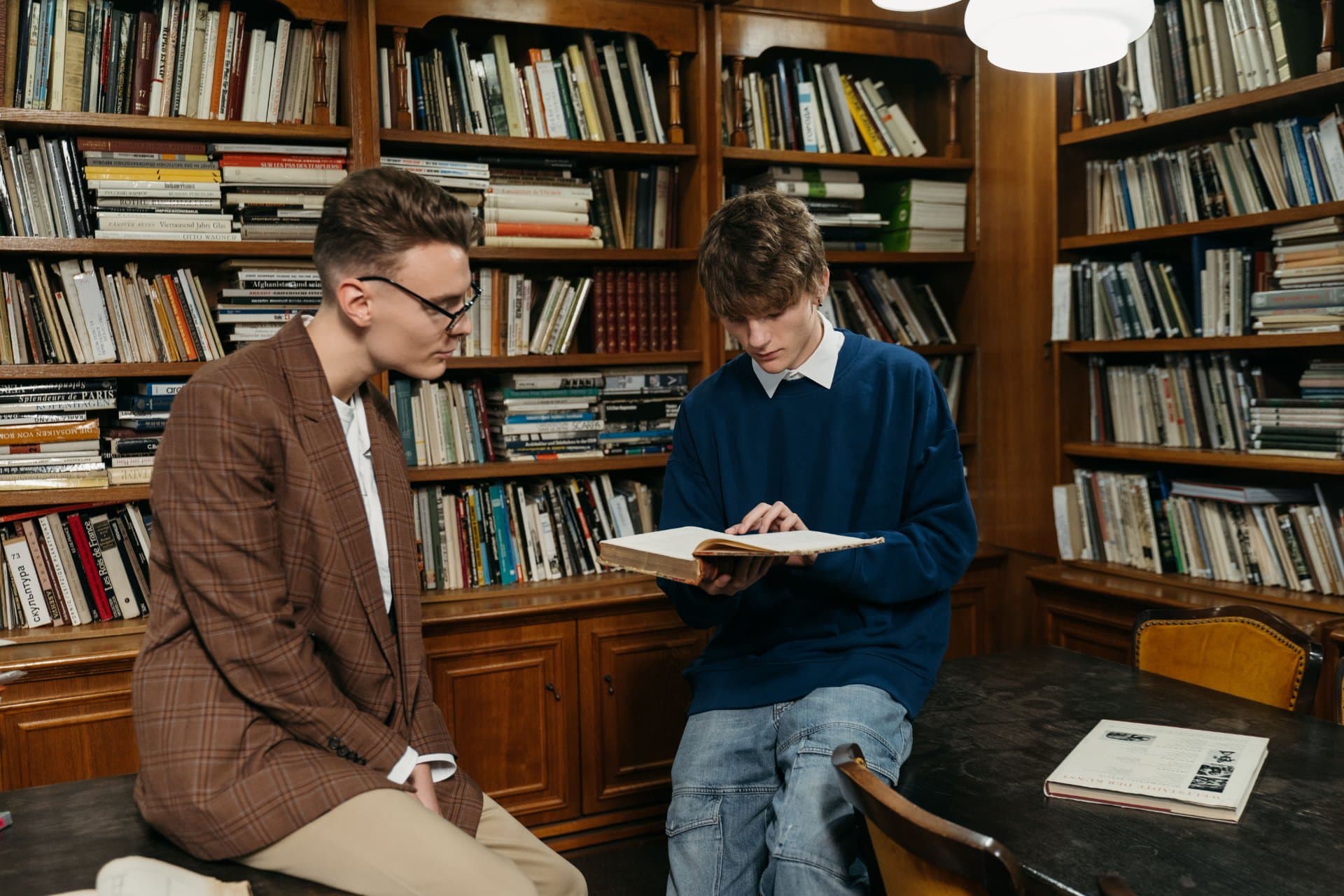
Students are often expected to remember large amounts of information. Whether it is scientific terminology, historical events, mathematical concepts or definitions, revision can sometimes become an exercise in trying to memorise disconnected facts. But our brains do not always work particularly well that way. Information becomes easier to remember when it has meaning, context and connections.
Stories are a powerful example. A story gives individual facts somewhere to belong. Instead of remembering a collection of unrelated events, a student can understand how one event led to another, why someone made a particular decision and what happened as a result. The information becomes part of a sequence rather than a list.
This does not mean every subject needs to be turned into a dramatic narrative. The underlying principle is connection. Students can create their own explanations that link ideas together. In science, they might explain how changing one variable affects another. In history, they can connect causes, events and consequences. In English, they can connect a character's actions to broader themes in a text.
This is also why simply copying notes can be less useful than actively explaining them. When students put information into their own words, they are forced to decide what matters and how different ideas relate to each other. They are effectively creating a small story or framework that makes the information easier to retrieve later.
Tutoring can provide an opportunity to practise this process. Rather than simply giving students more information to memorise, a tutor can ask questions that encourage them to make connections, explain relationships and put complicated ideas into their own words. Over time, students can become better at turning unfamiliar information into something meaningful.
The next time a student is faced with a page full of facts, it can be useful to ask: How do these ideas connect? What caused what? Why does this matter? What happened before this, and what happened afterwards?
Learning is rarely just about remembering individual pieces of information. The more connections students can build between those pieces, the more useful and memorable their knowledge can become.


Ready when you areReach out anytime
Leave your details and we'll call you back, or send us a message. It's just a friendly conversation to get started.
We don't have online enrolment because we'd like to talk to you first.
Please fill this in the form below, and then we'll walk the walk.