
We don't have online enrolment because we'd like to talk to you first.
Please fill this in the form below, and then we'll walk the walk.
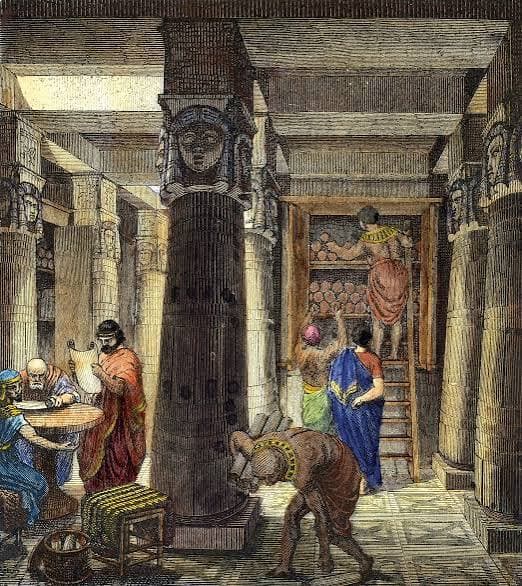
Founded in the early third century BC under Ptolemy I or his son Ptolemy II, the Library of Alexandria was meant to hold the sum of human knowledge. Alexandria, a Mediterranean port city established by Alexander the Great, was already a hub of trade and culture, and the Ptolemaic kings saw scholarship as a way to enhance their prestige. Ships entering the harbour were reportedly searched for books, which were copied, with the originals kept and the copies returned to their owners.
The library was part of a larger research institution called the Mouseion, which housed scholars who were given stipends, meals and freedom from taxes so they could focus on their work. Their achievements were remarkable. Eratosthenes, for example, calculated the circumference of the Earth with surprising accuracy using shadows and geometry. Euclid is thought to have taught in the city, producing the foundations of geometry. Callimachus compiled the Pinakes, an early catalogue that organised works by subject and author, effectively an ancestor of the modern library index.
How the library ended is often misunderstood. Popular accounts describe a single dramatic fire, yet the truth is more gradual. Julius Caesar's forces accidentally set fire to part of the city in 48 BC, which may have destroyed some scrolls, though the library continued to function afterwards. Over the following century, funding shrank, political upheaval drove scholars away, and the Roman emperor Aurelian's campaign in the 270s AD damaged the district where the Mouseion stood. By the time the Serapeum, a daughter library, was destroyed in 391 AD, the institution had long been in decline.
The real tragedy is less about one catastrophic blaze and more about neglect. Texts were written on fragile papyrus that needed constant recopying, and when support for that work faded, knowledge quietly disappeared. The story of Alexandria remains a reminder that preserving learning requires continual investment, not just a grand building.


Ready when you areReach out anytime
Leave your details and we'll call you back, or send us a message. It's just a friendly conversation to get started.
We don't have online enrolment because we'd like to talk to you first.
Please fill this in the form below, and then we'll walk the walk.