
We don't have online enrolment because we'd like to talk to you first.
Please fill this in the form below, and then we'll walk the walk.
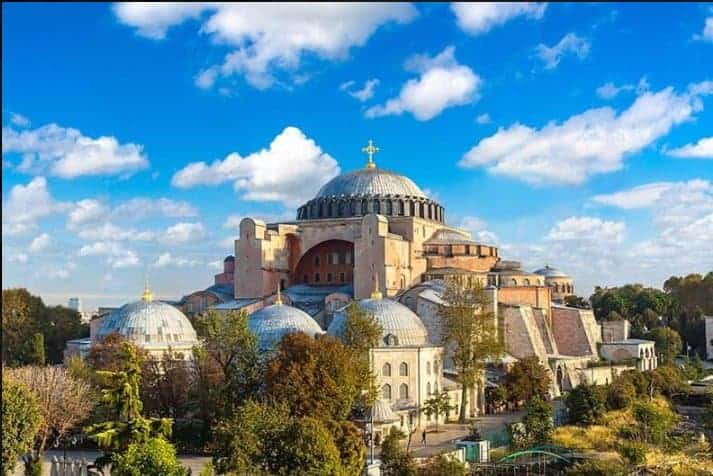
There is a very strong argument, reinforced by surprising consenus among historians, that Constantinople was the most significant, influential and powerful cities in the history of the world.
Constantinople was founded by Emperor Constantine the Great in AD 330, an expansion of the existing Greek coastal settlement of Byzantion. Following the trend of earlier emperors in the Tetrarchy period, Constantine moved the capital of the Roman Empire from the increasingly obsolete Rome to the more strategic location of Constantinople.
The city was found right on the crossroads of Europe and Asia, making it an extremely lucrative and prospective location, economically speaking. It was also geographically closer to the eastern provinces of Rome such as Egypt and Asia Minor, which promised more trade and opportunity exploration. These territories also needed proximity to military in case of invasion, as they were further from Rome.
Over the next few centuries, especially during the reign of the emperor Justinian, Constantinople grew to become the largest city in Eurasia, and by far the most populated and powerful city in the world at the time. Civil strife, disputes, political intrigue and invasion were a constant threat and often caused significant danger to the city. However, many emperors achieved great success in prolonging the city's domination over the Mediterranean world and beyond.
Constantinople was the seat of the greatest empire on earth - the Roman Empire, and endured for another millenium after the fall of the city of Rome (AD 476). It was the axiomatic centre of the Silk Road and was the richest city in the world until its devastating sack during the Fourth Crusade in AD 1204. The city bears the greatest architectural masterpieces of its era, such as the magnificent Hagia Sophia cathedral and the imposing Theodosian Walls. Its cultural legacy as the centre (even today) of Eastern Orthodoxy and the guardian of both sacred apostolic theology as well as revered Classical texts is unsurpassed.
The Renaissance (lit. 'rebirth') was largely due to the rediscovery of these texts following the Fall of Constantinople in AD 1453 at the hands of the Ottoman Sultanate.


Ready when you areReach out anytime
Leave your details and we'll call you back, or send us a message. It's just a friendly conversation to get started.
We don't have online enrolment because we'd like to talk to you first.
Please fill this in the form below, and then we'll walk the walk.