
We don't have online enrolment because we'd like to talk to you first.
Please fill this in the form below, and then we'll walk the walk.
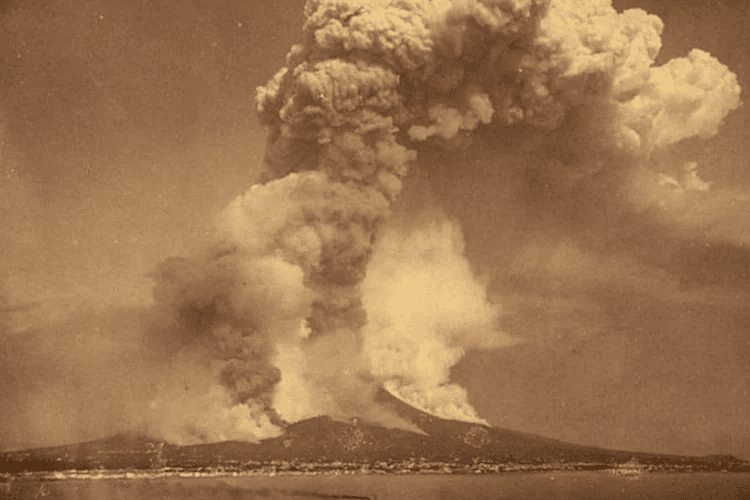
In August 1883, the volcanic island of Krakatoa, located in the Sunda Strait between Java and Sumatra, erupted with a force so immense that it remains one the loudest sounds ever recorded in human history. The final explosion, on the morning of August 27th, was clearly heard in Perth, Australia, over 3000 kilometres away, and on the island of Rodrigues near Mauritius, nearly 48000 kilometres away. Sailors as far as the Indian Ocean reported hearing what they believed were cannon fire or distant naval battles.
The eruption obliterated most of the island itself, sending pyroclastic flows racing across the sea and triggering tsunamis that reaches heights of over 30 metres. These waves devastated coastal towns in Java and Sumatra, killing more than 36,000 people, the vast majority of the eruption's total death toll. The destruction was so sudden and complete that entire villages vanished within minutes, with ships found stranded kilometres inland afterward.
Beyond its immediate devastation, Krakatoa's atmospheric impact was extraordinary. The eruption ejected an estimated 20 cubic kilometres of rock, ash and pumice into the atmosphere, some of it reaching heights of 80 kilometres. This debris circled the globe, causing vivid red sunsets to be reported as far away as London and New York for months afterward. Some scholars believe these strange skies inspired the blood-organs backdrop of Edvard Munch's famous painting 'The Scream', painted a decade later.
The eruption also caused measurable global cooling, dropping average temperatures by as much as 1.2 degrees Celsius in the following year, disrupting harvest and weather patterns worldwide. Barometric pressure waves from the blast were detected circling the Earth multiple times, recorded by instruments in cities as distant as London and Bogotá.
Krakatoa's eruption became one of the first natural disasters to be reported globally in near real-time, thanks to the recently laid undersea telegraph cables, making it a pivotal moment in both geological science and the history of global communication.


Ready when you areReach out anytime
Leave your details and we'll call you back, or send us a message. It's just a friendly conversation to get started.
We don't have online enrolment because we'd like to talk to you first.
Please fill this in the form below, and then we'll walk the walk.