
We don't have online enrolment because we'd like to talk to you first.
Please fill this in the form below, and then we'll walk the walk.
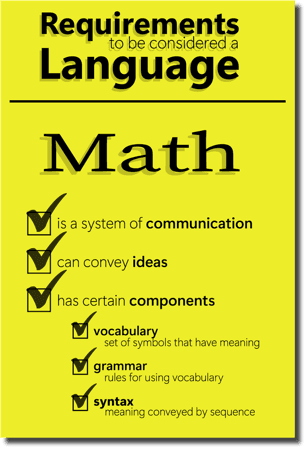
One things that students always comment on as they move into senior maths is the amount of words and absence of numbers in complex questions. They start to realise that maths isn't just about numbers, it's also about language.
As a working speech pathologist and tutor, something I have noticed across the disciplines is that students don't always struggle because they don't understand the maths. Sometimes they struggle because they can't organise their thinking well enough to find their way to a solution. If a student tells me, "I just don't get it," I'll usually ask them to break the question down and talk me through what they do know first. More often than not, they've already solved half the problem without realising it. I also encourage students to think out loud while they're working. It slows them down just enough to catch mistakes before they become bigger ones, and promotes clarity of each step. Instead of moving quickly from one line to the next, I might encourage them to explain their thinking. For example, "I'm expanding the brackets first because of the order of operations," or "I need to check whether this step will help me towards my next step." That simple habit builds much stronger self-monitoring than repeatedly doing practice questions.
Another strategy I borrow from speech pathology is reducing language load. Maths questions, especially complex ones, are often wordy. We break questions into chunks, highlight key information and rephrase complex sentences before touching the calculator. This helps the students to identify the important pieces of information in the question and develop a plan for how they will move towards the solution.
For some students, it is more important to support them to develop the language they need to think clearly than teaching them formulas. Once they can explain their reasoning, solving the maths usually becomes much easier.


Ready when you areReach out anytime
Leave your details and we'll call you back, or send us a message. It's just a friendly conversation to get started.
We don't have online enrolment because we'd like to talk to you first.
Please fill this in the form below, and then we'll walk the walk.