
We don't have online enrolment because we'd like to talk to you first.
Please fill this in the form below, and then we'll walk the walk.
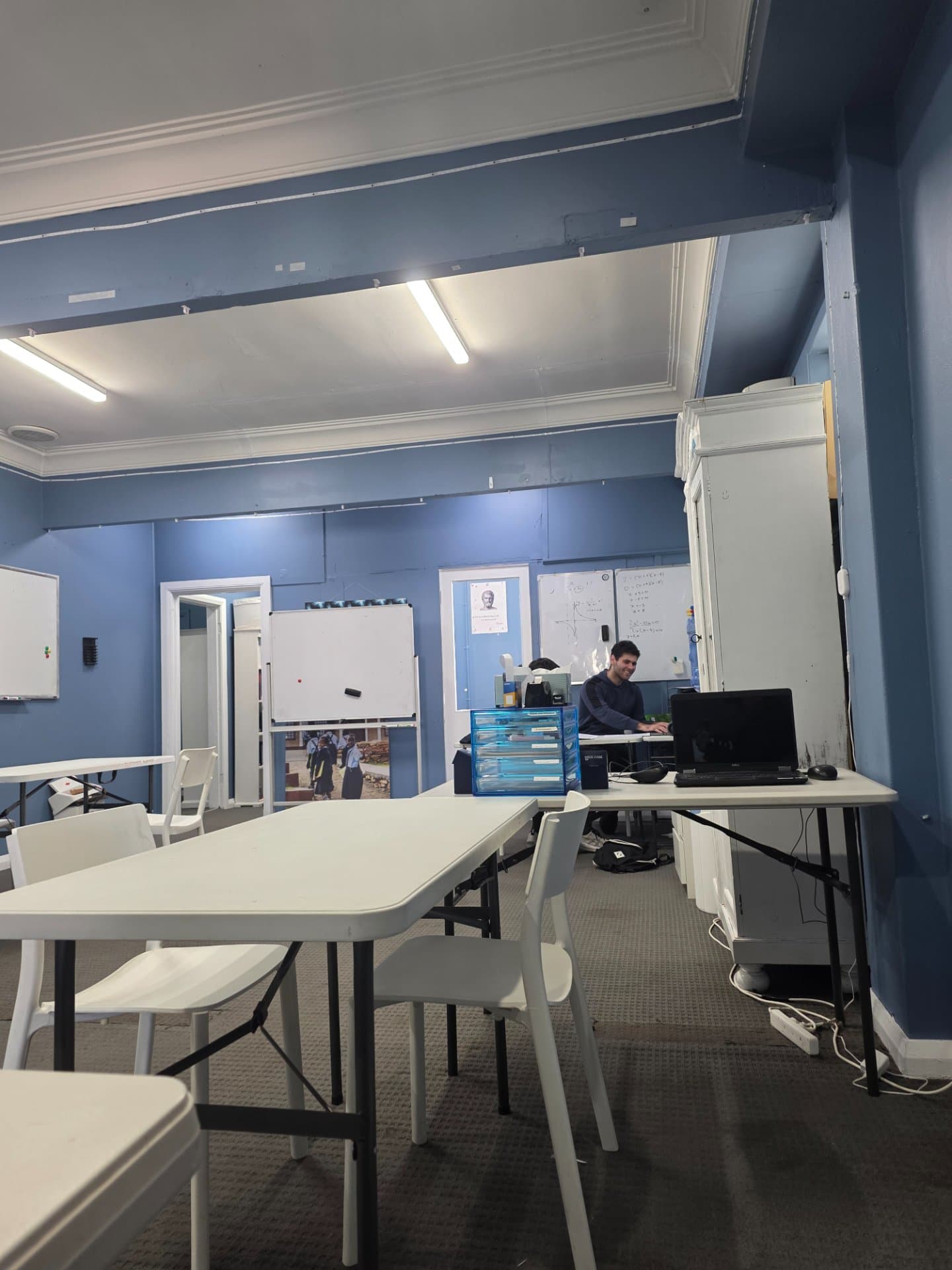
Today, I observed Nikolas working with a student on non-linear relationships. The lesson focused on recognising different types of non-linear graphs and understanding how their shapes change depending on the relationship between the variables. The lesson also encouraged the student to move beyond simply identifying graphs and begin developing an understanding of why different relationships produce different graphical patterns.
Nikolas began by revisiting linear relationships before moving into examples of non-linear graphs. This provided the student with a clear point of comparison and helped activate their prior knowledge before introducing the new concepts. He used a mix of explanation, questioning and worked examples, giving the student opportunities to identify patterns and explain what they noticed rather than simply being told the answer. This encouraged the student to think critically about the graphs and develop their reasoning skills.
Throughout the lesson, Nikolas used visual examples to support the student's understanding. By looking closely at the shape and direction of different graphs, the student was able to make connections between the equation, the variables and the resulting graph. Nikolas also used targeted questions to check the student's understanding and encouraged them to explain their thinking. This helped identify any areas of uncertainty and allowed misconceptions to be addressed as they arose.
What stood out to me was the pacing of the lesson. Nikolas gave the student enough support when needed, while still allowing time for them to work through questions independently. Rather than immediately providing the solution when the student was unsure, he used prompting questions to guide them towards the answer. This helped maintain the student's engagement and encouraged them to become more confident in approaching unfamiliar questions.
Nikolas also regularly checked the student's understanding throughout the lesson rather than waiting until the end. He adjusted his explanations where necessary and revisited concepts when the student needed further clarification. This demonstrated the importance of being responsive to individual student needs and recognising when a different explanation or example may be more effective.
Another strength of the lesson was the balance between explicit teaching and independent practice. The student was first given clear explanations and examples before being given opportunities to apply their understanding. This allowed them to gradually build confidence and take greater responsibility for solving the questions independently.
Overall, it was a clear and well-paced lesson that reinforced the value of combining visual examples, purposeful questioning and independent practice, particularly when teaching concepts such as non-linear relationships. Observing Nikolas highlighted how effective questioning and appropriate scaffolding can support students in developing a deeper understanding of mathematical concepts, while also encouraging them to become more confident and independent learners.


Ready when you areReach out anytime
Leave your details and we'll call you back, or send us a message. It's just a friendly conversation to get started.
We don't have online enrolment because we'd like to talk to you first.
Please fill this in the form below, and then we'll walk the walk.