
We don't have online enrolment because we'd like to talk to you first.
Please fill this in the form below, and then we'll walk the walk.
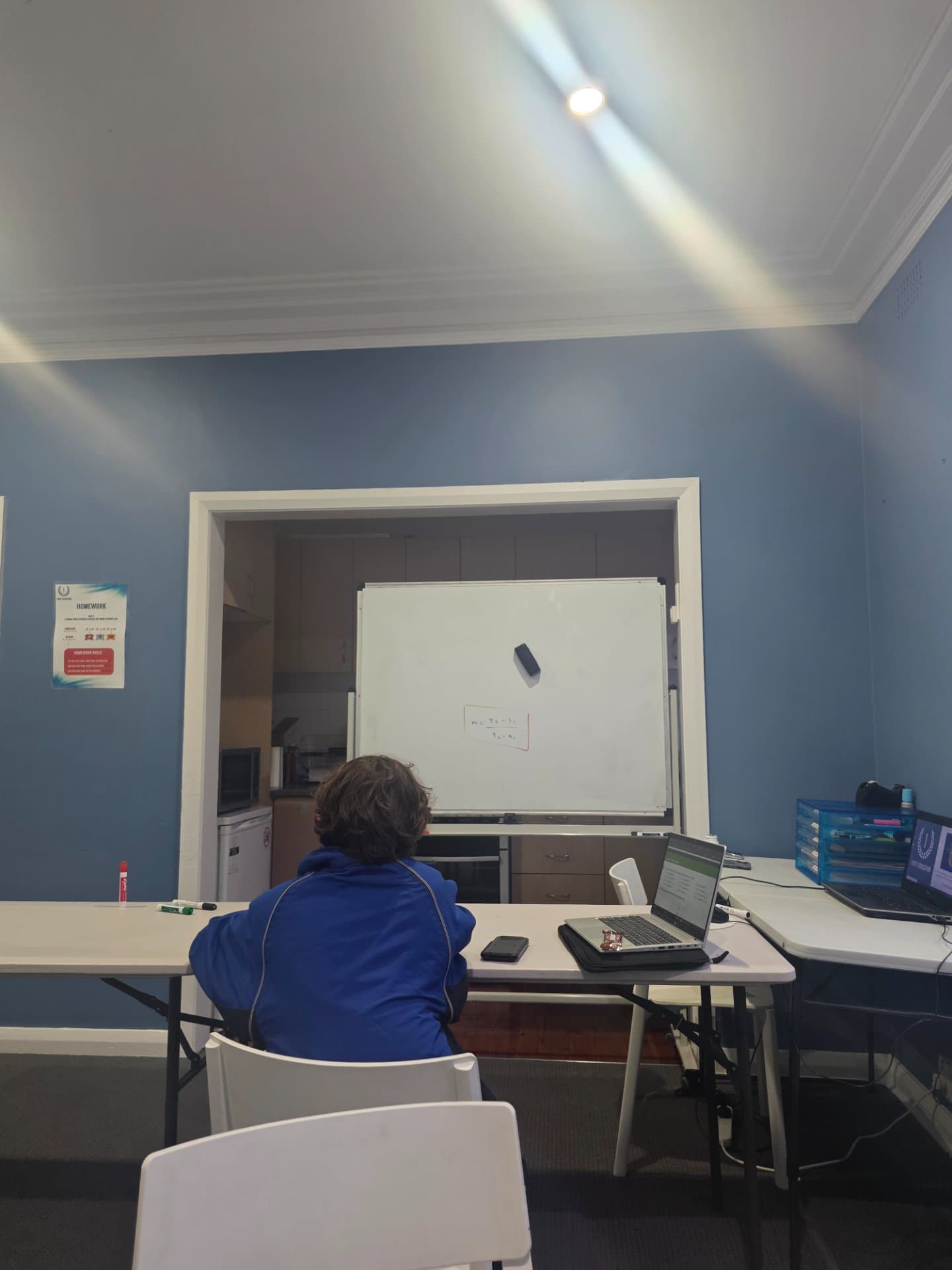
Today I was able to observe Tom teach the basics of gradients. He began by linking the idea of gradient to how steep a line is, which gave the student a simple way to understand the concept before moving into the formula.
As the lesson progressed, Tom used worked examples to show how the change in the vertical direction compared with the change in the horizontal direction determines the gradient. He regularly asked the student what they thought the next step should be, rather than completing each example himself, which helped keep the student involved in the process.
I noticed that Tom was careful to explain the meaning behind the calculation rather than treating the gradient formula as something to memorise. When the student became unsure about positive and negative gradients, he used the direction of the line to help them recognise the difference before returning to the numerical examples.
Tom also adjusted the difficulty gradually, starting with straightforward coordinate pairs before moving to examples that required a little more interpretation. This gave the student time to become comfortable with the basic process without making the lesson feel repetitive.
Overall, the lesson showed the importance of introducing a new mathematical idea visually and conceptually before relying too heavily on formulas. Tom’s use of questioning and progressively harder examples helped the student build confidence and develop a clearer understanding of what gradient actually represents.


Ready when you areReach out anytime
Leave your details and we'll call you back, or send us a message. It's just a friendly conversation to get started.
We don't have online enrolment because we'd like to talk to you first.
Please fill this in the form below, and then we'll walk the walk.