
We don't have online enrolment because we'd like to talk to you first.
Please fill this in the form below, and then we'll walk the walk.
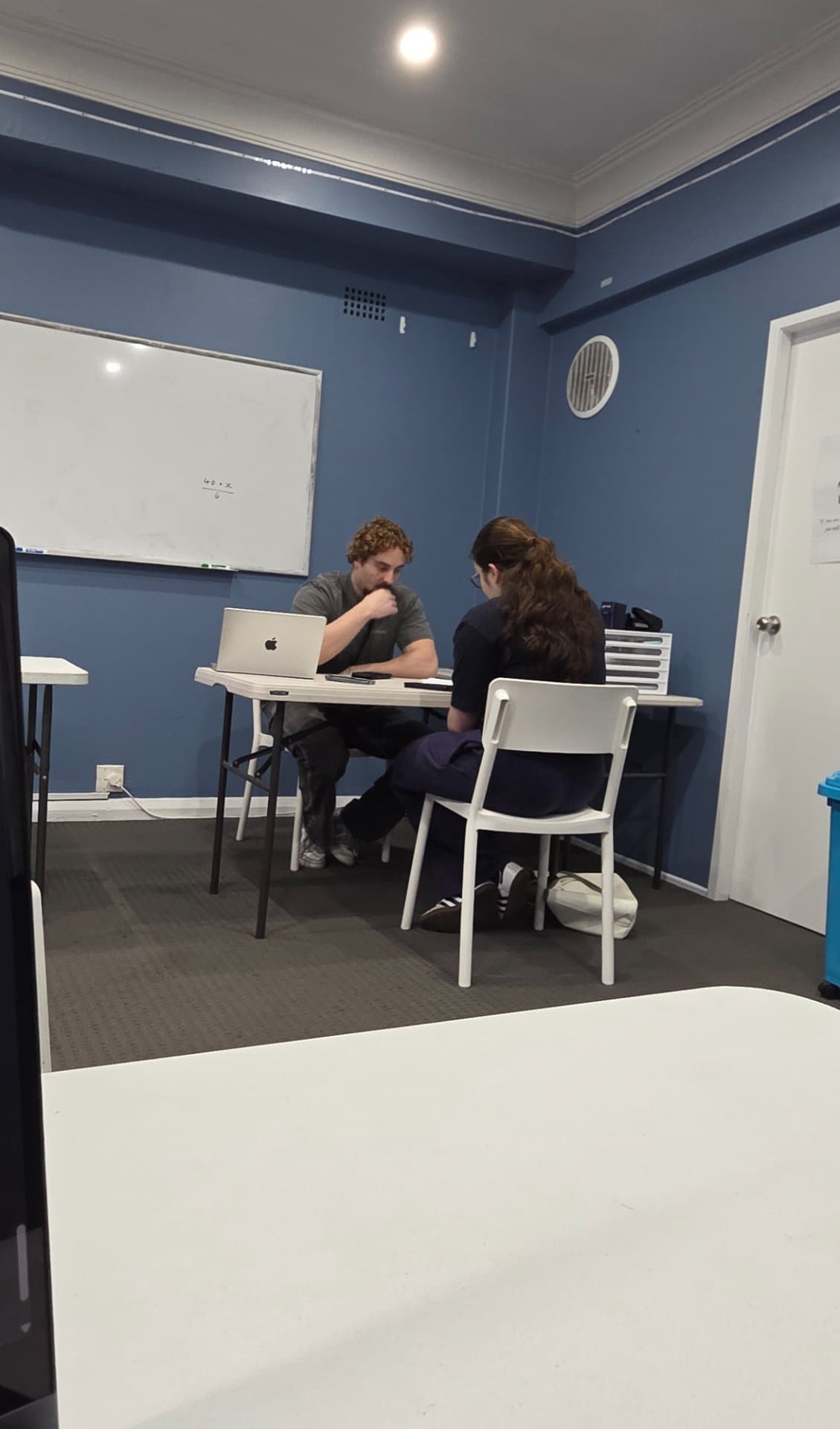
I had the opportunity to observe James working with a student on measurement. The main focus of the lesson was on converting between units and applying these skills to find the area of different shapes.
James began by working through unit conversions, making sure the student was comfortable moving between measurements such as millimetres, centimetres and metres. He then introduced questions where the student had to identify missing dimensions, including working out the height of a shape before using the appropriate area formula.
I thought the lesson was structured well because each skill built naturally into the next. James regularly asked the student to explain how they reached an answer, which helped check that they understood the process rather than simply following a formula. This also allowed James to identify any areas of uncertainty and provide clarification when needed.
Another strength of the lesson was the balance between teacher guidance and independent learning. James demonstrated examples clearly before giving the student opportunities to attempt similar questions independently. When the student encountered a challenging question, he used targeted questioning to guide them towards the solution rather than immediately providing the answer. This encouraged the student to think critically and develop greater confidence in their own problem-solving abilities.
The use of diagrams also supported the student's understanding, particularly when identifying missing measurements and connecting the dimensions of a shape to its area. By combining visual representations with calculations, James helped the student understand not only how to apply an area formula, but also why the formula was appropriate for each problem.
Overall, the lesson was a good example of how measurement can be taught through a combination of calculation, visual interpretation and problem solving. James created a supportive learning environment where the student was encouraged to ask questions, explain their reasoning and work independently. The progression of the lesson helped reinforce foundational measurement skills while gradually introducing more complex applications, allowing the student to build both their understanding and confidence.


Ready when you areReach out anytime
Leave your details and we'll call you back, or send us a message. It's just a friendly conversation to get started.
We don't have online enrolment because we'd like to talk to you first.
Please fill this in the form below, and then we'll walk the walk.