
We don't have online enrolment because we'd like to talk to you first.
Please fill this in the form below, and then we'll walk the walk.
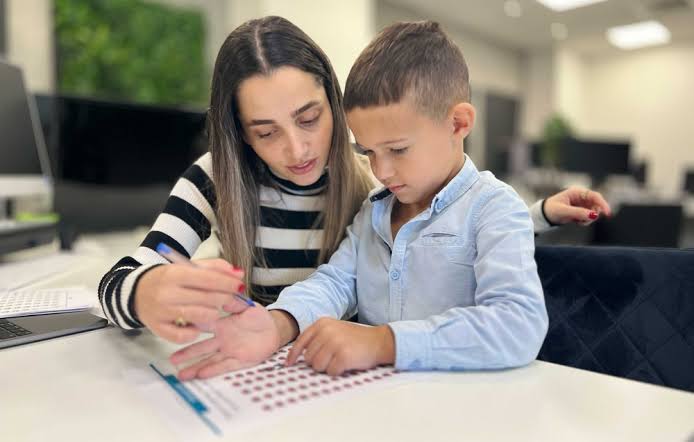
For a long time, I was confused about different tutoring styles, especially between older children and younger children. Having tutored a wide range of ages (from year 1 to year 12), I can confirm that not only is each age group different, but each child is also unique. However, there are some formulas that I have discovered work really well for tutoring younger children.
While I begin each tutoring session, no matter on the student or subject, with a quick weekly catchup, I feel that this is especially important for younger children. I talk to them about their days, their hobbies, their likes and dislikes, and try to form a foundation between the student and myself of something that we have in common and can relate back to. This makes the student feel understood, and, oftentimes, elicits many smiles and energetic stories from younger children, helping them to overcome a fear or aversion of tutoring.
Further, it's important to remember that while older students have been in school for close to or even over a decade, younger students are still new to the system and are definitely still experimenting on the best way for them to learn. I try to keep my sessions structured relatively similarly each week to ensure that the students fall into a comfortable routine, however, it is still really important for me to figure out how to make learning the most fun and the most effective for the students. For example, my youngest student needed some help with handwriting and spelling. As a typical younger child who wanted to feel like a big kid, he took really enthusiastically to writing out his words and practicing his handwriting on the big whiteboard. Another example is from another student who struggles to enjoy homework and needs help with it. While active learning is the most ideal situation, sometimes some students need to forget that they are completing their homework tasks. Thus, with this student I've found that it's very useful for me to talk to him about basketball and hear about what he did at soccer training.
It's incredibly important to remember that every child is different, but at the end of the day, there are some learning techniques which are universal and may help our students learn, and enjoy it!


Ready when you areReach out anytime
Leave your details and we'll call you back, or send us a message. It's just a friendly conversation to get started.
We don't have online enrolment because we'd like to talk to you first.
Please fill this in the form below, and then we'll walk the walk.