
How to keep a student's interest when learning about interest (on a sunday too)
We don't have online enrolment because we'd like to talk to you first.
Please fill this in the form below, and then we'll walk the walk.
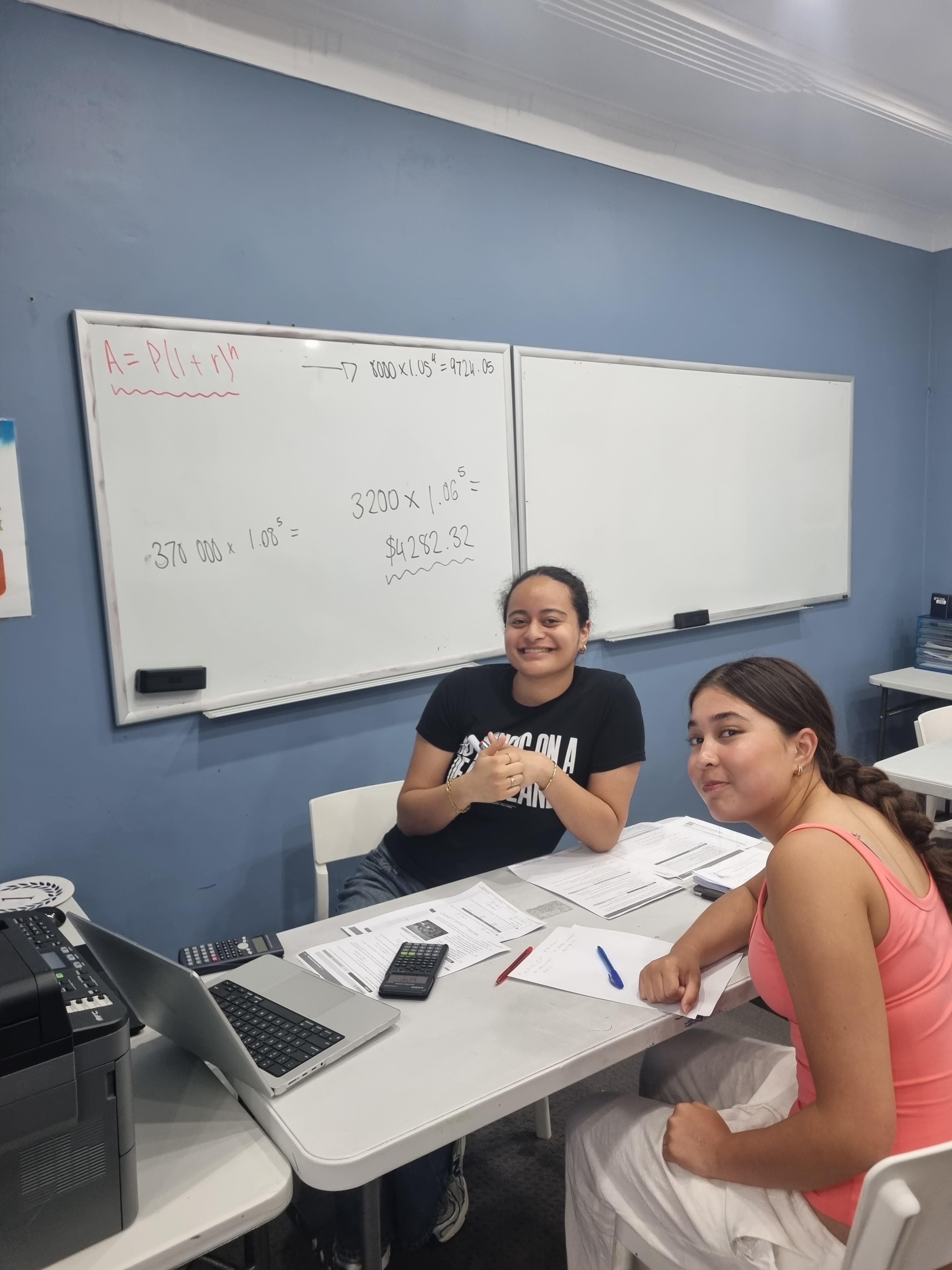
Sunday the 20th of September 2026 was an unseasonably warm day. Observing Siniva's session, I'm sure Evelyn, the student, initially would have rathered go to the beach, than learn about simple and compound interest. However, Siniva employed a hanful of helpful teaching methods to keep interest interesting! And kept the students attention for the whole session.
To start with, Siniva had a good read on the student's body language. When Evelyn was sitting back in her chair or staring out the window, Siniva changed her speaking tone, utilised the whiteboard more, asked the student questions, and generally increased her energy to indicate to the student that there are important things happening here up the front. Let's focus for this bit. This worked well in keeping the student engaged and making the session feel more dynamic and interactive, instead of just a static or lecture-esque session, the student was engaging and the tutor and the student had decent back and forths for the session.
Siniva was also very well prepared, she had quite a few worksheets printed out, and her and the student worked through those with little luls or wasted time. This is important for keeping the students attention as well! Dips in energy for time spent going through resources, can drop a student's attention and pull focus. By being prepared the focus of the session was always on the student's work.
Finally, her method of breaking down the complexity of the problems was textbook! She started with simple interest and did a few practice questions to cement it. She then talked about the limits of simple interest and how in the real world things are a bit different. Then she broke down compound interest and they worked through compound interest questions to cement it in place. This slow breaking down gave the student not just a mathematical understanding but also a real world understanding of simple interest!


Ready when you areReach out anytime
Leave your details and we'll call you back, or send us a message. It's just a friendly conversation to get started.
We don't have online enrolment because we'd like to talk to you first.
Please fill this in the form below, and then we'll walk the walk.