
From Athens to the HSC: English Advanced as Distilled Philosophy
We don't have online enrolment, because we want first to talk.
Please fill this in the form below, and then we'll walk the walk.
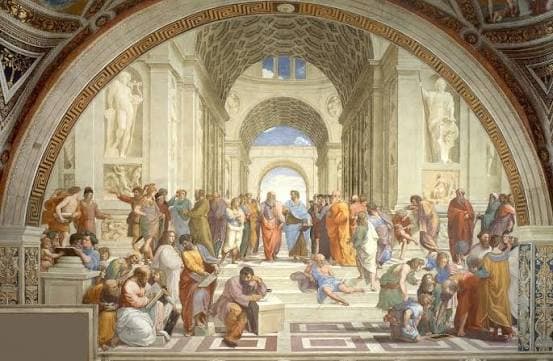
The NSW HSC English Advanced course can seem like a study of novels, poems, plays and essays. Beneath that surface, however, it is doing something older. It trains students in the habits of philosophy: questioning assumptions, interpreting language, testing perspectives and asking what makes a life, society or idea meaningful.
Those habits have deep roots in ancient Athens. Socrates turned conversation into inquiry by refusing easy answers. Plato examined truth, justice, art and reality through dialogue. Aristotle systematised rhetoric, logic, ethics and literary criticism. Their methods helped establish a tradition in which ideas were not merely received. They were examined.
English Advanced distils that tradition into the study of texts.
When students analyse how a composer represents identity, power, morality or human experience, they are participating in philosophical inquiry. When they compare perspectives, identify contradictions or evaluate how language shapes meaning, they are practising forms of reasoning that would have been recognisable in the Athenian intellectual world.
Even the essay itself carries this inheritance. A strong HSC response proposes a thesis, develops arguments, weighs evidence and anticipates complexity. It is not simply a container for quotes. It is a miniature act of dialectic: a structured attempt to move from question to insight.
The syllabus also insists that meaning is contested. Texts change when contexts change. Interpretations collide. Values are questioned. This is philosophy in literary clothing.
Of course, English Advanced is not a philosophy course in the formal sense. Students are not required to master metaphysics or Aristotelian logic. Yet the intellectual machinery is remarkably similar. Read closely. Define terms. Question appearances. Examine assumptions. Construct an argument.
Athens did not invent every form of human thought, and the HSC is not its direct descendant. But a clear line of intellectual inheritance remains.
English Advanced takes philosophy’s enormous questions and compresses them into a classroom practice: read, question, argue, reconsider, which may well be its deepest purpose.

