
Developing analytical writing and examination skills
We don't have online enrolment because we'd like to talk to you first.
Please fill this in the form below, and then we'll walk the walk.
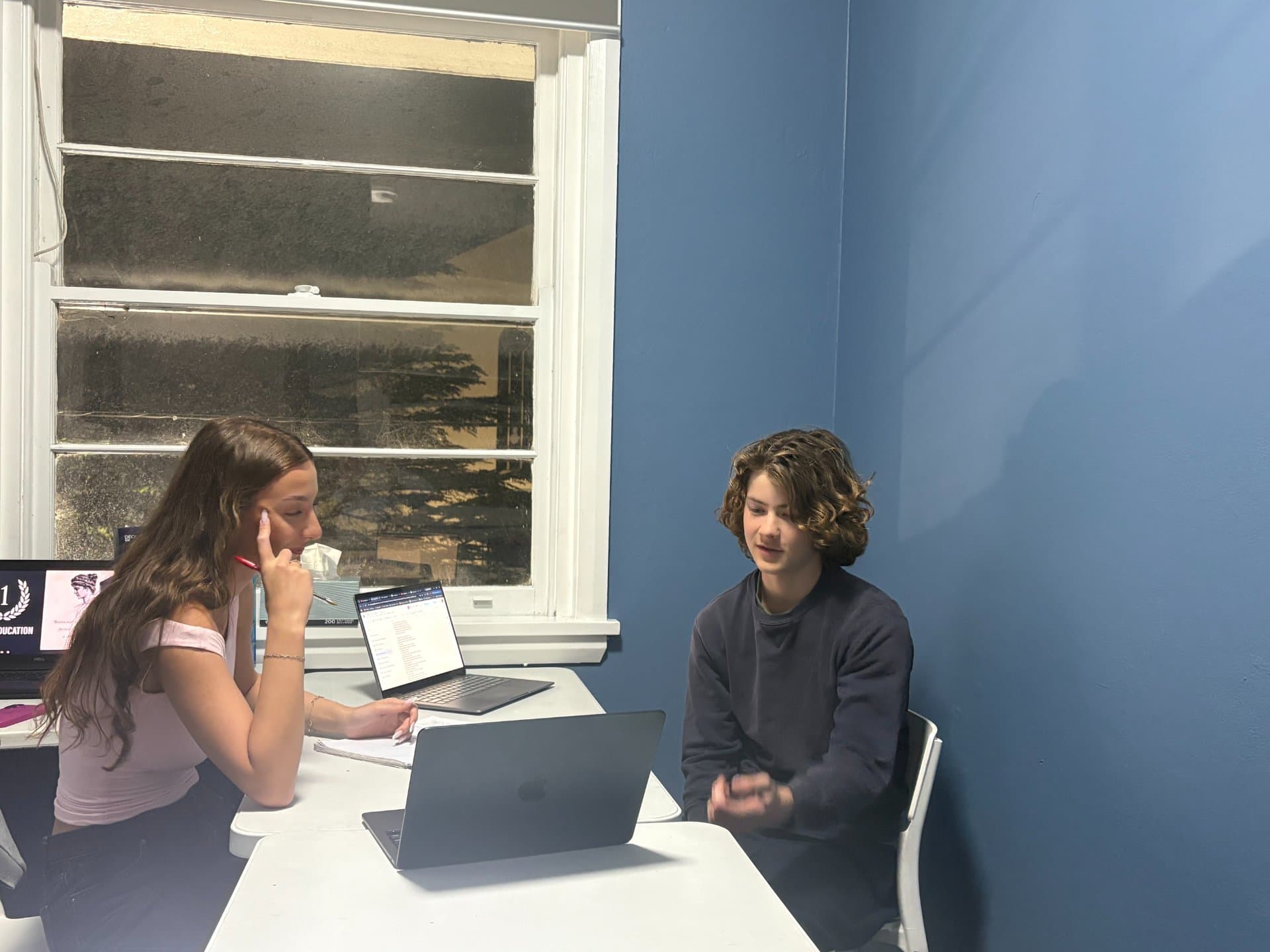
Writing a strong analytical essay requires students to think critically, organise their ideas and support their arguments with relvant textual evidence. In a recent tutoring session, Katerina worked closely with Huxley to develop these essential skills, focusing on responding to an analytical essay question using the PETAL structure (Point, Evidence, Technique, Analysis and Link).
Katerina began the lesson by reviewing and marking an essay response Huxley had previously completed. She carefully worked through his writing, identifying areas of strength and highlighting opportunities for improvement. Through detailed feedback and suggested edits, she guided Huxley in refining his expression, strengthening his arguments and ensuring his anaysis remained relevant to the question. This provided a valuable opportunity for Huxley to undertand how his writing could be improved.
Following this review, Huxley mentioned that he had recently completed a mock examination in class, but had struggled to manage his time effectively, leaving him unable to attempt the fourth question, which was worth six marks. Recognising this challenge, Katerina adapted the lesson to focus on developing strategies for approaching extended-response questions under examination conditions.
To address this, Katerina developed a practise six-mark question that reflected the style and expectations of Huxley's examination. Together, they explored how to approach the question effectively, with particular attention to determining the level detail expected for a higher-mark response. Katerina encouraged Huxley to consider how he could communicate his understanding clearly, while avoiding unnecessary information that could consume valuable examination time.
As they worked through the activity, Katerina used guiding questions to encourage Huxley to explain his reasoning and make thoughtful decisions about the context of his response. This allowed her to assess his understanding and provide immediate clarification where needed.
Overall, the lesson reflected Katerina's ability to recognise and respond to specific challenges in Huxley's learning. Her patient and encouraging approach created a positive environment in which Huxley could ask questions, reflect on his progress and develop practical strategies to apply in future assessments.


Ready when you areReach out anytime
Leave your details and we'll call you back, or send us a message. It's just a friendly conversation to get started.
We don't have online enrolment because we'd like to talk to you first.
Please fill this in the form below, and then we'll walk the walk.