
We don't have online enrolment because we'd like to talk to you first.
Please fill this in the form below, and then we'll walk the walk.
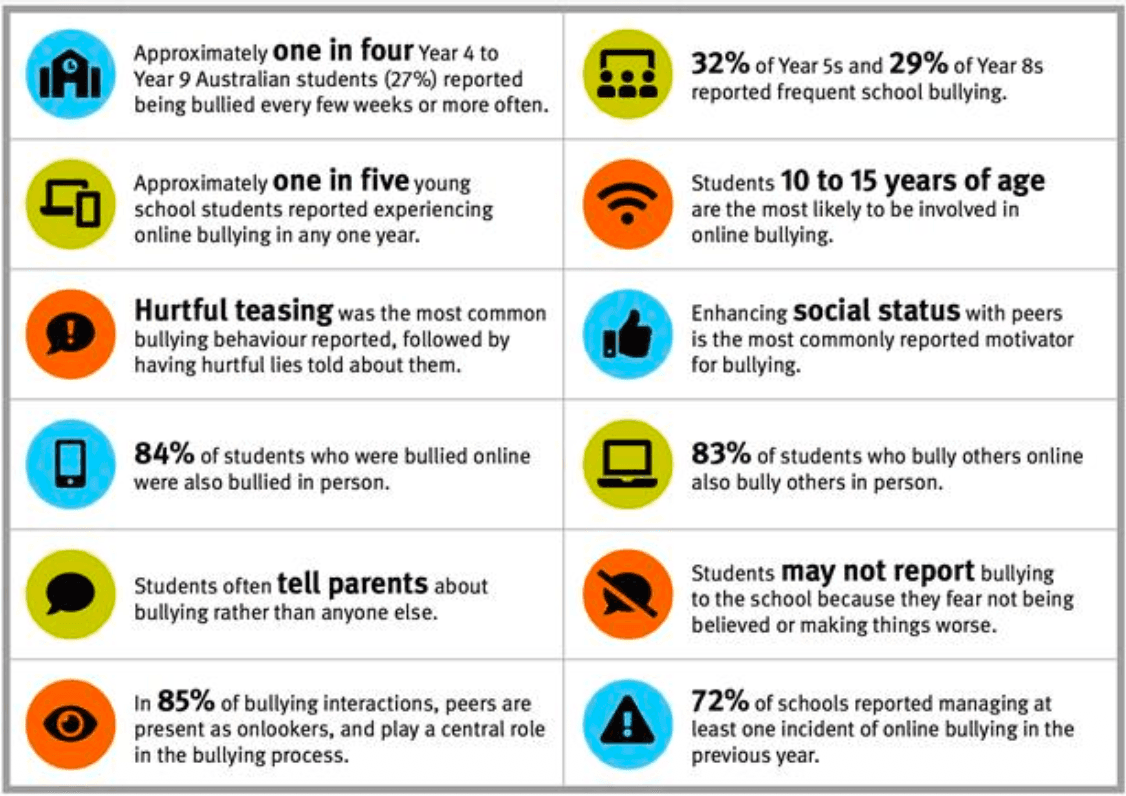
Bullying is a form of aggressive behaviour that is intentional, hurtful (physical and psychological), and/or threatening and persistent (repeated). There is an imbalance of strength (power and dominance).
What do we know about bullying in schools?
- Bullying has been reported as occurring in every school and kindergarten/day-care environment in which it has been investigated.
- Bullying can be categorised as direct or indirect and also as physical, verbal and gestural.
- Although there is no consistent evidence that bullying overall is increasing, one area of growing concern among children is cyber bullying, especially among older students.
- Gender differences have been found indicating that boys are bullied physically more often than girls. Girls are generally more often involved in indirect forms of aggression, such as excluding others, rumour spreading and unpleasant manipulating of situations to hurt those they do not like.
- There are differences in the nature and frequency of victimisation reported by children according to age. Generally, bullying among younger children is proportionally more physical, whilst for older children indirect and more subtle forms of bullying tend to occur more often.
- Despite these differences in the kinds of bullying most experienced by different age groups, children typically report bullying less often as they get older, although being victimised tends to increase when children enter secondary school.
- Being bullied at school typically has negative effects on the physical and psychological well-being of those children who are frequently and severely targeted.
Impacts of bullying:
- Children who are bullied are more likely to have higher levels of stress, anxiety, depression and illness.
- People who bully are more likely to drop out of school, use drugs and alcohol and engage in criminal behaviour.
- Young people who bully have a one in four chance of having a criminal record by the age of 30.
- Positive and supportive relationships between principals, teachers, students and parents can have a positive impact on reducing bullying.
'Bullying is camouflage for feelings of self hatred, anger, revenge, low self esteem and fear.' (Sherwood, 2008).


Ready when you areReach out anytime
Leave your details and we'll call you back, or send us a message. It's just a friendly conversation to get started.
We don't have online enrolment because we'd like to talk to you first.
Please fill this in the form below, and then we'll walk the walk.